22 Japanese Style Living Room Ideas for Serenity
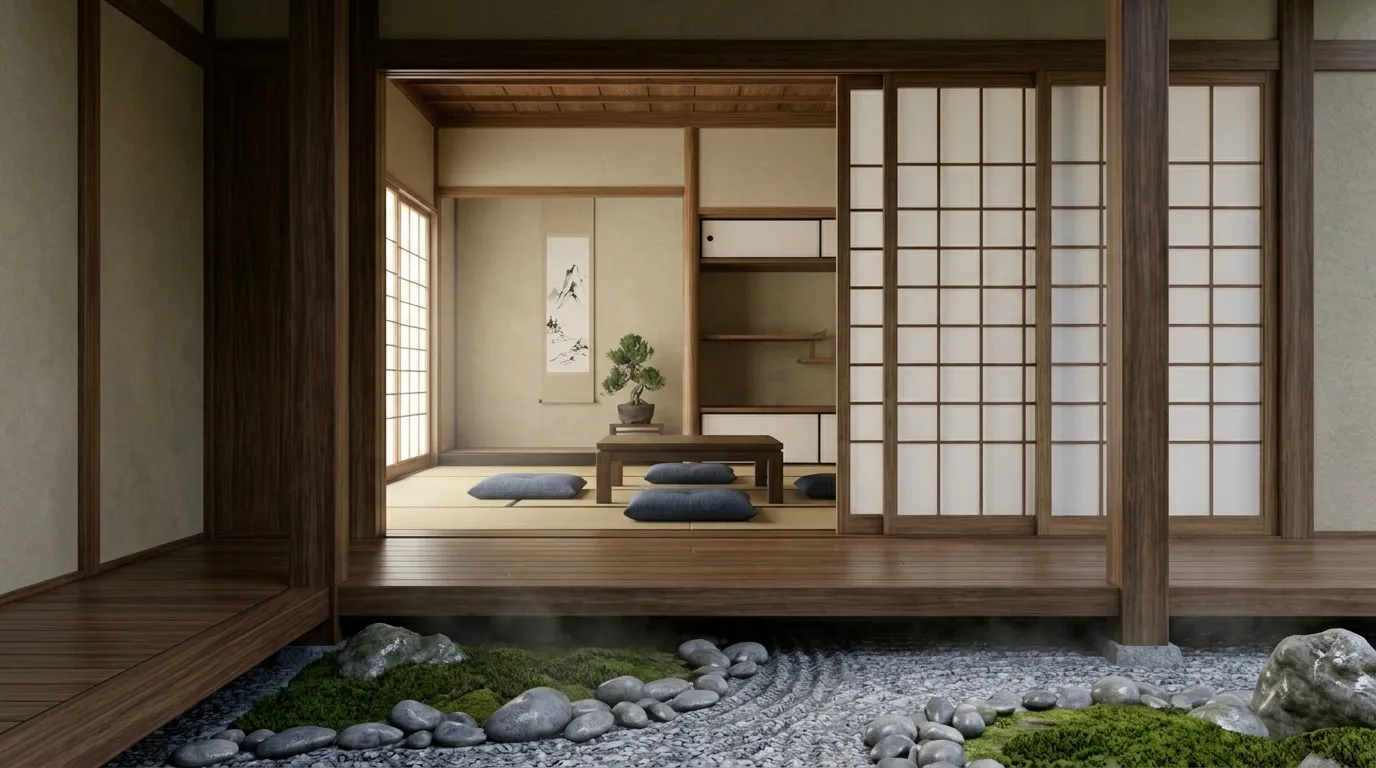
Japanese style living rooms emphasize simplicity, natural materials, and harmony with nature. This aesthetic combines clean lines, neutral tones, and wooden elements to create calm and serene spaces. Minimalist furniture, tatami mats, shoji screens, and natural textures encourage mindfulness and relaxation. These design elements make the living room a tranquil sanctuary, perfect for reflection or socializing in comfort. Explore these 22 Japanese style living room ideas to bring balance, elegance, and serenity into your home while maintaining functionality and timeless aesthetic appeal.
1 Low Wooden Platform Sofa
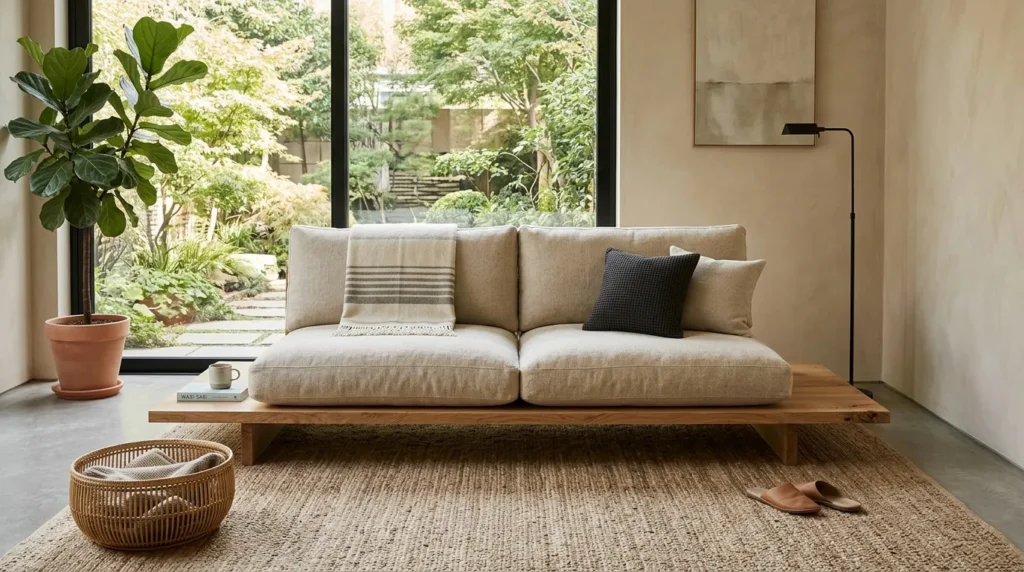
Low platform sofas are central to Japanese living room design. Their minimal height encourages a connection to the floor and enhances the room’s openness. Neutral cushions maintain a calm palette while complementing natural wood textures. The simplicity of design promotes mindfulness and serenity, making the space visually uncluttered and inviting.
Styling includes adding a tatami rug or small wooden side table for practicality. Pairing with plants or shoji screens enhances the tranquil ambiance. This setup balances comfort, functionality, and aesthetics while maintaining a minimalist Japanese-inspired living room.
2 Shoji Screens as Room Dividers
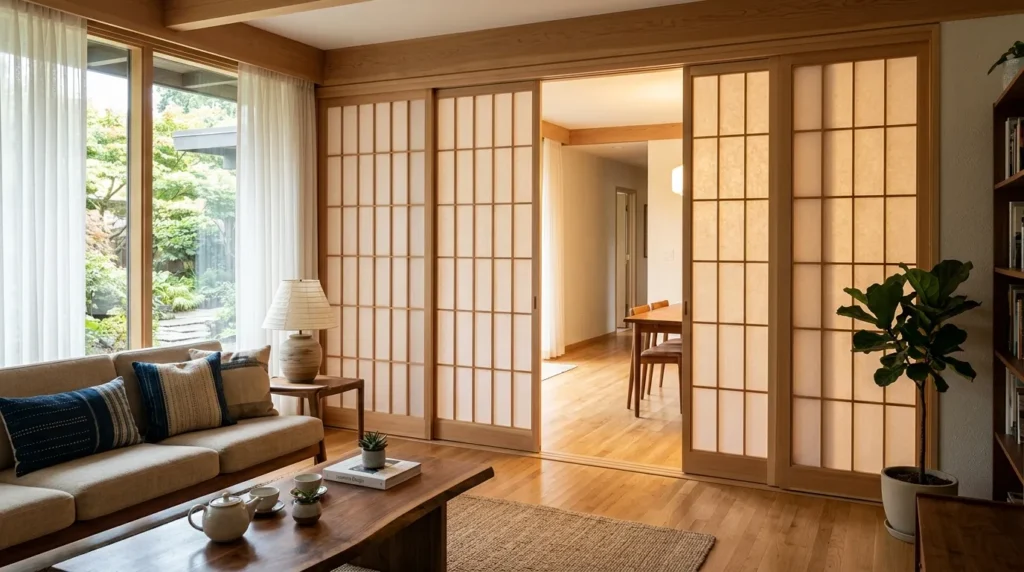
Shoji screens provide functional separation without blocking light or airflow. Their translucent panels create a soft glow, enhancing serenity and maintaining openness in the living room. The natural wooden frames integrate seamlessly with Japanese-style furniture.
Styling includes arranging screens strategically to define seating areas or hide storage. Pairing with tatami mats, low tables, and plants reinforces calmness and traditional Japanese aesthetics, fostering a balanced, peaceful environment.
3 Tatami Mat Flooring
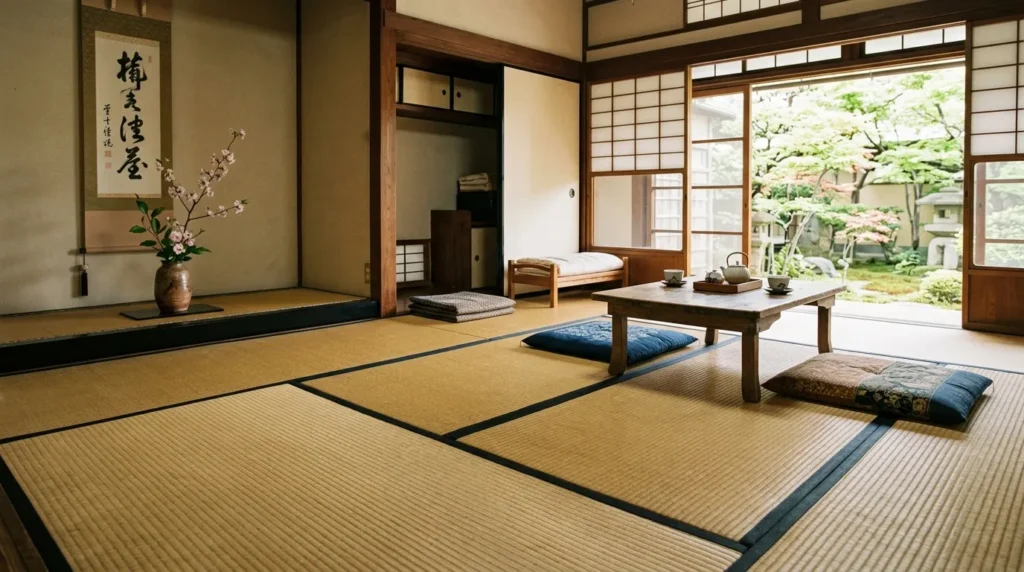
Tatami mats offer natural texture and a grounding effect, central to Japanese interior design. Their soft surface encourages floor seating, meditation, or casual lounging, promoting a sense of calm and connection to the space.
Styling includes pairing with low furniture, neutral cushions, and wooden accents. Combining tatami mats with shoji screens or natural light creates a harmonious, inviting atmosphere that emphasizes simplicity and tranquility.
4 Minimalist Wooden Coffee Table
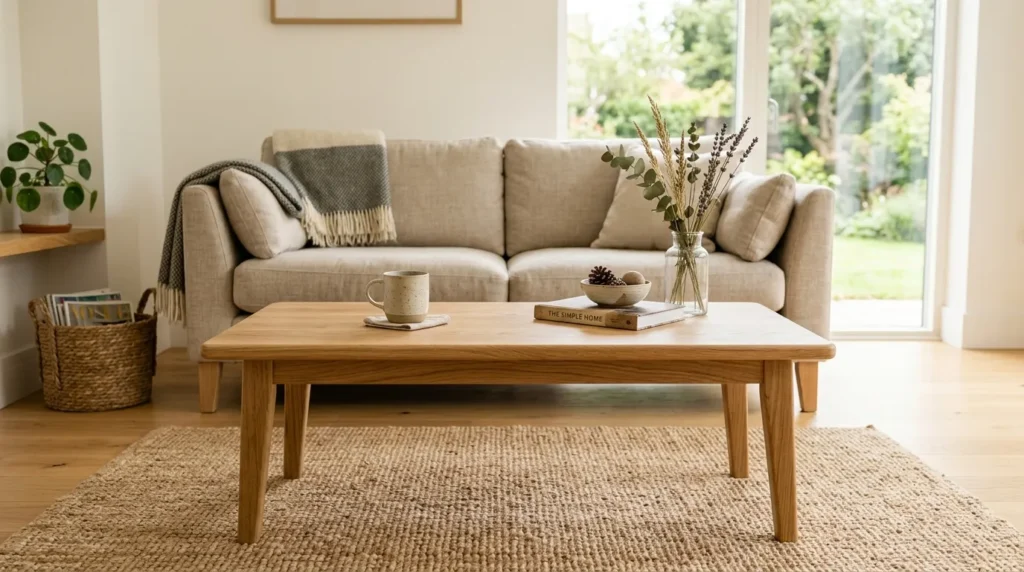
Minimalist coffee tables complement Japanese living room design by providing essential functionality without overcrowding. Clean lines and natural wood materials emphasize simplicity, enhancing the room’s calm and grounded aesthetic.
Styling includes placing neutral or woven trays, small decorative items, or bonsai plants on the table. This maintains balance, visual interest, and functionality while preserving the minimalist and serene ambiance.
5 Neutral Color Palette with Wooden Accents
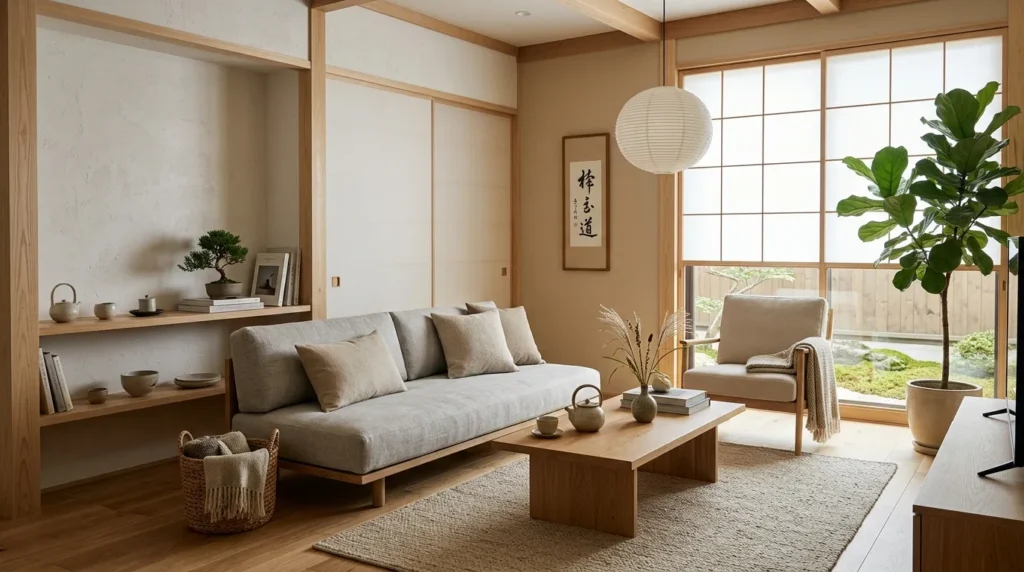
Neutral tones promote relaxation and openness in Japanese living rooms. Light wood adds warmth and texture, enhancing the natural, harmonious feel. This combination creates a cohesive and inviting environment suitable for meditation or social gatherings.
Styling includes incorporating cushions, rugs, or wall art in complementary shades. The color palette maintains visual serenity and balances simplicity with subtle decorative elements for an authentic Japanese aesthetic.
6 Indoor Bamboo Plants
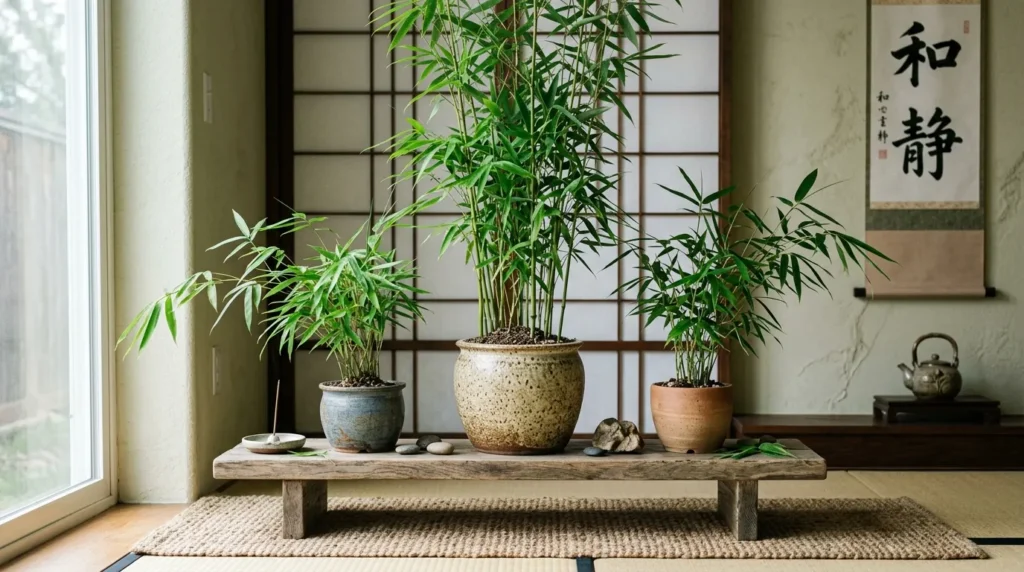
Bamboo plants symbolize strength and flexibility while bringing natural vibrancy indoors. Their vertical growth adds visual interest without overwhelming small spaces. They reinforce the Japanese focus on harmony with nature and mindfulness.
Styling includes grouping plants strategically near seating areas or corners. Complementing with wooden furniture and natural lighting enhances tranquility, creating a peaceful and balanced living room environment.
7 Low Floor Seating with Cushions
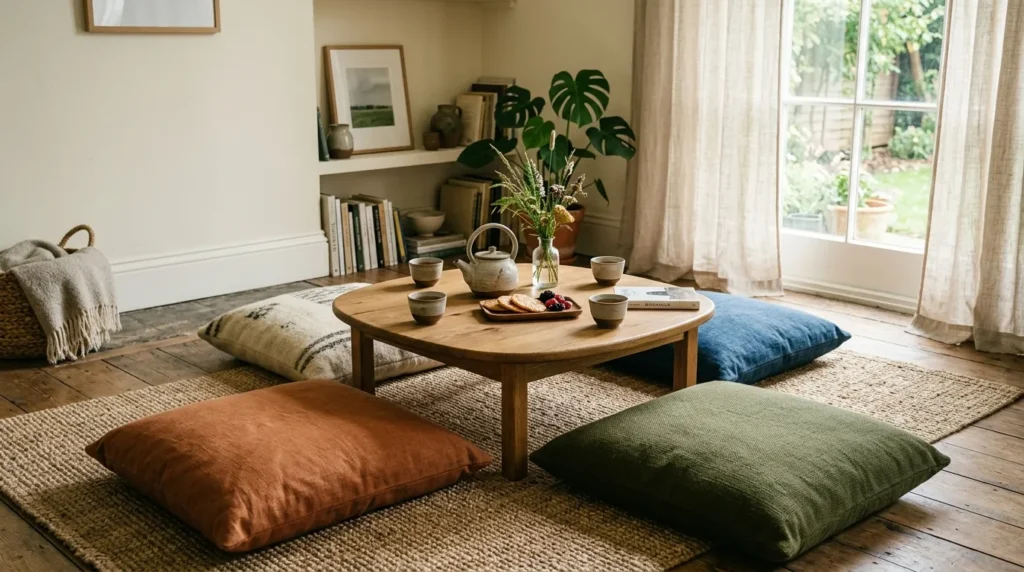
Floor seating encourages mindfulness and intimacy while maintaining an open and uncluttered living room. Cushions in neutral tones complement wooden floors or tatami mats, enhancing the Japanese-inspired aesthetic.
Styling includes coordinating cushion colors, textures, and placement to define seating zones. Pairing with low tables and subtle decor maintains functionality while preserving a serene and balanced environment.
8 Sliding Glass Doors with Wooden Frames
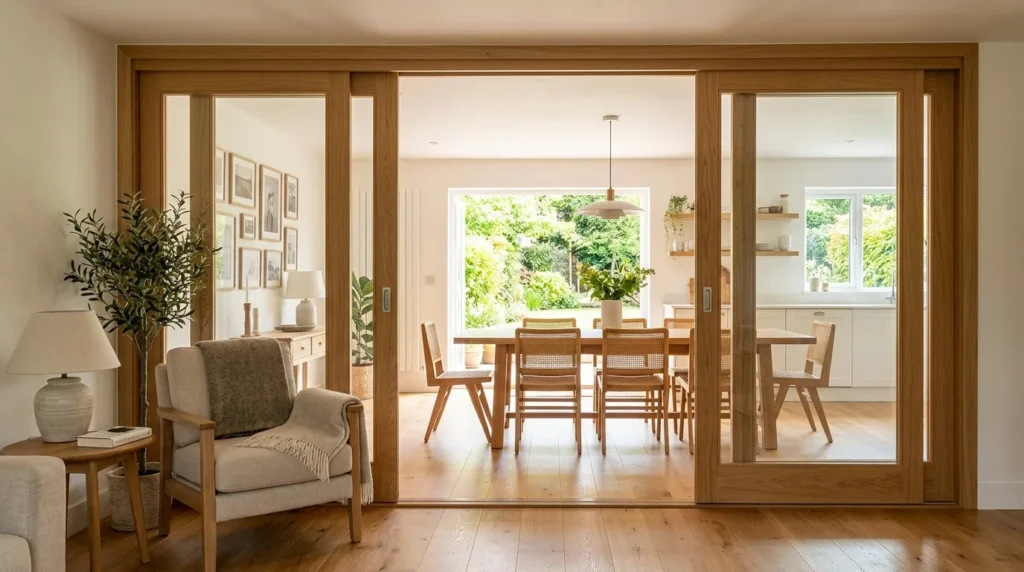
Sliding doors maximize space efficiency, provide flexibility, and maintain openness in Japanese-style living rooms. Wooden frames add warmth, emphasizing natural materials and clean lines.
Styling includes pairing with minimalistic decor, soft lighting, and neutral furnishings. Sliding doors create a calm, functional transition between rooms, enhancing serenity and visual flow.
9 Bonsai Display Table
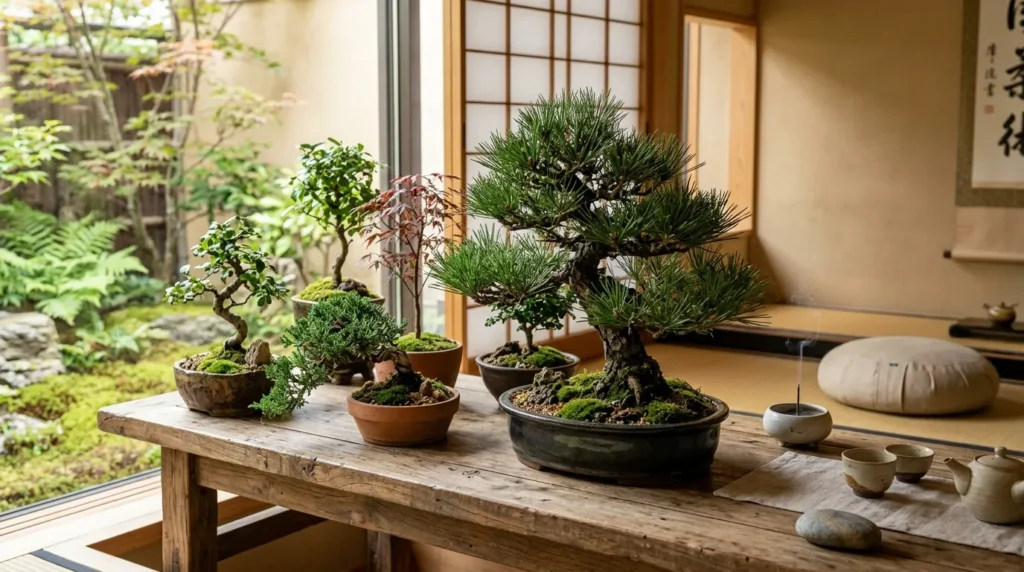
Bonsai displays introduce balance, texture, and nature-inspired beauty. The meticulous care of bonsai reflects mindfulness, a key principle in Japanese interiors. Placing them on low wooden tables enhances the connection to natural elements.
Styling includes surrounding the table with neutral accents, soft lighting, and minimal furnishings. This arrangement creates a serene and contemplative corner while maintaining harmony within the living room.
10 Woven Tatami Chair with Wooden Frame
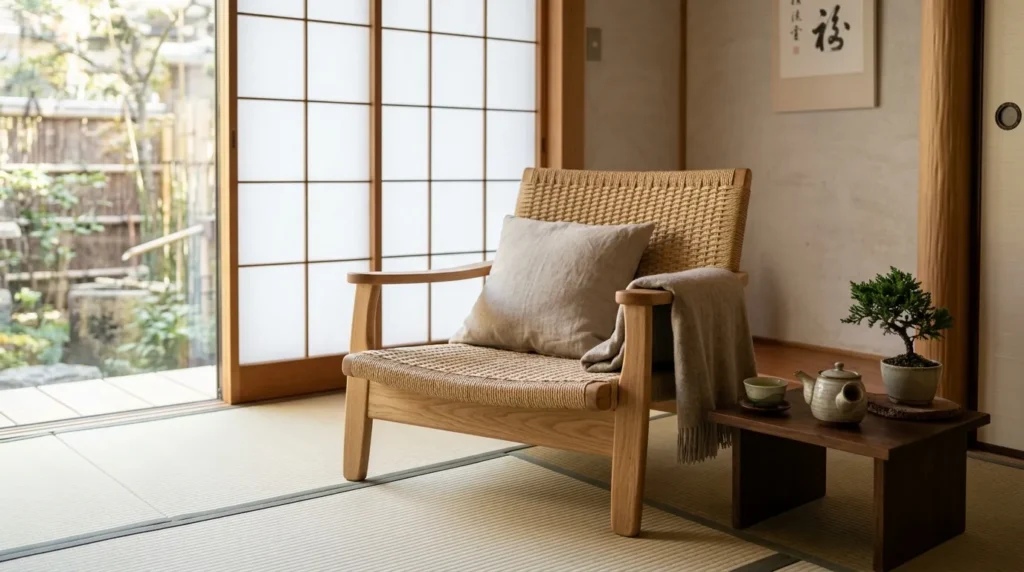
Tatami chairs integrate traditional materials with modern function. Their low profile and woven texture promote comfort while reinforcing a minimalist aesthetic. They complement other wooden furniture and natural decor.
Styling includes pairing with cushions, a small side table, or neutral rug. The combination maintains a clean, calming space that supports relaxation and interaction within the living room.
11 Exposed Wooden Beams
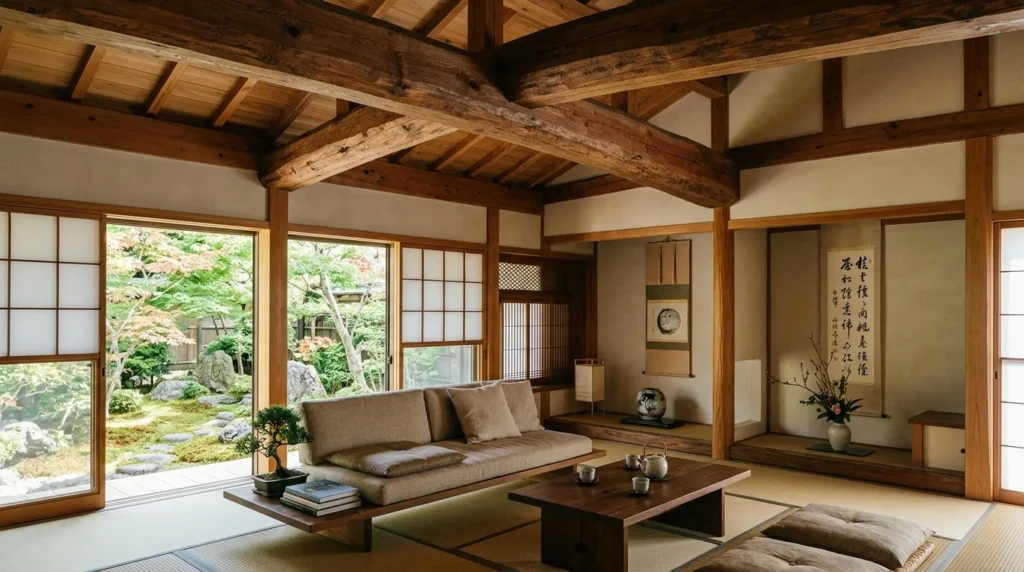
Exposed beams emphasize natural materials and craftsmanship, enhancing the serene and grounded atmosphere. They create depth and visual interest without overwhelming the minimalist space.
Styling includes neutral walls, low furniture, and subtle lighting to accentuate beams. This approach maintains harmony and promotes a calm, inviting ambiance.
12 Neutral Area Rug over Tatami Mats
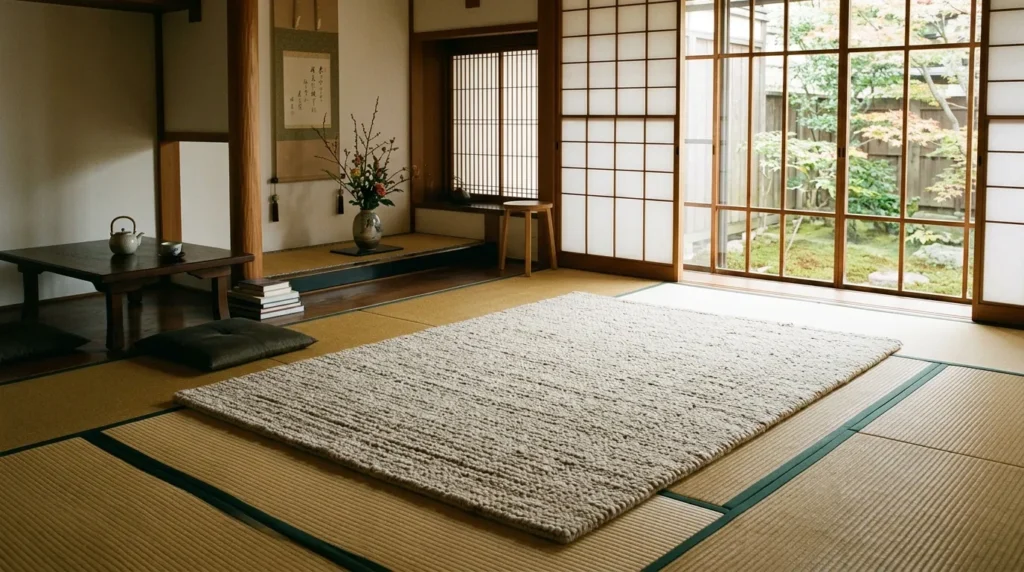
Layered rugs enhance coziness while maintaining a serene palette. Neutral tones ensure cohesion with wooden elements and other furniture.
Styling includes complementing cushions and low tables. This layering adds dimension, tactile comfort, and balance while preserving the minimalist aesthetic of the Japanese living room.
13 Low Wooden TV Console
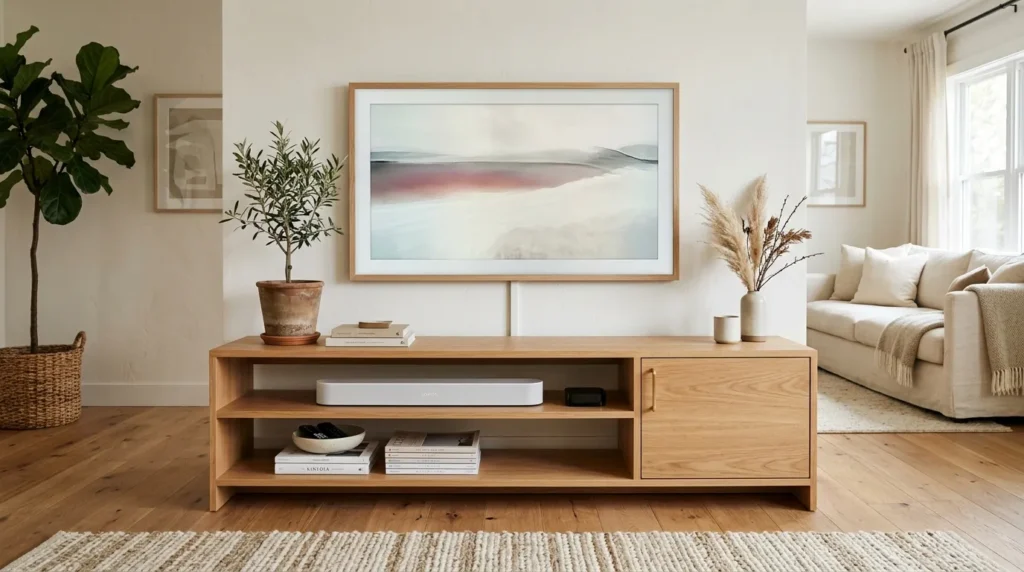
Low TV consoles emphasize horizontal lines, creating a grounded and harmonious layout. Wood adds warmth while keeping technology discreet and functional.
Styling includes minimal decor and neutral tones to maintain simplicity. Functional design supports organization without compromising serenity or aesthetics.
14 Tatami-Like Floor Cushions
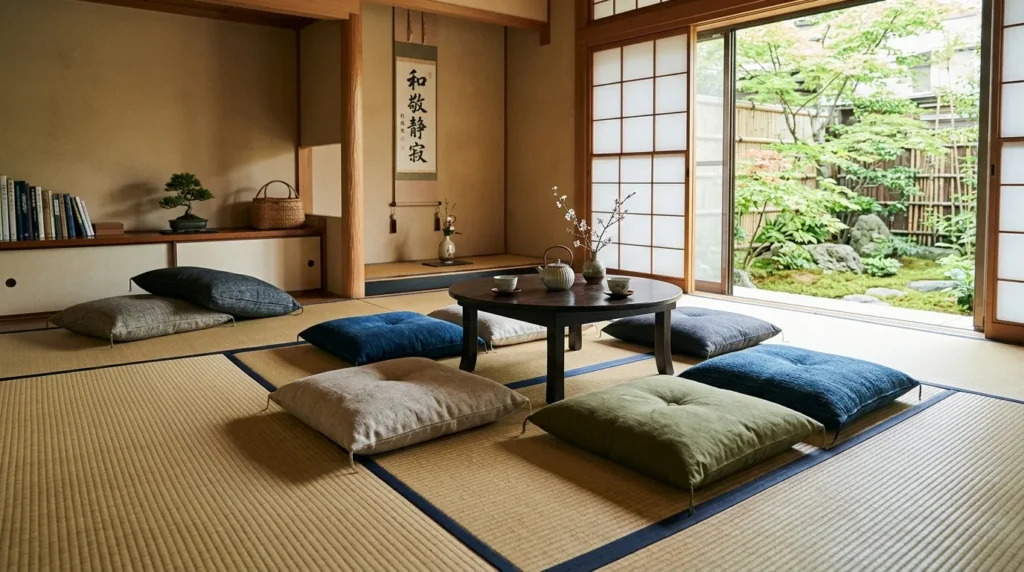
Floor cushions encourage floor-level interaction, aligning with traditional Japanese principles. They enhance versatility and comfort in small spaces.
Styling includes coordinating textures, patterns, and colors with natural wood and rugs. This combination promotes cohesion and relaxation in a serene environment.
15 Shoji-Style Windows
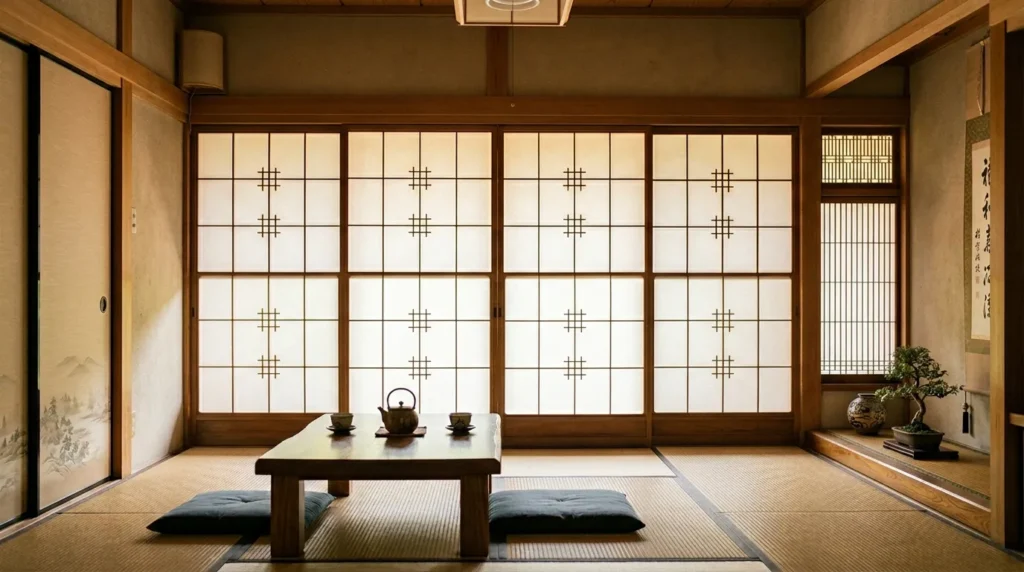
Shoji-style windows soften incoming light, creating a gentle, calming ambiance. The wooden lattice and translucent panels provide privacy without blocking views.
Styling includes pairing with neutral furnishings and floor cushions. This combination reinforces natural textures and serenity while maintaining Japanese aesthetic harmony.
16 Low Wooden Coffee Table with Minimal Decor
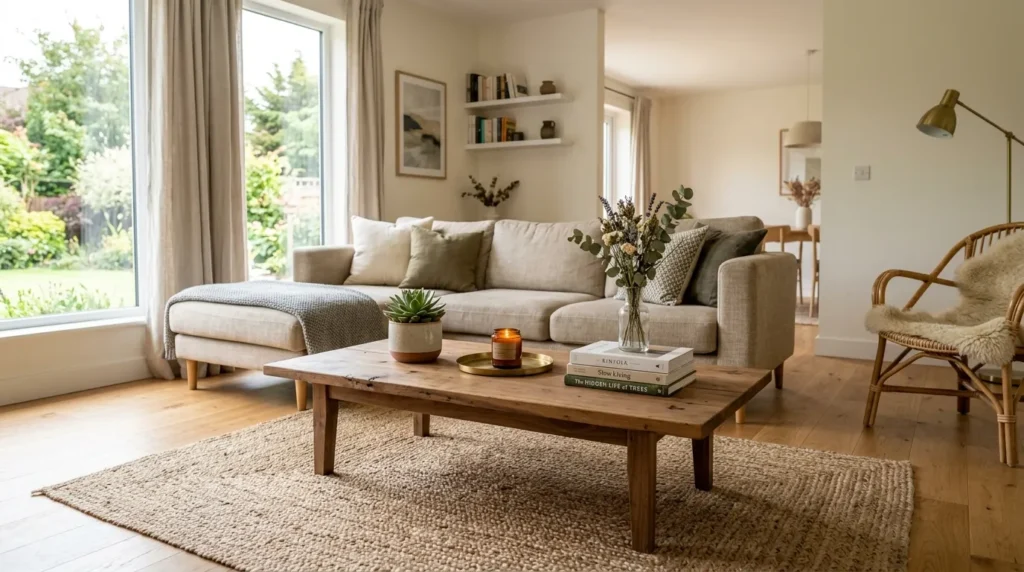
Minimal coffee tables emphasize horizontal lines and natural materials. They provide functional surfaces without overcrowding space, keeping the room open and inviting.
Styling includes neutral decor and textured elements, maintaining simplicity while enhancing functionality. This preserves tranquility and focus in the living room design.
17 Natural Fiber Baskets for Storage
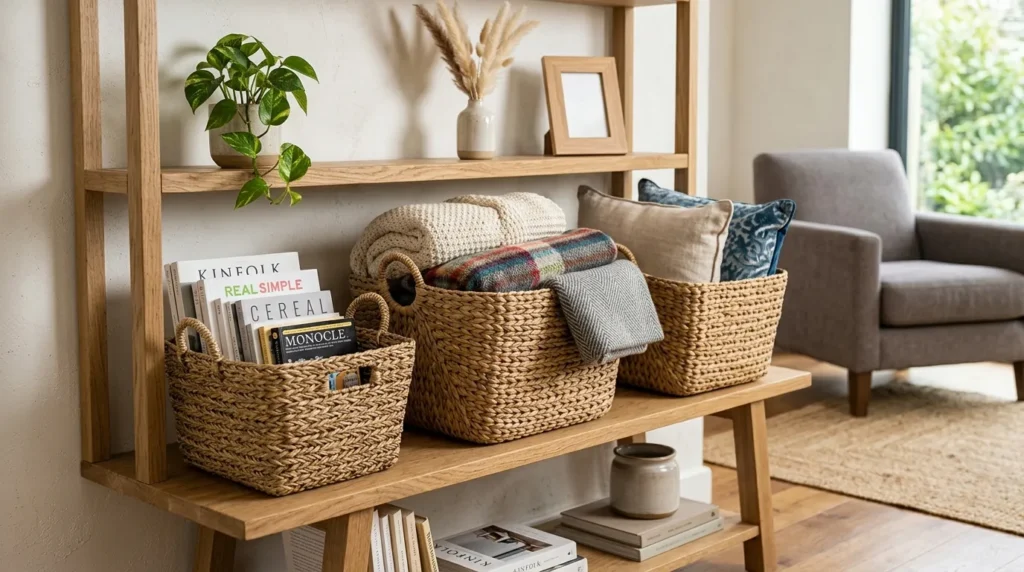
Baskets provide practical, stylish storage, ensuring a tidy environment. Natural fibers add warmth and tactile interest to the room.
Styling includes coordinating with rugs, furniture, and neutral color palettes. This approach maintains harmony while emphasizing functional serenity.
18 Zen-Inspired Wall Art
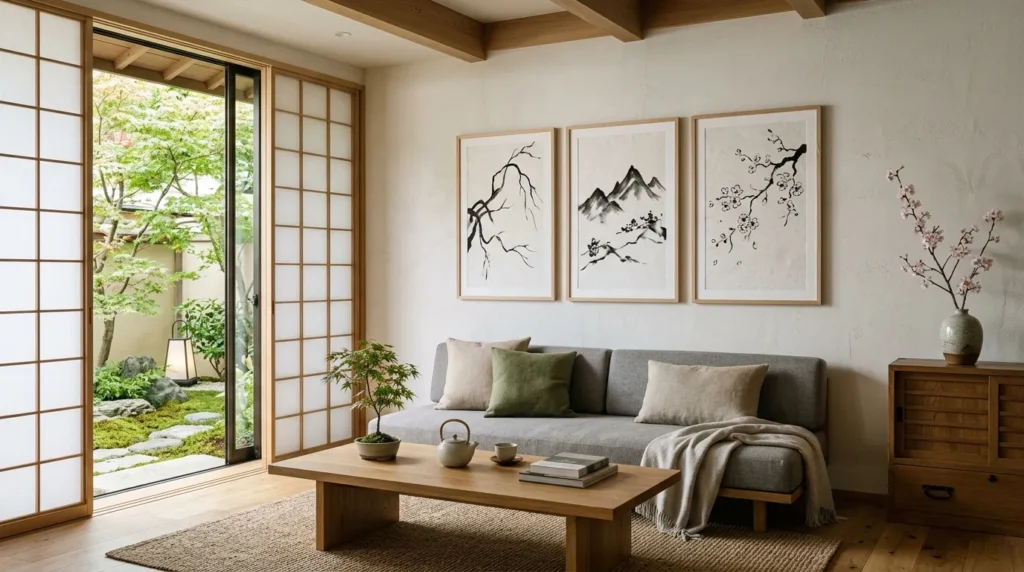
Zen-inspired art emphasizes simplicity and nature, aligning with Japanese design principles. Its restrained use maintains serenity and focus within the space.
Styling includes placing pieces strategically, using neutral frames, and coordinating with existing textures. This enhances balance, visual appeal, and tranquility.
19 Sliding Wooden Storage Cabinets
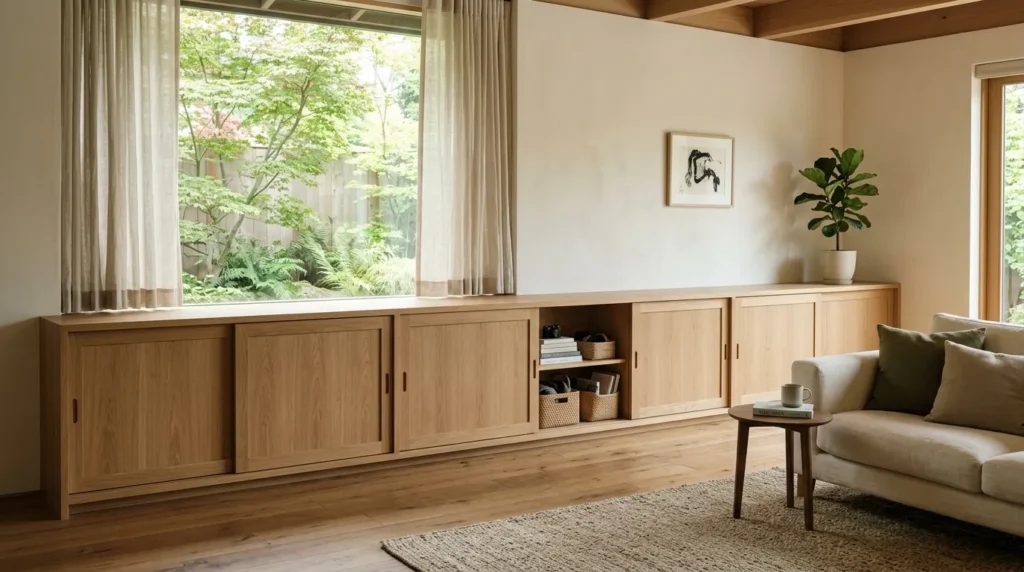
Sliding cabinets reduce visual clutter while providing functional storage. Their low profile emphasizes horizontal lines and openness, key elements of Japanese design.
Styling includes neutral decor, coordinated flooring, and subtle accents. This ensures functionality, balance, and a calm, organized environment.
20 Zen Corner with Floor Lantern
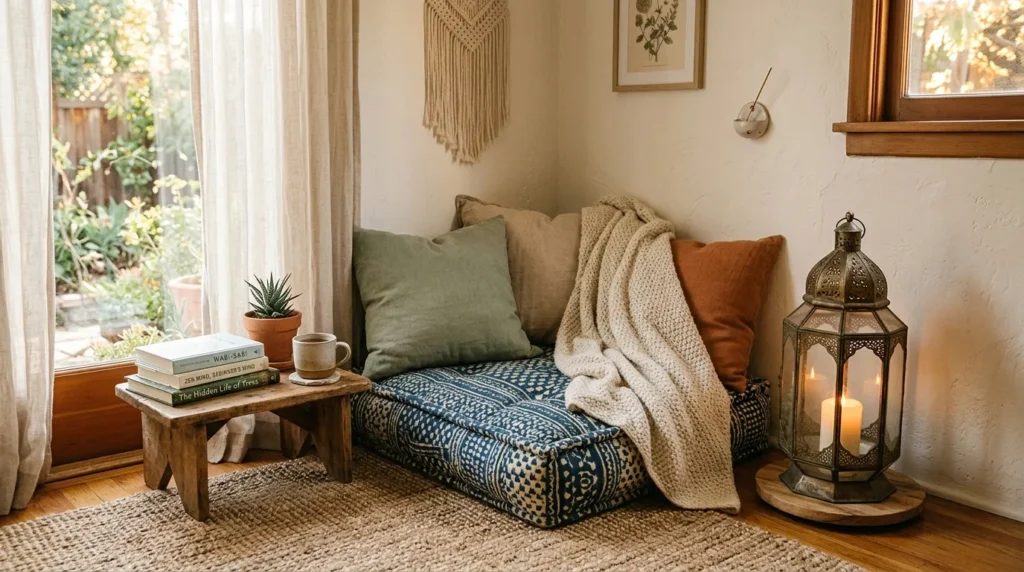
Zen corners promote mindfulness and relaxation. Soft lighting from lanterns creates a peaceful atmosphere, complementing neutral and wooden elements in the room.
Styling includes simple decor, floor cushions, and natural textures. This arrangement encourages reflection and calm, enhancing the serene Japanese living room aesthetic.
21 Sliding Tatami Room Divider
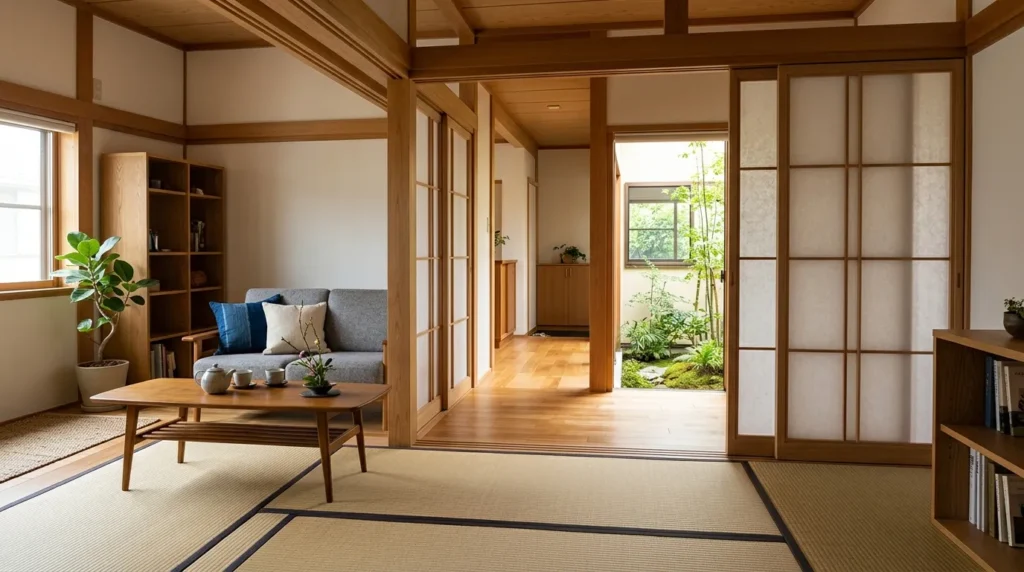
Sliding dividers optimize small spaces, maintaining a sense of flow while creating functional separation. Tatami textures enhance authenticity and calmness.
Styling includes minimal decor and natural textures. The divider maintains a cohesive and serene environment while balancing openness and functionality.
22 Low Wooden Console with Plants
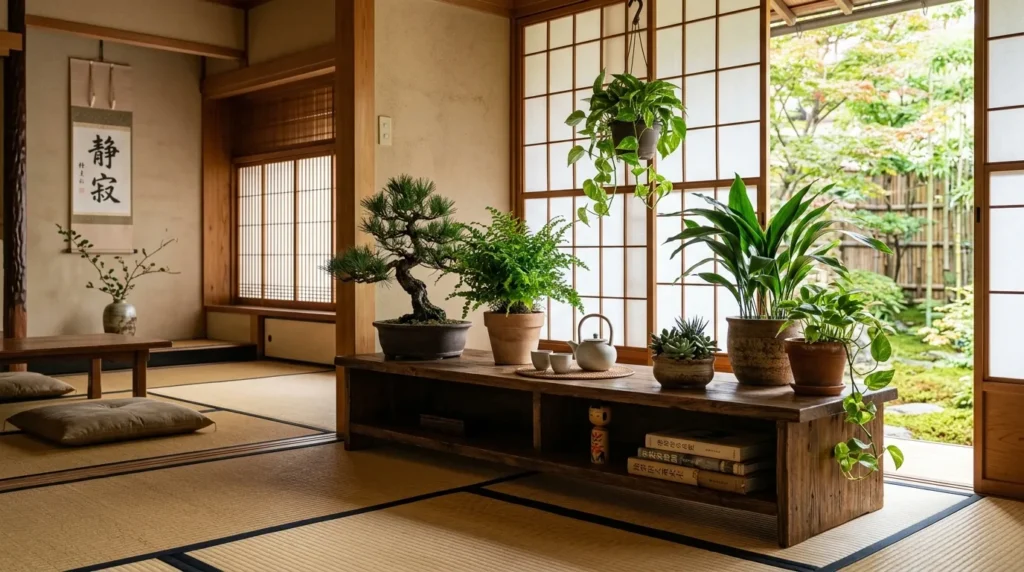
Consoles provide surfaces for decor while maintaining horizontal emphasis. Plants add life, texture, and a calming presence, reinforcing Japanese principles.
Styling includes coordinating plant types, neutral accessories, and lighting. The result is a balanced, serene, and aesthetically cohesive living room that promotes relaxation and harmony.
Conclusion:
Japanese style living rooms combine simplicity, natural materials, and neutral tones to create serene, inviting spaces. These 22 ideas demonstrate how low furniture, tatami mats, shoji screens, and natural textures promote balance and tranquility. Incorporating minimal decor, greenery, and thoughtful storage ensures both functionality and aesthetic appeal. By embracing these design elements, a small or large living room can become a peaceful sanctuary that encourages relaxation, mindfulness, and visual harmony.