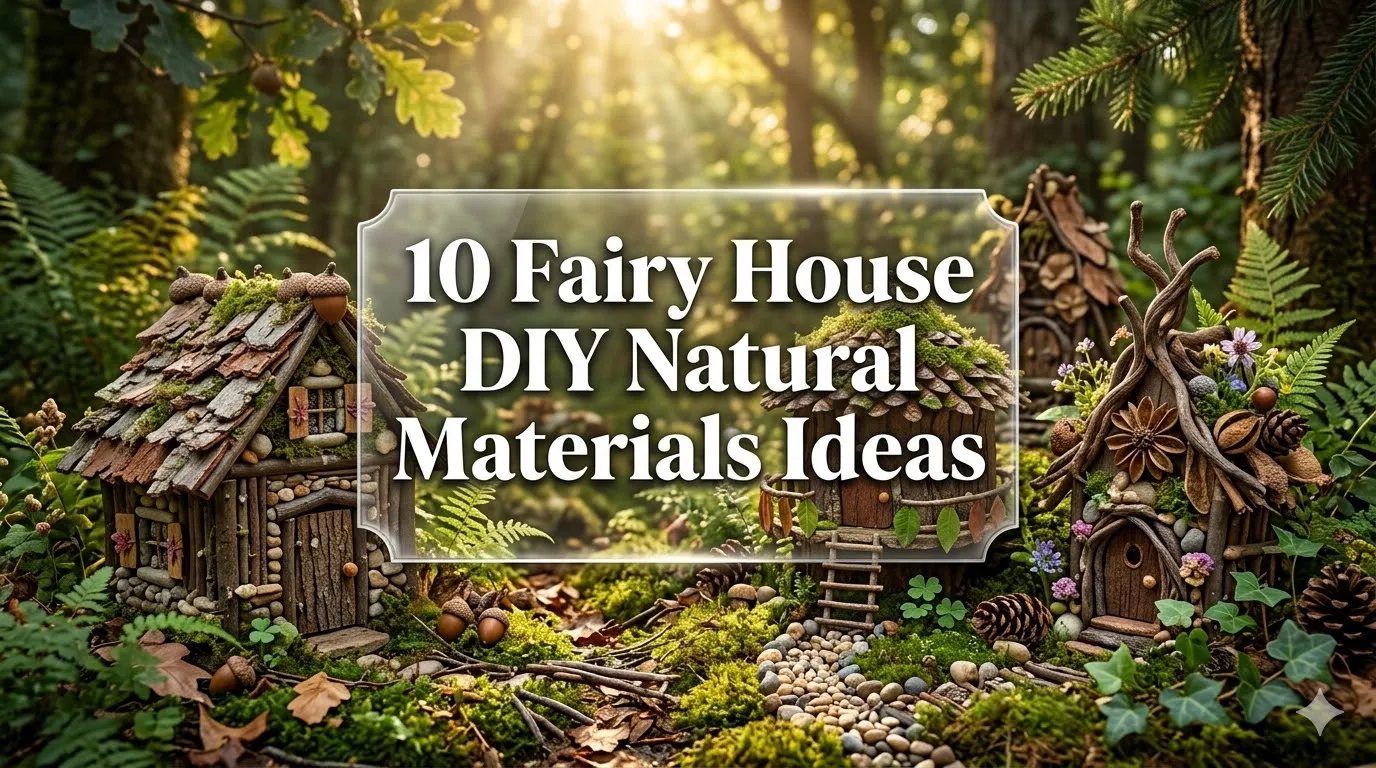
10 Fairy House DIY Natural Materials Ideas
Introduction
There’s something magical about creating tiny fairy houses from materials found in nature. Whether you’re decorating a garden, planning a family craft project, or simply looking for a creative way to spend an afternoon outdoors, fairy houses offer the perfect blend of imagination and DIY charm. One of the best things about these miniature creations is that they don’t require expensive supplies. Many of the most beautiful fairy homes are made using simple natural materials such as twigs, bark, pinecones, stones, acorns, moss, and dried flowers.
I’ve noticed that natural-material fairy houses often look more enchanting than store-bought versions because they blend seamlessly into outdoor spaces. The textures, colors, and organic shapes create a whimsical appearance that feels straight out of a storybook. They’re also a wonderful way to encourage creativity while making use of materials that are freely available in your backyard, local park, or nature trail.
Whether you want a rustic woodland cottage, a tiny mushroom retreat, or a charming garden hideaway, these ideas can help you build a fairy village that feels magical and unique. Each design focuses on natural textures, easy-to-find materials, and charming details that make people stop and smile.
Table of Contents
- Twig Cottage
- Bark Roof Cabin
- Pinecone Hideaway
- Acorn Door Cottage
- Mossy Woodland Home
- Pebble Stone Retreat
- Mushroom Fairy Hut
- Driftwood Village
- Flower Petal Cottage
- Mini Forest Manor
1. Twig Cottage
Quick Benefits
- Easy to build
- Uses free natural materials
- Perfect for beginners
- Rustic woodland appearance
- Great for garden displays
Why It Works
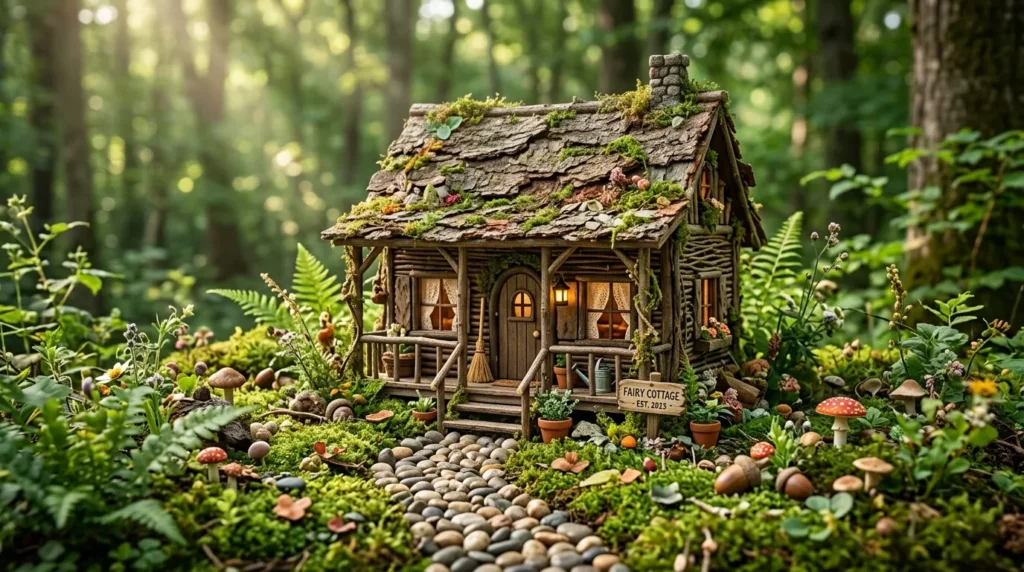
A Twig Cottage is one of the most classic fairy house designs because it mimics the look of a real log cabin on a miniature scale. Thin twigs create natural walls, while their varying thicknesses add texture and visual interest. The rustic appearance blends beautifully into flower beds, under trees, or alongside garden pathways. Because twigs are widely available, this project is also one of the most budget-friendly options for creating a magical fairy village.
How To Style It
Collect straight twigs of similar size and trim them to length. Glue them side by side onto a small cardboard or wooden base to form walls. Add a roof made from bark or layered leaves for extra character. Surround the cottage with moss, pebbles, and miniature flowers to create a woodland-inspired fairy garden scene.
2. Bark Roof Cabin
Quick Benefits
- Looks realistic
- Adds natural texture
- Durable outdoors
- Rustic fairy-tale charm
- Easy to customize
Why It Works
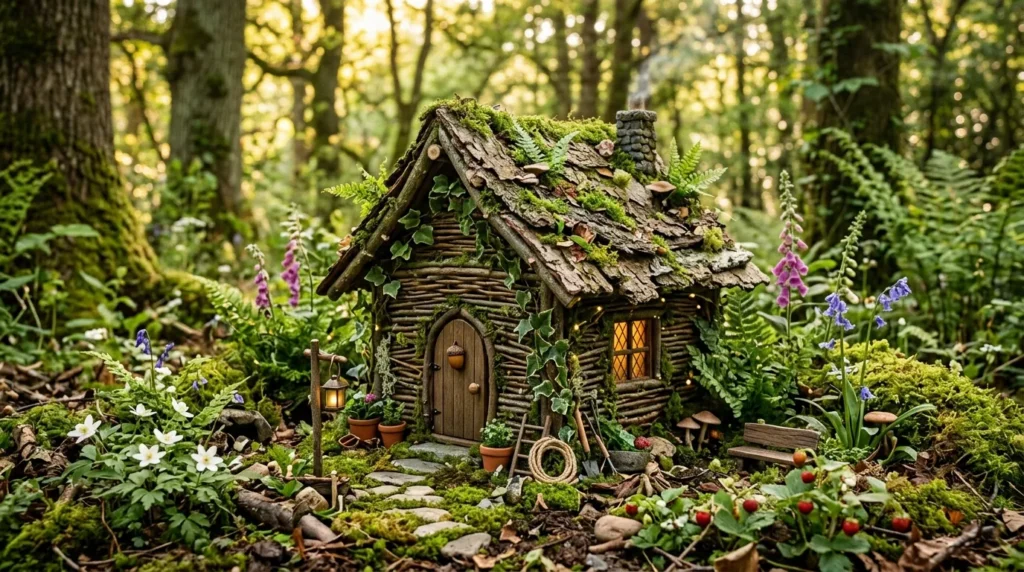
Tree bark naturally resembles the wooden shingles found on traditional cottages, making it one of the most effective materials for fairy house roofs. The rough texture adds authenticity and helps the structure blend into outdoor environments. Different bark types can create unique appearances, allowing every fairy house to feel one-of-a-kind.
How To Style It
Use bark pieces to create a sloped roof over a simple twig frame. Add pebble pathways leading to the entrance and use moss around the base for a cozy woodland effect. Tiny acorns and seed pods can serve as decorative details around the house.
3. Pinecone Hideaway
Quick Benefits
- Unique texture
- Naturally decorative
- Simple construction
- Perfect for small spaces
- Ideal for woodland themes
Why It Works
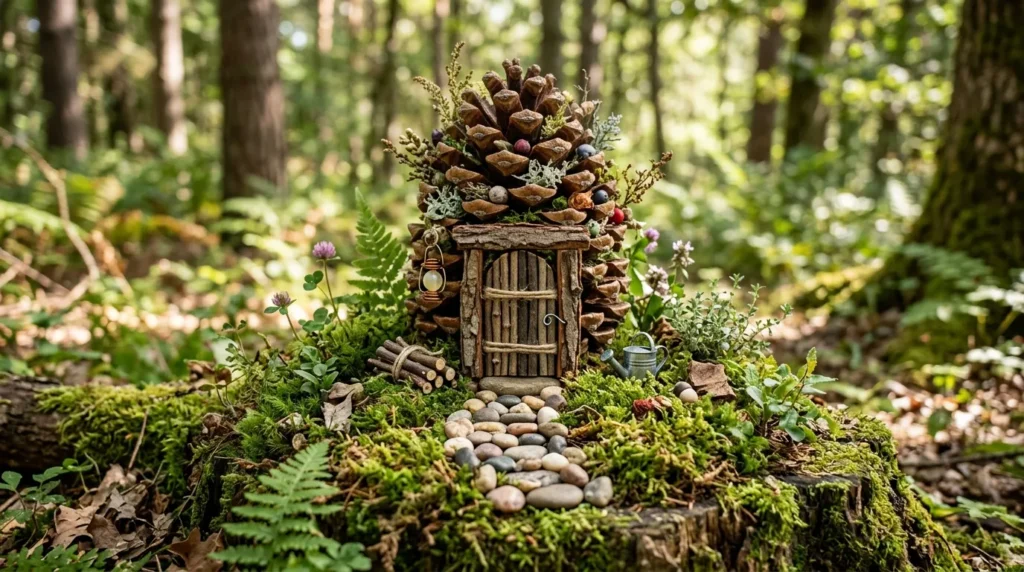
Pinecones already have an architectural appearance that resembles roof shingles or miniature towers. Their layered scales create texture without requiring additional decoration. This makes them ideal for fairy houses that look detailed while remaining simple to build.
How To Style It
Turn a large pinecone upside down to create the main structure. Add a small twig door, pebble steps, and moss landscaping. Place the finished house beneath shrubs or near tree roots to enhance the magical woodland effect.
4. Acorn Door Cottage
Quick Benefits
- Charming focal point
- Highly detailed appearance
- Uses easy-to-find materials
- Perfect for fairy villages
- Creates storybook charm
Why It Works
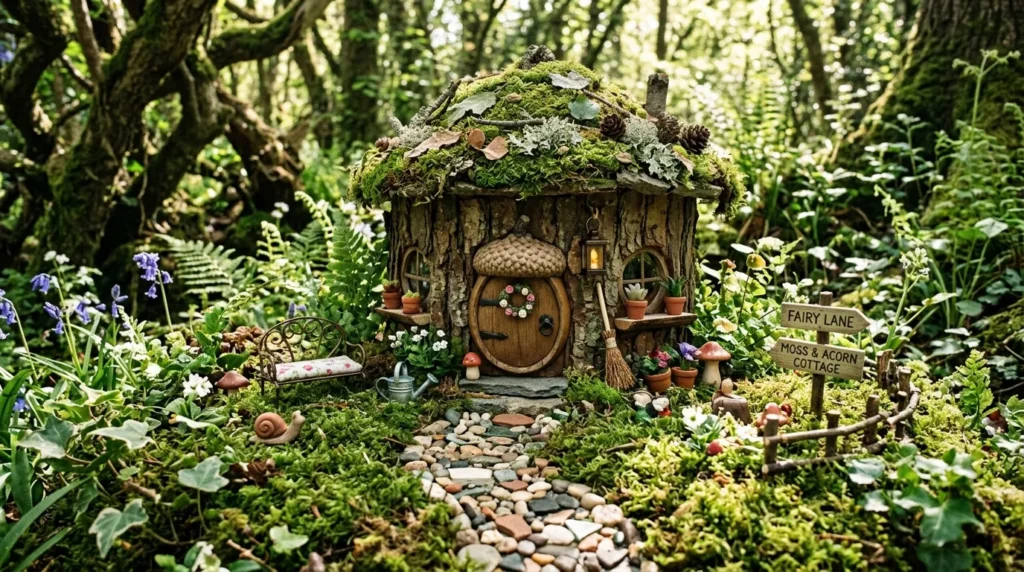
Tiny details often make fairy houses feel magical, and acorn caps create some of the most charming decorative features. Using acorns as doors, windows, or roof accents immediately adds personality and whimsy to the design.
How To Style It
Create a small cottage from twigs or bark and attach an acorn cap as the front door. Add miniature pebble paths and moss landscaping around the entrance. Small dried flowers can act as fairy garden decorations.
5. Mossy Woodland Home
Quick Benefits
- Soft natural appearance
- Blends into gardens
- Adds vibrant texture
- Looks enchanted
- Easy to decorate
Why It Works
Moss instantly creates the appearance of an old enchanted cottage hidden deep within the forest. Its soft texture and vibrant green color help fairy houses feel alive and connected to nature. Moss also covers imperfections and adds a finished appearance to simple structures.
How To Style It
Cover portions of a twig or bark fairy house with preserved moss. Add pebble pathways, miniature mushrooms, and tiny wood slices to create a magical woodland landscape. Position the house in a shaded garden area for maximum realism.
6. Pebble Stone Retreat
Quick Benefits
- Extremely durable outdoors
- Creates realistic cottage walls
- Uses easy-to-find materials
- Adds natural texture
- Perfect for fairy villages
Why It Works
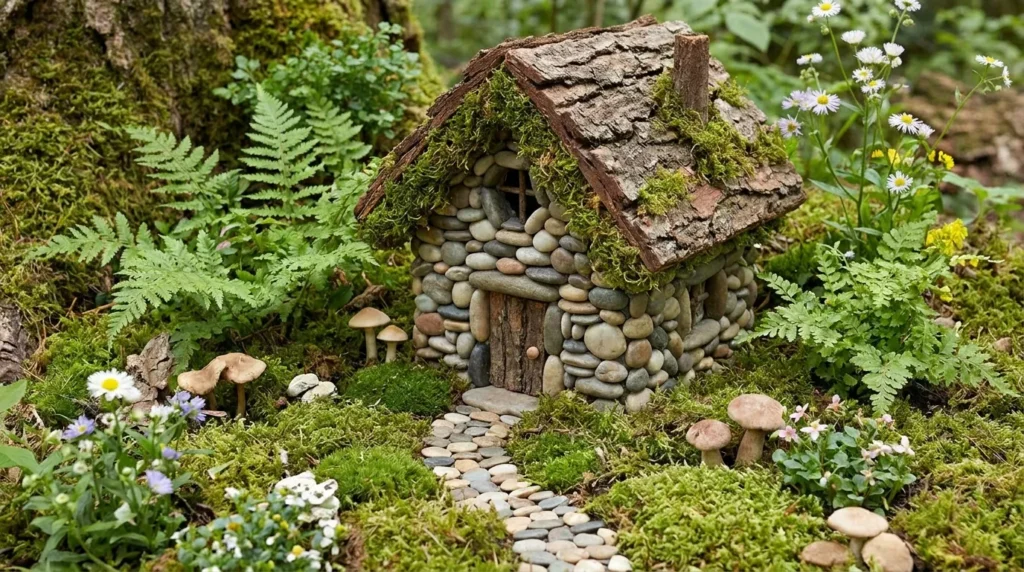
Pebbles create the appearance of miniature stone cottages that look like they belong in an enchanted forest. The varied shapes and natural colors of small stones add depth and realism that is difficult to achieve with artificial materials. Because pebbles withstand rain, sunlight, and changing weather conditions, they are an excellent choice for outdoor fairy gardens that stay on display throughout the year.
One thing that works especially well about pebble houses is their versatility. Smooth river rocks create a polished cottage appearance, while rougher stones give the structure an old-world woodland charm. The natural texture makes every fairy house unique and helps it blend beautifully into flower beds, garden borders, and landscape features.
How To Style It
Glue small pebbles onto a sturdy base to create cottage walls. Add a bark roof and a twig door to soften the appearance and maintain a natural theme. Use moss around the foundation and create a winding pathway from tiny stones leading to the entrance. Small succulents and miniature plants can complete the fairy garden scene.
7. Mushroom Fairy Hut
Quick Benefits
- Whimsical storybook style
- Eye-catching garden feature
- Great for children and families
- Perfect fairy-tale appearance
- Highly Pinterest-worthy
Why It Works
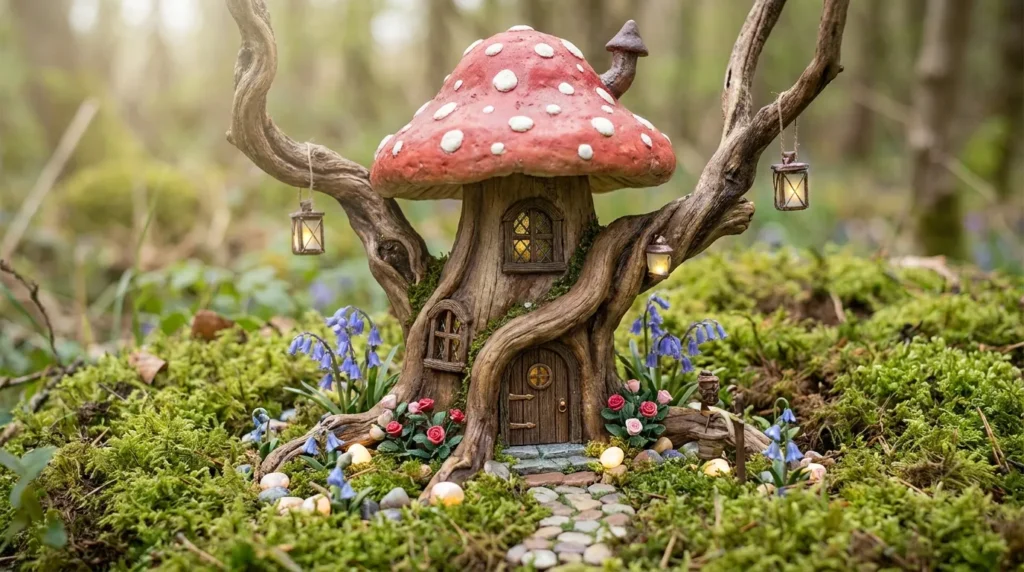
Mushroom houses have become one of the most recognizable fairy garden designs because they immediately evoke a magical woodland atmosphere. Their rounded shape stands out among traditional cottage structures and creates a playful focal point in any fairy village. Natural materials such as wood slices, acorn caps, bark, and seed pods can be used to recreate the charming look of a woodland mushroom retreat.
I’ve noticed that mushroom fairy houses are often the first structures people save on Pinterest because they feel imaginative and instantly recognizable. Their whimsical appearance works beautifully in gardens, containers, and woodland-themed displays.
How To Style It
Use a large acorn cap, seed pod, or wooden disk as the mushroom top. Create the stem from stacked pebbles, bark pieces, or a small branch section. Add moss around the base and place miniature stones nearby to create a natural woodland setting. Tiny flowers can add color and help the house feel even more magical.
8. Driftwood Village
Quick Benefits
- Coastal-inspired style
- Unique weathered texture
- Works in containers or gardens
- Creates visual interest
- Sustainable DIY project
Why It Works
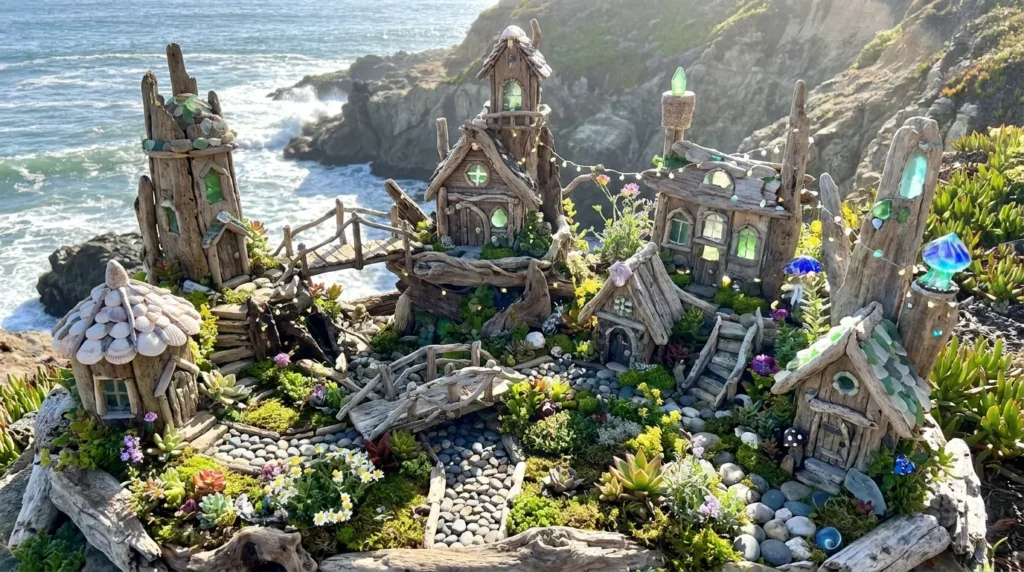
Driftwood offers a naturally weathered appearance that makes fairy houses look as though they have existed for years. The soft gray tones and organic shapes create a relaxed coastal aesthetic while still maintaining a whimsical fairy-tale feel. Each piece of driftwood has unique textures and contours, ensuring that every house feels completely original.
This style is especially appealing for beach-inspired gardens or outdoor spaces that embrace natural materials. The aged appearance of driftwood instantly adds character and helps create a miniature fairy village with plenty of personality.
How To Style It
Arrange small driftwood pieces vertically to create walls and use flatter sections for roofing. Decorate with sea glass, shells, pebbles, and preserved moss to blend woodland and coastal influences. Position the finished house among ornamental grasses or container gardens for a charming display.
9. Flower Petal Cottage
Quick Benefits
- Soft romantic appearance
- Adds natural color
- Great seasonal project
- Creates fairy-tale charm
- Perfect for decorative displays
Why It Works
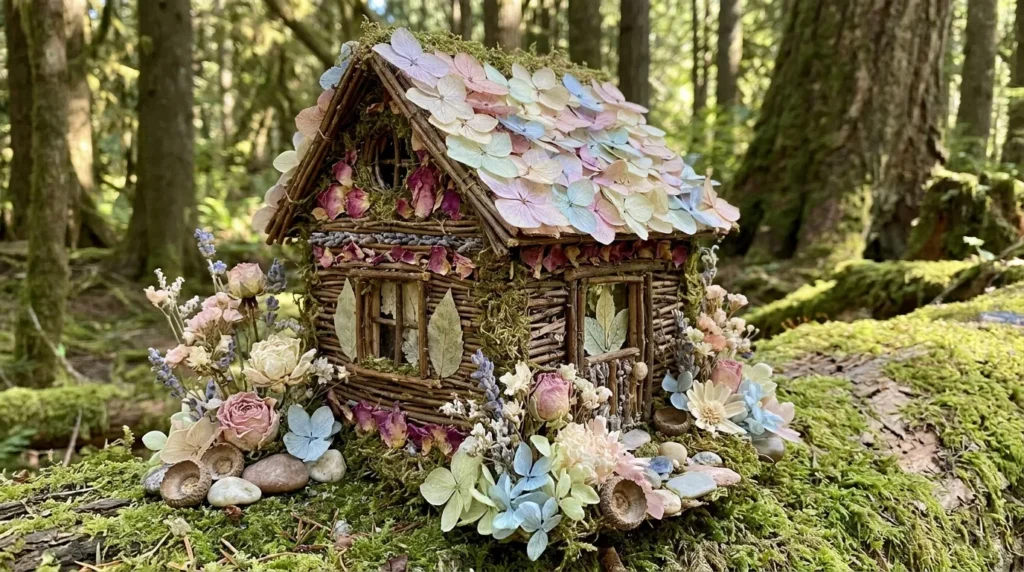
Dried flower petals introduce gentle color and delicate texture into fairy house designs. Unlike painted decorations, natural petals provide organic beauty that feels whimsical and elegant. The soft colors help fairy cottages stand out while still maintaining a connection to nature.
Flower petal cottages work particularly well during spring and summer when gardens are full of blooms. They bring a lighter, more decorative feel to fairy villages and pair beautifully with moss, bark, and twig structures.
How To Style It
Create a small cottage using twigs and bark, then decorate portions of the roof with dried flower petals. Pressed flowers can also be used around windows and doors for added charm. Surround the cottage with miniature garden paths and natural greenery to create a magical floral setting.
10. Mini Forest Manor
Quick Benefits
- Creates a dramatic focal point
- Encourages creative design
- Perfect for larger displays
- Uses multiple natural materials
- Looks professionally crafted
Why It Works
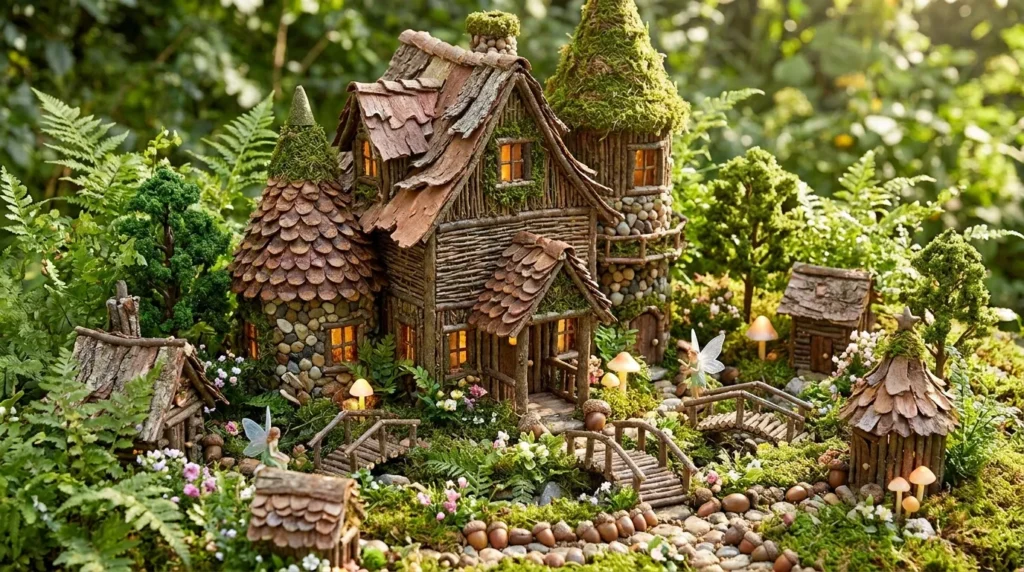
A Mini Forest Manor combines many natural materials into one elaborate fairy house design. Twigs, bark, pebbles, moss, pinecones, acorns, and seed pods all contribute to a layered structure that feels like a true woodland mansion. This approach allows for endless creativity and results in a fairy house that becomes the centerpiece of an entire fairy village.
One simple trick I always suggest is combining multiple textures rather than relying on a single material. The contrast between bark, stone, moss, and wood adds richness and makes the house appear far more detailed and realistic.
How To Style It
Start with a sturdy base and construct several small sections to create the appearance of multiple rooms. Use bark roofs, pebble chimneys, twig walls, and moss landscaping throughout the design. Add miniature pathways, tiny bridges, and decorative accents to create an enchanted woodland estate that feels straight out of a fairy tale.
Frequently Asked Questions
What are the best natural materials for fairy houses?
Twigs, bark, pinecones, moss, pebbles, acorns, seed pods, driftwood, dried flowers, and leaves are among the most popular natural materials. They are easy to find, inexpensive, and create authentic fairy-tale charm.
How do I make a fairy house weather-resistant?
Using waterproof craft glue, preserving natural materials, and placing the fairy house in a partially protected area can help extend its lifespan. Some crafters also apply a clear outdoor sealant for added protection.
Can children help build fairy houses?
Yes. Fairy house projects are excellent family activities because children can help gather materials, design layouts, and decorate the structures. Adult supervision is recommended when using cutting tools or strong adhesives.
Where should I place a fairy house in my garden?
Fairy houses look best beneath trees, near flower beds, along garden paths, or in container gardens. Areas with natural shade often enhance the magical woodland appearance.
Do fairy houses attract wildlife?
While fairy houses do not directly attract wildlife, natural materials can blend into habitats where birds, insects, and small creatures already live. Avoid using food-based decorations if you want to minimize animal activity.
How can I create an entire fairy village?
Build several houses using different materials and connect them with pebble pathways, miniature bridges, moss gardens, and small decorative features. Varying house sizes and styles helps create a realistic village appearance.
Conclusion
Fairy houses made from natural materials offer a wonderful combination of creativity, outdoor exploration, and DIY charm. From simple twig cottages and moss-covered retreats to elaborate forest manors, these projects transform everyday natural elements into enchanting miniature worlds. They encourage imagination while creating beautiful garden features that blend seamlessly with the surrounding landscape.
One of the most appealing aspects of these projects is their accessibility. Many of the materials can be collected during a walk through the backyard, local park, or nature trail. This makes fairy house crafting both affordable and environmentally friendly while allowing each creation to feel unique and personal.
Whether you’re building a single cottage or an entire fairy village, start with materials that inspire you and let nature guide the design. Small details such as pebble pathways, acorn doors, moss roofs, and flower accents can turn simple structures into magical works of art. Before long, you’ll have a charming fairy garden that delights visitors and adds storybook character to your outdoor space.
Related Articles
- 10 Garden Craft Ideas Using Natural Materials
- 10 DIY Fairy Garden Ideas For Small Spaces
- 10 Creative Pinecone Crafts For Outdoor Decor
- 10 Enchanted Garden Decor Ideas
- 10 Easy Nature Crafts For Kids And Adults