10 Yard Modern Design Ideas
A well-designed yard can change the way a home feels before anyone even walks through the front door. For many USA homeowners, the outdoor space is no longer treated as leftover land behind the house. It has become a second living area, a place for slow mornings, family dinners, weekend hosting, quiet reading, fire pit nights, and everyday comfort. The challenge is creating a yard that feels stylish and practical without turning it into a space that demands constant maintenance.
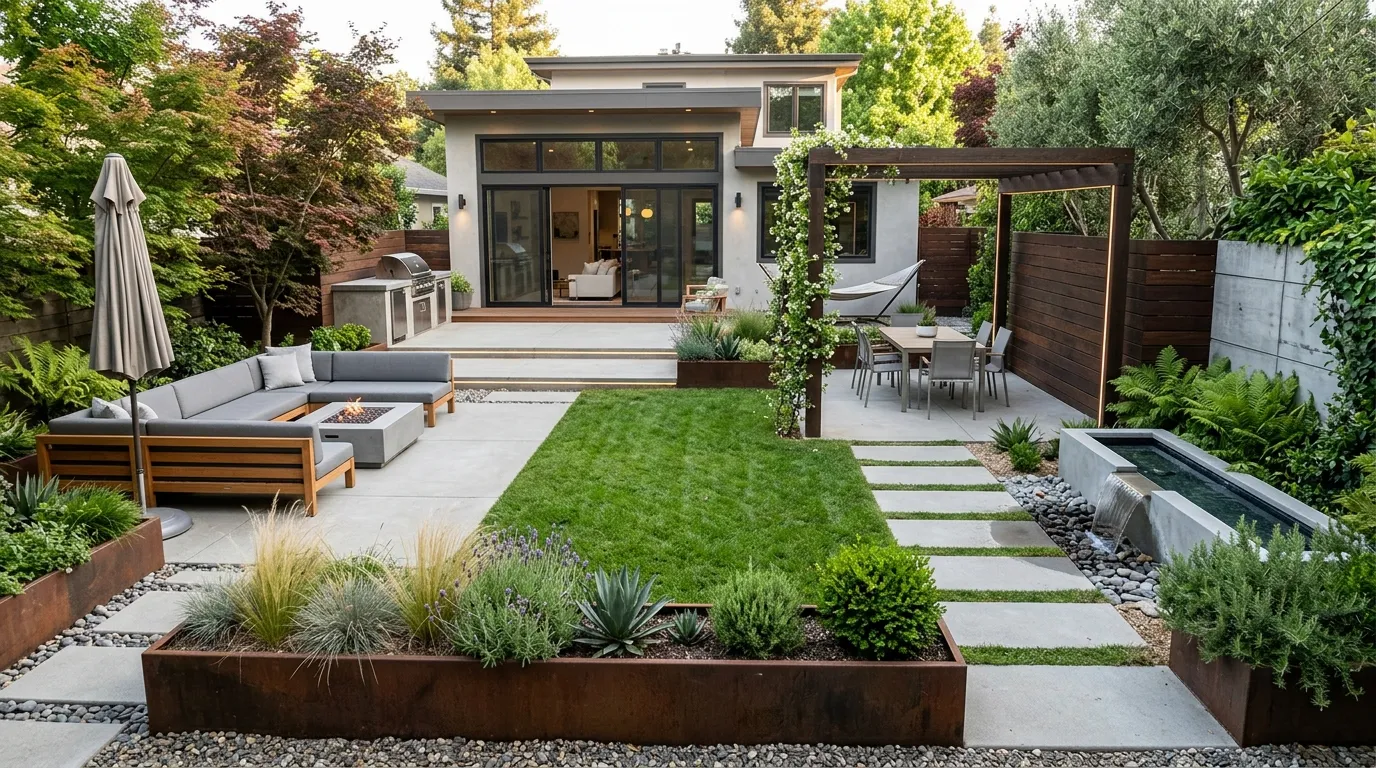
Modern yard design works best when clean lines, useful zones, durable materials, and natural textures come together with purpose. Instead of filling the space with random plants or bulky furniture, the goal is to build a layout that feels calm, open, and easy to use. Think wide concrete pavers, warm wood accents, gravel borders, raised planters, outdoor lighting, soft seating, trimmed greenery, and simple pathways that guide the eye naturally.
The ideas below are designed for real American homes, whether you have a compact suburban backyard, a narrow side yard, a front yard that needs curb appeal, or a larger outdoor area waiting for structure. Each section includes practical styling guidance, material suggestions, layout logic, and visual details that make the space more Pinterest-worthy while still being livable. With the right planning, your yard can feel polished, welcoming, and beautifully connected to your home.
1. Concrete Lounge
- Creates a clean and durable outdoor seating base
- Works well with sectionals, chairs, and low tables
- Gives the yard a structured modern foundation
- Pairs beautifully with grass, gravel, and planters
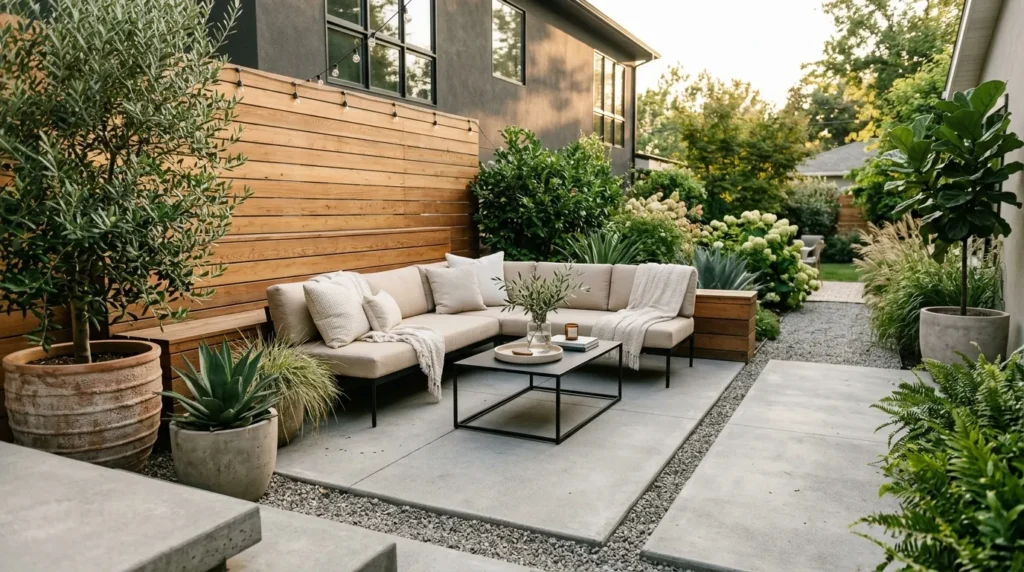
A concrete lounge area instantly gives the yard a more intentional and finished look. The clean surface creates a stable foundation for outdoor furniture while keeping the layout simple and low-maintenance. Instead of using plain poured concrete without design, choose large slabs, smooth finishes, or separated concrete pads with gravel or grass joints. In my experience, this style works best when the concrete is softened with warm cushions, wood accents, oversized planters, and textured outdoor pillows that keep the space from feeling too cold.
This idea is especially useful for homeowners who want a practical place to relax without building a full deck. A concrete lounge can handle heavy furniture, changing weather, and frequent foot traffic better than many softer surfaces. Use a neutral outdoor sectional, a black metal coffee table, and a few sculptural planters to create balance. Add string lights or low pathway lighting for evening comfort. The result feels clean, grounded, and easy to enjoy for casual hosting or quiet nights outside.
2. Gravel Garden
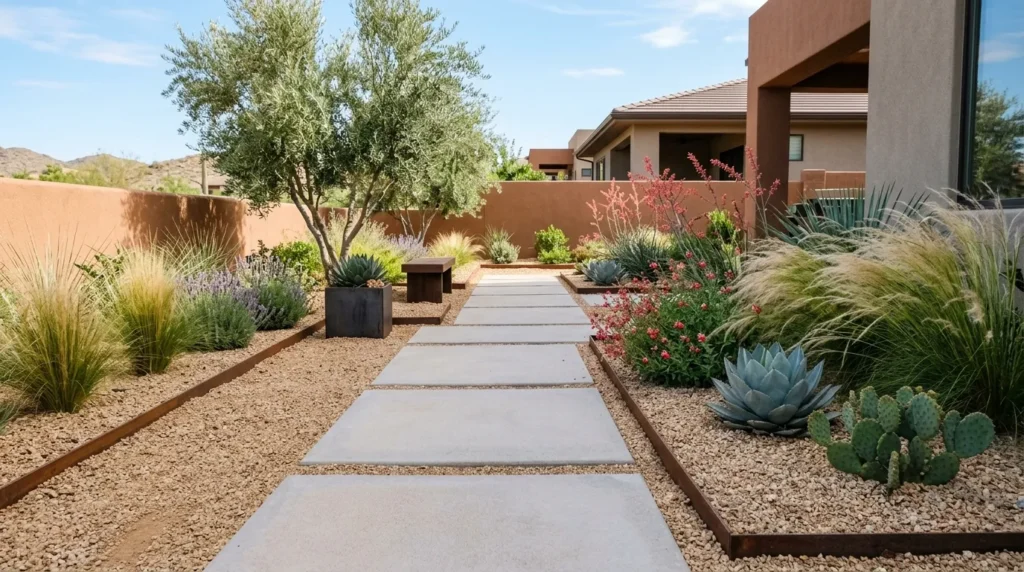
- Adds texture without heavy maintenance
- Works well in dry and sunny regions
- Creates a clean base for plants and pathways
- Helps define modern outdoor zones naturally
A gravel garden brings a calm, architectural look to the yard without requiring constant watering or mowing. The texture works beautifully beside concrete paths, raised beds, steel edging, and drought-tolerant plants. Pea gravel, crushed granite, river rock, or limestone chips can all create different moods depending on the color and size. That’s why many designers recommend gravel for homeowners who want a stylish outdoor space that feels natural but does not need the upkeep of a traditional lawn.
The transformation is practical because gravel can turn awkward corners, side yards, or bare patches into polished design features. It improves drainage, reduces mud, and gives outdoor furniture or stepping stones a clean visual frame. Pair it with ornamental grasses, agave, lavender, boxwood, or native plants suited to your climate. Use metal or stone edging to keep the gravel contained and tidy. When done well, the space feels modern, relaxed, and especially beautiful in warm afternoon light.
3. Raised Planters
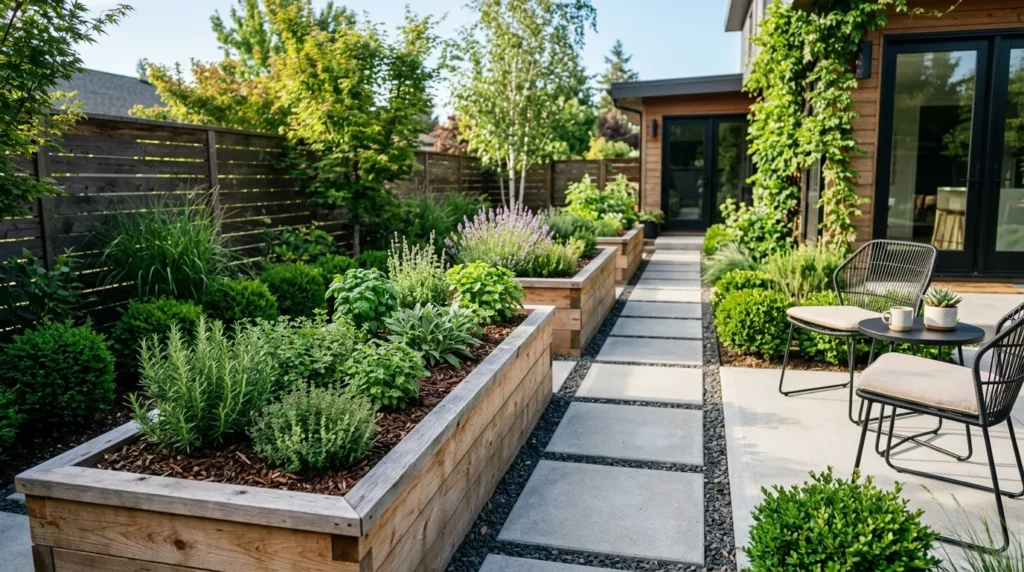
- Adds height and structure to flat yards
- Makes planting easier to manage and organize
- Works with vegetables, herbs, shrubs, or flowers
- Creates strong lines around patios and walkways
Raised planters are one of the easiest ways to make a yard feel designed instead of unfinished. They add height, shape, and order, especially in spaces where the ground feels flat or empty. Wood, metal, concrete, and composite planter boxes all work well depending on the style of the home. I’ve noticed that long rectangular planters look especially polished because they create clean boundaries around patios, seating areas, and pathways without feeling bulky or overly decorative.
This idea also makes the yard more functional because planting becomes easier to control. You can grow herbs near an outdoor kitchen, flowers near a lounge area, or privacy shrubs along a fence line. Raised beds also help with soil quality and drainage, which is useful in many USA climates. Keep the materials consistent with the rest of the yard for a cohesive look. Add drip irrigation if possible, then finish with mulch or decorative stone for a neat, professional appearance.
4. Stepping Path
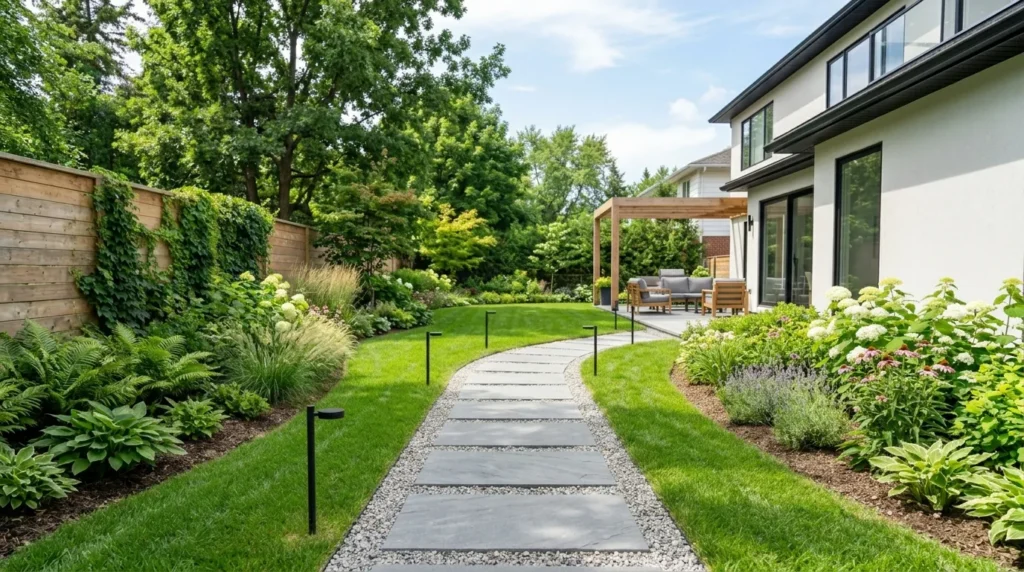
- Guides movement through the outdoor space
- Connects patios, gardens, gates, and seating zones
- Adds visual rhythm without heavy construction
- Works with grass, gravel, mulch, or ground cover
A stepping path gives the yard a natural sense of movement while keeping the design simple. Large pavers placed through grass, gravel, or mulch create a clean walkway that feels modern but not overly formal. The best paths usually have consistent spacing, generous stone size, and a clear destination. Concrete, bluestone, slate, limestone, and porcelain pavers are all strong options. In my experience, oversized stepping stones make the space feel more high-end than small scattered pieces.
The practical benefit is that a path prevents worn trails through the lawn while helping guests understand how to move through the yard. It can lead from the back door to a fire pit, from a patio to a garden gate, or from a driveway to the front entry. Keep the path wide enough for comfortable walking and level enough to avoid tripping. Add low lights along one side for nighttime use. The finished look feels organized, welcoming, and easy to maintain.
5. Fire Pit Zone
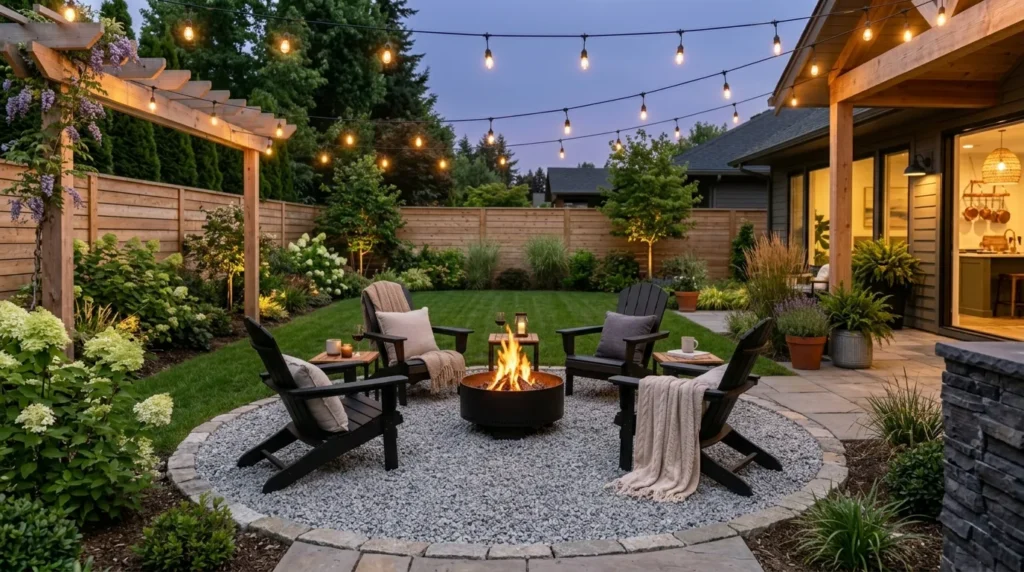
- Creates a natural gathering place
- Works for cool evenings and weekend hosting
- Adds warmth, light, and visual focus
- Pairs well with gravel, pavers, or concrete pads
A fire pit zone gives the yard a purpose that people immediately understand. It creates a central gathering spot where family and friends can sit, talk, relax, and enjoy the outdoors beyond daylight hours. The key is placing the fire feature on a safe, nonflammable surface such as gravel, stone, concrete, or pavers. I’ve seen this work well in many homes because the fire pit becomes both a design focal point and a practical reason to use the yard more often.
This layout can be casual or polished depending on the materials you choose. Adirondack chairs create a relaxed American backyard feel, while low concrete benches or black metal chairs make the space more contemporary. Keep enough clearance around the fire pit and avoid placing it too close to fences, plants, or overhanging branches. Add outdoor pillows, side tables, and warm lighting for comfort. The result feels cozy, useful, and visually strong, especially during fall evenings and summer gatherings.
6. Outdoor Dining
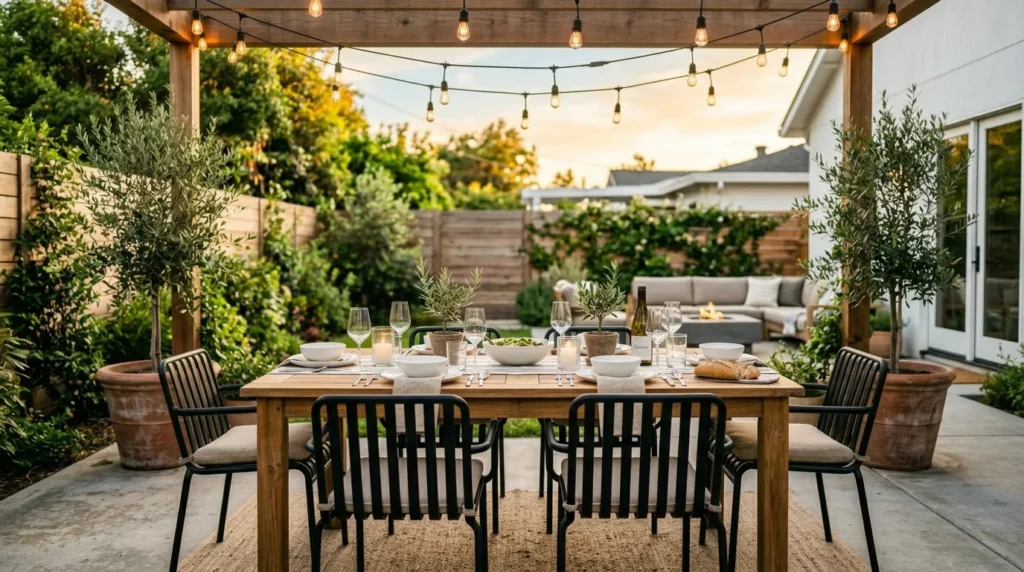
- Turns the yard into a true entertaining area
- Works for family meals, grilling, and weekend brunch
- Looks best with stable flooring and layered lighting
- Can fit both small patios and larger backyards
An outdoor dining area makes the yard feel more like an extension of the home. Instead of placing a table randomly on the lawn, create a defined dining zone with pavers, decking, gravel, or concrete underneath. This keeps chairs stable and makes the setup feel intentional. Choose weather-resistant materials such as teak, aluminum, powder-coated steel, or resin wicker. In my experience, dining spaces feel most inviting when they include shade, lighting, and enough room for people to move comfortably.
The transformation is noticeable because meals outside suddenly feel easier and more enjoyable. A simple table can become the center of summer dinners, birthday gatherings, coffee mornings, and casual weeknight grilling. Add string lights overhead, lanterns on the table, and planters around the edges for softness. If the yard is small, use a round table or foldable chairs to save space. If the yard is large, anchor the area with an outdoor rug or pergola. The goal is comfort, not clutter.
7. Privacy Screens
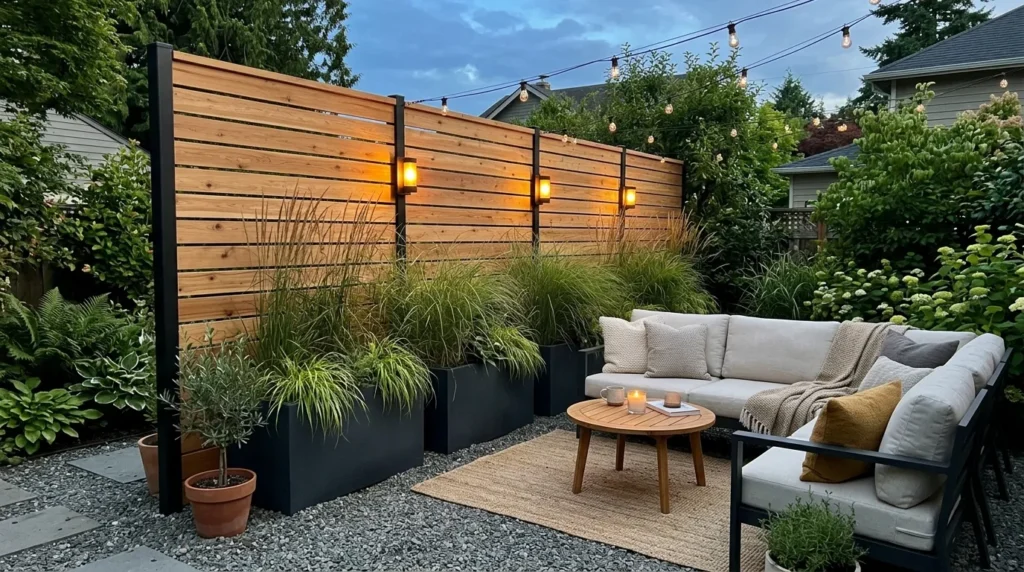
- Makes the yard feel more comfortable and enclosed
- Helps block neighboring views or busy streets
- Works with wood slats, metal panels, or tall planters
- Adds vertical design without taking much ground space
Privacy screens can completely change how comfortable a yard feels. Many American homes sit close to neighbors, sidewalks, or driveways, which can make outdoor relaxing feel exposed. A modern screen solves that problem while adding a strong design element. Horizontal wood slats, black metal panels, composite boards, bamboo screens, and tall planter walls are all practical options. That’s why many designers recommend privacy features early in the planning process instead of treating them as an afterthought.
The right screen does more than block a view. It creates a backdrop for seating, dining, plants, and lighting. Place screens behind a sofa, around a hot tub, beside a patio, or along one side of a narrow yard. Keep the height appropriate for local rules and avoid making the space feel boxed in. Climbing plants, tall grasses, and soft lighting can make the screen feel warmer. The finished yard feels more personal, calm, and comfortable for everyday use.
8. Water Feature
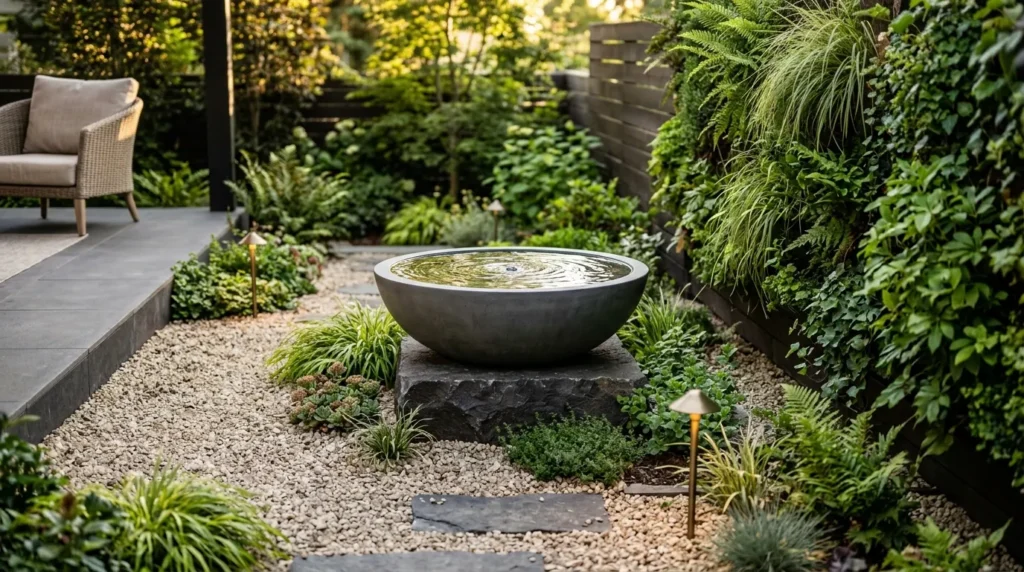
- Adds sound, movement, and calm atmosphere
- Works in small yards, patios, and garden corners
- Creates a strong focal point without taking much space
- Pairs well with stone, concrete, plants, and lighting
A water feature brings a peaceful feeling to the yard that furniture alone cannot create. The sound of moving water softens traffic noise, neighborhood activity, and the general busyness of outdoor life. Modern options include wall fountains, bubbling stone features, narrow reflecting pools, and compact bowl fountains. I’ve noticed that simple shapes usually look more timeless than overly decorative styles, especially when paired with clean landscaping and neutral materials.
This idea works because it appeals to both sight and sound. A small fountain near a seating area can make morning coffee feel calmer, while a reflecting pool beside a pathway adds quiet elegance. Choose a size that fits the yard rather than overpowering it. Use smooth stone, concrete, ceramic, or dark metal for a modern finish. Add low plants and subtle lighting around the base to complete the scene. With proper placement and maintenance, the feature feels soothing, polished, and memorable.
9. Modern Lighting
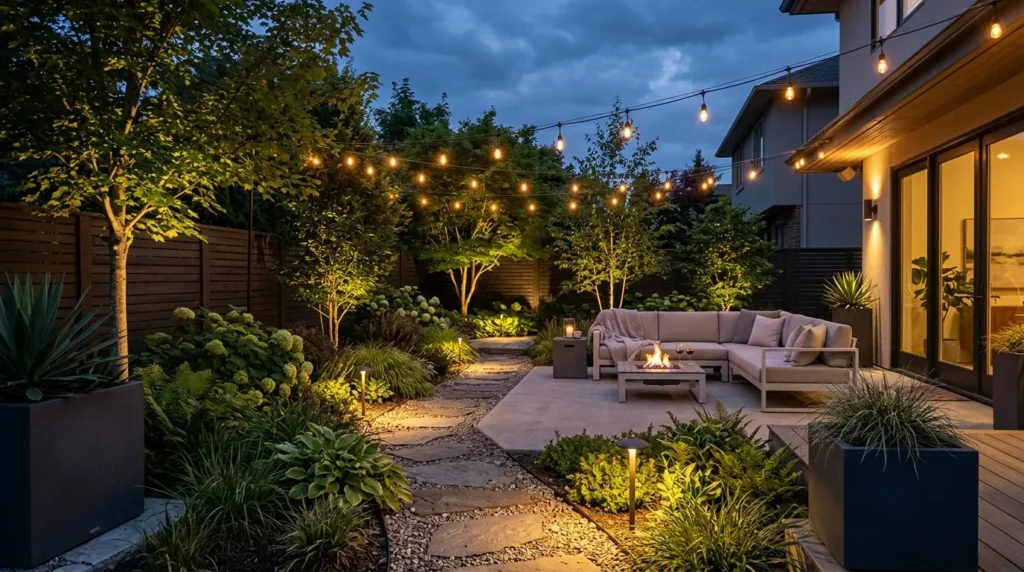
- Extends yard use after sunset
- Highlights pathways, plants, seating, and architecture
- Adds warmth and safety without visual clutter
- Works with solar, low-voltage, and LED options
Modern lighting is one of the most powerful upgrades for any outdoor space. A yard can look beautiful during the day but feel flat or unusable at night without proper lighting. Use a mix of pathway lights, wall sconces, step lights, string lights, and uplighting to create depth. The goal is not to flood the yard with brightness. Instead, layer soft light where people walk, sit, cook, and gather so the space feels safe and inviting.
The effect is immediate because lighting makes textures, plants, and architectural lines stand out after dark. Place warm lights near seating areas, subtle uplights behind trees, and low fixtures along paths or steps. Solar lights are easy to add, but low-voltage systems usually look more refined and reliable. Choose warm white bulbs for a cozy mood and avoid harsh blue tones. When planned thoughtfully, lighting turns the yard into an evening retreat that feels comfortable, polished, and ready for hosting.
10. Minimal Lawn
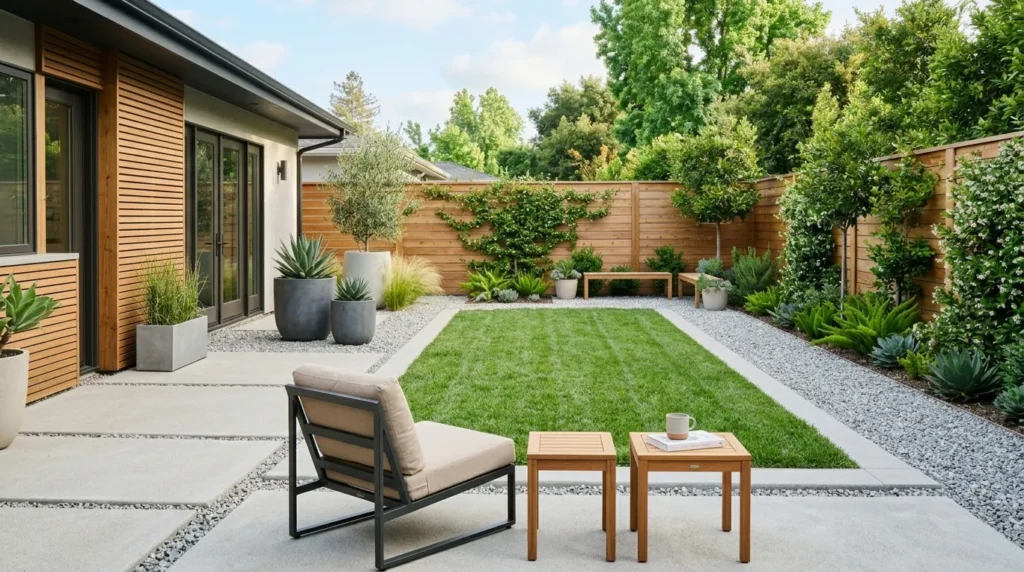
- Keeps the yard open, clean, and easy to maintain
- Works well with patios, planters, and modern borders
- Reduces visual clutter in smaller outdoor spaces
- Creates a calm green area for kids, pets, or lounging
A minimal lawn works beautifully when the grass is treated as one clean design element instead of filling every unused space. The idea is to keep a simple rectangle, square, or curved patch of lawn surrounded by pavers, gravel, planting beds, or edging. This gives the yard a crisp shape while still preserving softness. A Yard Modern layout often benefits from less lawn, not more, because controlled greenery looks cleaner and feels easier to maintain.
The practical advantage is that the yard becomes more balanced. You still have soft green space for pets, kids, lounging, or visual relief, but you are not maintaining a huge lawn that overwhelms the design. Use metal edging, concrete borders, or planting beds to define the grass clearly. Keep the lawn healthy with proper irrigation, mowing, and soil care, or use high-quality turf where real grass struggles. The finished result feels calm, open, and thoughtfully arranged for everyday living.