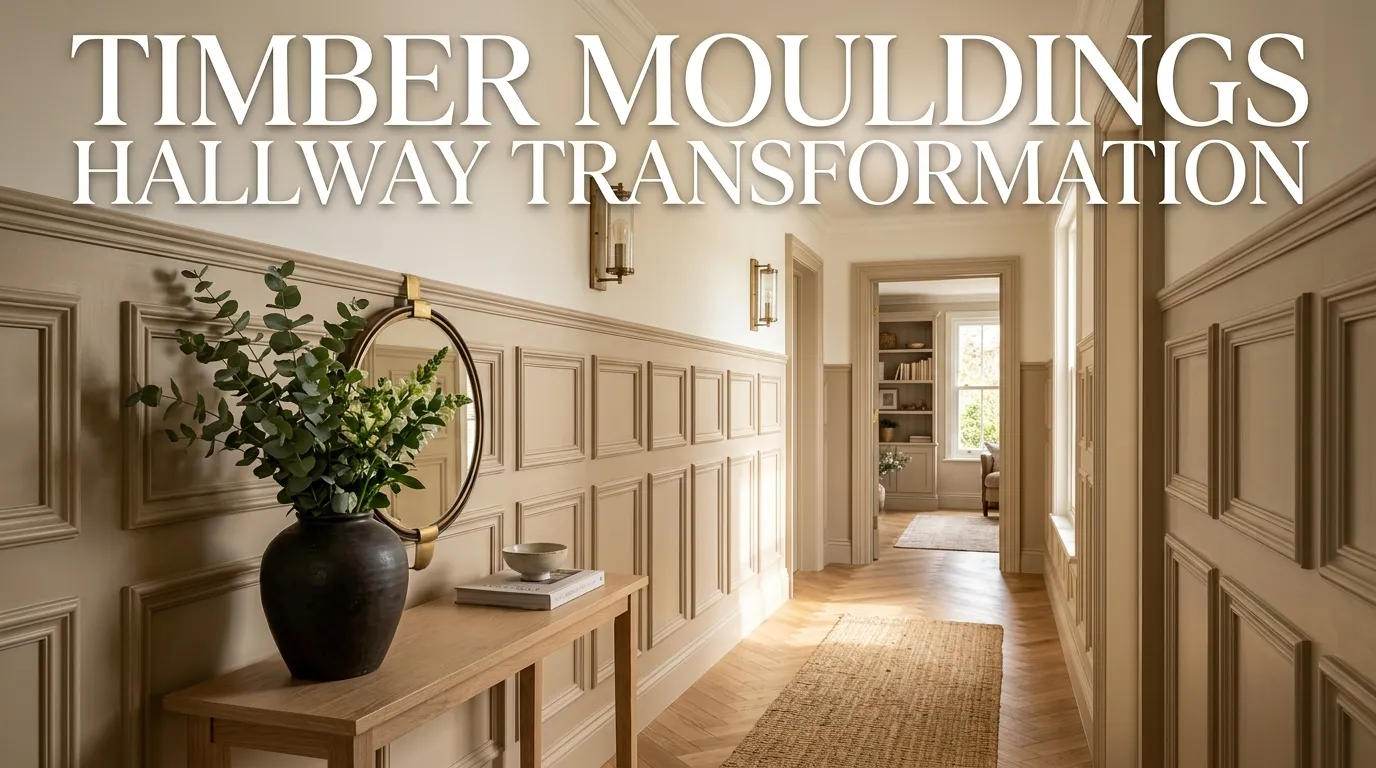
Timber Mouldings hallway transformation
A hallway can easily become one of the most overlooked spaces in a home, even though it is used every single day. It connects rooms, welcomes guests, frames doorways, and sets the tone before anyone reaches the living room, kitchen, bedrooms, or stairs. When the walls are plain, the lighting feels flat, or the space lacks detail, the hallway can feel unfinished. But with thoughtful wood trim, wall panels, paint, lighting, and styling, even a narrow passage can become one of the most character-filled areas in the house.
For USA homeowners, a hallway transformation is often about adding charm without taking away walking space. That is where Timber Mouldings can make a major difference. They add architectural detail, depth, shadow, and structure to walls that might otherwise feel blank. Whether the home is modern farmhouse, traditional, transitional, cottage-inspired, coastal, or classic, moulding can help the hallway feel more custom and connected to the rest of the interior.
This guide shares 11 practical and Pinterest-friendly hallway transformation ideas using wood trim details, paint choices, lighting, and finishing touches. Each idea is designed to feel achievable, visually inspiring, and useful for real homes.
1. Picture Frame
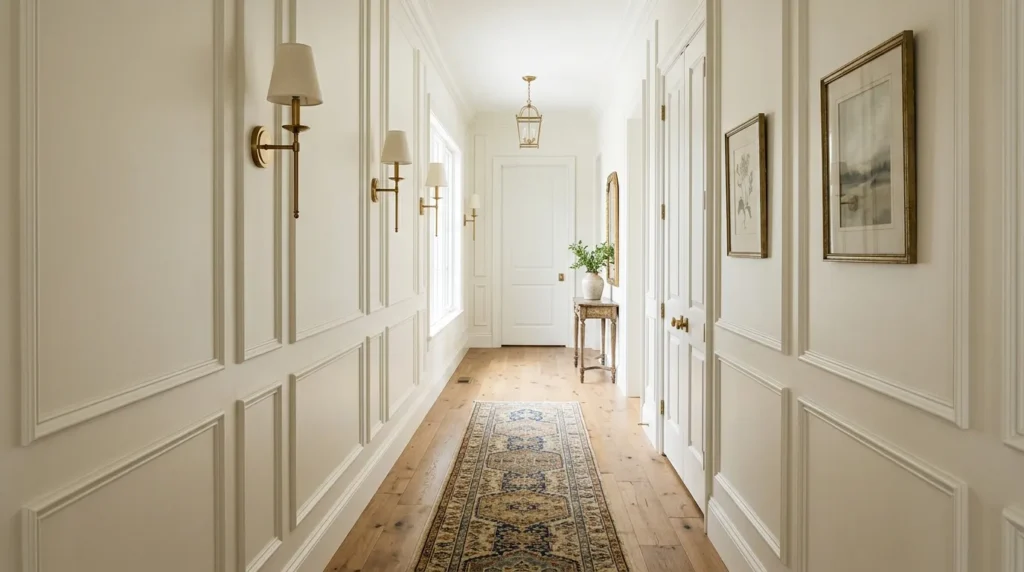
- Adds classic wall detail without crowding the hallway
- Works beautifully in long narrow corridors
- Creates a refined custom-home effect
- Pairs well with neutral paint and warm lighting
- Best with thin trim, level spacing, caulk, and satin paint
Picture frame moulding can turn plain hallway walls into a refined architectural feature almost instantly. This idea works because it adds repeated rectangular shapes that give the wall rhythm, depth, and structure. A narrow hallway often lacks room for furniture, so wall detail becomes the main design opportunity. In my experience, this style looks best when the panels are evenly spaced and aligned with door frames, baseboards, and nearby openings so the whole hallway feels intentional.
For a practical remodel, measure the wall carefully before cutting trim, then plan panel sizes that fit around outlets, switches, and doorways. Lightweight wood or MDF trim can work well depending on budget and finish. After installation, caulk the seams and paint the wall and trim the same color for a seamless built-in look. Warm white, soft greige, mushroom, and muted taupe all feel timeless. The result is elegant, polished, and perfect for adding character without reducing walking space.
2. Board Batten
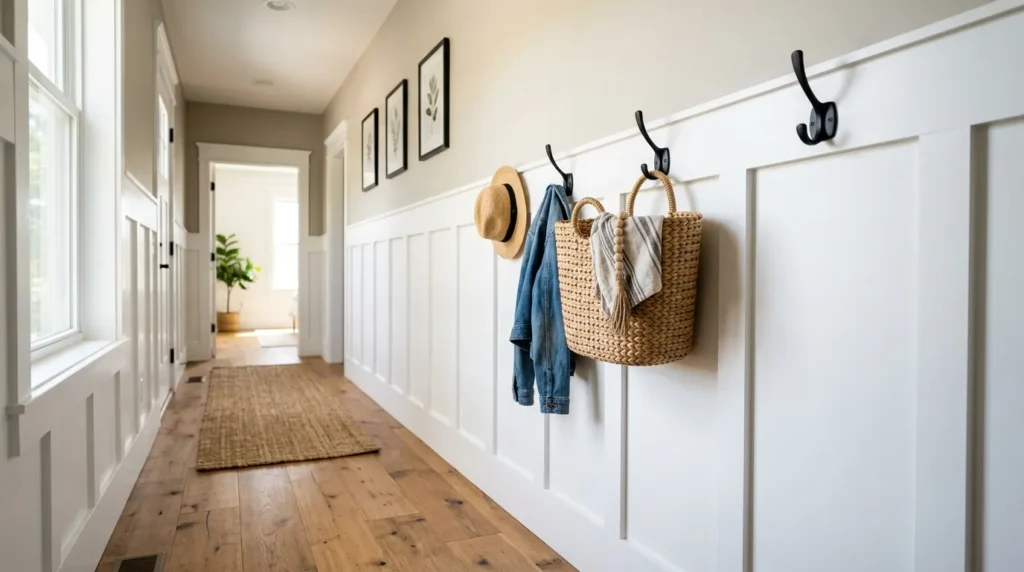
- Creates clean vertical lines and subtle texture
- Helps make low ceilings feel taller
- Works with farmhouse, coastal, and modern styles
- Protects lower walls from scuffs in busy homes
- Best with battens, backing boards, nails, caulk, and durable paint
Board and batten gives a hallway structure, height, and a fresh remodeled feeling. This idea works because vertical battens guide the eye upward, which can make a narrow or low-ceiling hallway feel taller. It also adds practical protection to the lower wall, especially in homes with kids, pets, backpacks, shoes, and daily traffic. That is why many designers recommend this treatment for entry corridors, stair hallways, and bedroom hallways that need both style and durability.
To make it work, decide whether the battens will cover the lower half, two-thirds, or full wall height. Lower-height board and batten feels classic and balanced, while full-height battens feel more dramatic and modern. Keep spacing consistent, and use paintable caulk to smooth the edges before painting. A satin or semi-gloss finish helps with cleaning scuffs. This upgrade pairs beautifully with brass sconces, oak floors, black hooks, and vintage runners, creating a hallway that feels warm, practical, and thoughtfully designed.
3. Chair Rail
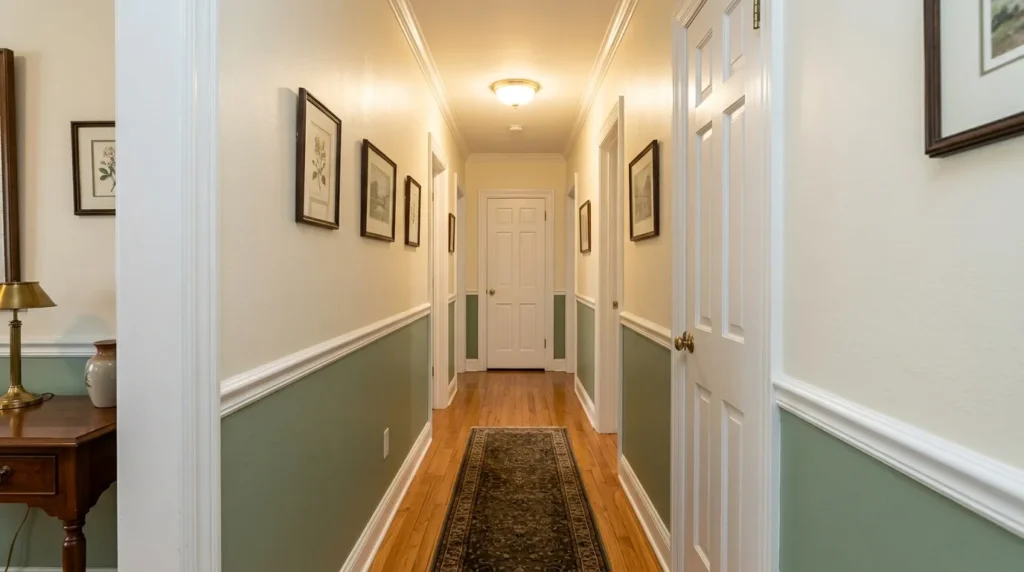
- Adds a horizontal break to plain hallway walls
- Works well with two-tone paint schemes
- Gives older homes a classic refreshed look
- Helps protect walls from bumps and marks
- Best with solid trim, wall paint, level lines, and caulk
A chair rail can make a hallway feel more finished while keeping the design simple and affordable. This idea works because the horizontal line divides the wall into two intentional zones. In a narrow hallway, that visual break can add polish without making the space feel busy. It is especially useful if you want to use color on the lower wall while keeping the upper section light and bright. I’ve noticed this approach works beautifully in traditional and transitional homes.
For the cleanest result, place the chair rail at a height that relates well to nearby doors, switches, and baseboards. Paint the lower wall a slightly deeper color, such as warm taupe, sage, blue-gray, or greige, and keep the upper wall creamy or white. Use durable paint below the rail because that area sees more scuffs. This project is approachable compared with full wall paneling, but it still changes the hallway dramatically. The final look feels layered, classic, and easy to maintain.
4. Tall Baseboards
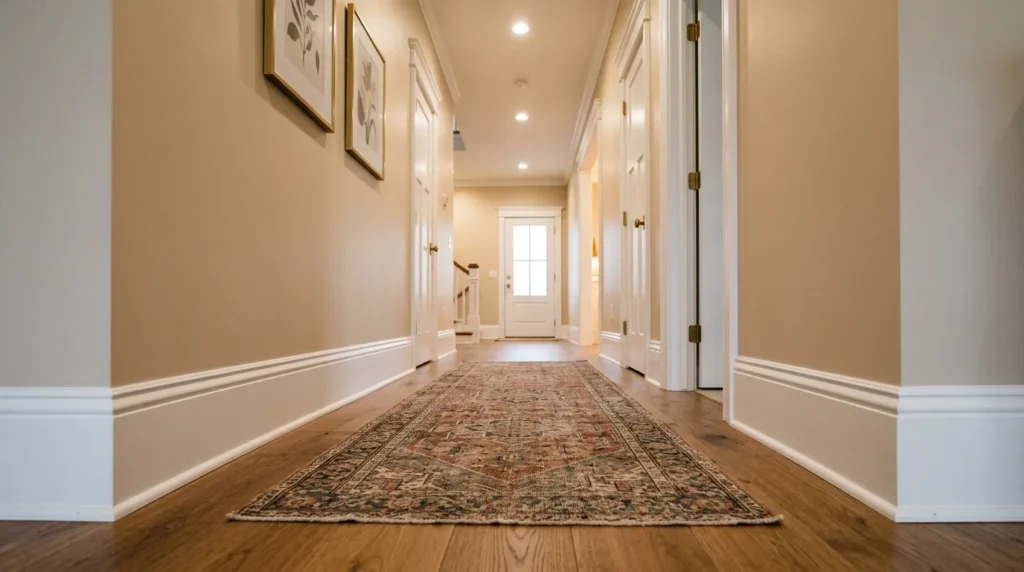
- Makes the hallway feel more custom and substantial
- Adds visual weight to lower walls
- Works with classic, modern, and transitional interiors
- Helps connect trim details throughout the home
- Best with primed wood, shoe moulding, caulk, and satin paint
Tall baseboards can quietly make a hallway look more expensive and thoughtfully finished. This idea works because baseboards frame the bottom of the wall, and when they are too short or plain, the whole space can feel builder-basic. Taller trim gives the hallway stronger proportions and helps the walls feel grounded. This is especially effective in older homes where door casings, crown trim, or stair details already have character but the hallway walls feel underdeveloped.
For a remodel, choose baseboards that match the home’s style instead of selecting the tallest option automatically. Five to seven inches often feels substantial without overwhelming standard-height ceilings. Add shoe moulding if the floor edges need a cleaner transition. Caulk gaps carefully, fill nail holes, and paint with a durable finish so the trim stands up to cleaning. Tall baseboards look especially polished with hardwood floors, vintage runners, and wall sconces. It is a subtle upgrade, but the finished hallway feels noticeably more complete.
5. Wall Panels
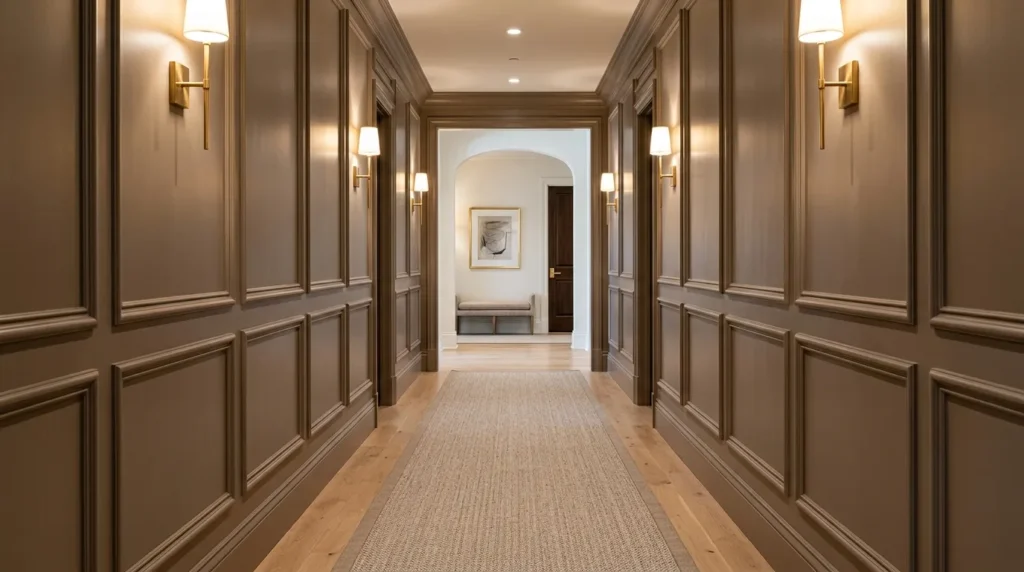
- Creates depth and texture on large blank walls
- Makes narrow hallways feel more designed
- Works with modern, cottage, and classic styles
- Can be painted to match the wall or contrast softly
- Best with MDF panels, wood trim, adhesive, nails, and caulk
Wall panels give a hallway a custom built-in look without needing furniture or bulky decor. This idea works because panels add visual interest directly to the walls, which is ideal when floor space is limited. Depending on the layout, panels can be square, rectangular, vertical, or grid-style. They create shadow and dimension, making the hallway feel less flat. In my experience, the most successful panel designs are simple enough to repeat cleanly along the full length of the corridor.
Before installation, sketch the layout and measure every section, especially around doors and corners. Uneven spacing can make the finished project look rushed, so planning is everything. Use adhesive and finishing nails for security, then caulk seams before painting. Painting the panels and wall the same color creates a refined architectural effect, while contrast colors make the detail bolder. This transformation works beautifully with neutral palettes, soft lighting, and minimal artwork. It gives the hallway a polished, Pinterest-worthy finish.
6. Crown Detail
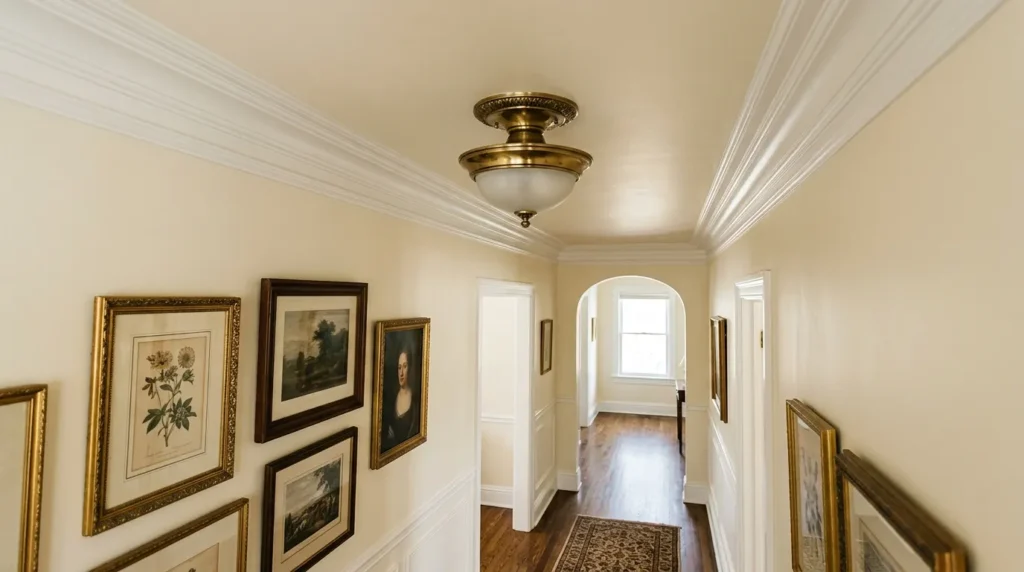
- Draws attention upward and finishes the ceiling line
- Adds elegance to traditional or transitional hallways
- Works well with sconces and classic paint colors
- Helps connect hallways to formal living spaces
- Best with crown moulding, miter cuts, caulk, and careful painting
Crown detail can make a hallway feel more elegant by finishing the line where wall meets ceiling. This idea works because ceilings and walls often feel disconnected in plain hallways. Crown trim creates a soft architectural transition, adding shadow and polish without taking up usable space. It is especially beautiful in homes with formal living rooms, dining rooms, staircases, or older architectural details that need to continue through connecting spaces.
For best results, choose crown moulding that fits the ceiling height. Smaller profiles work better in standard eight-foot hallways, while taller or layered crown can suit higher ceilings. Mitered corners need precision, so this may be a project where careful DIY skills or professional help matter. Paint the crown the same color as other trim for a cohesive look. This detail pairs beautifully with warm white walls, brass lighting, hardwood floors, and traditional artwork. The hallway feels more finished, elevated, and connected to the home’s character.
7. Door Casings
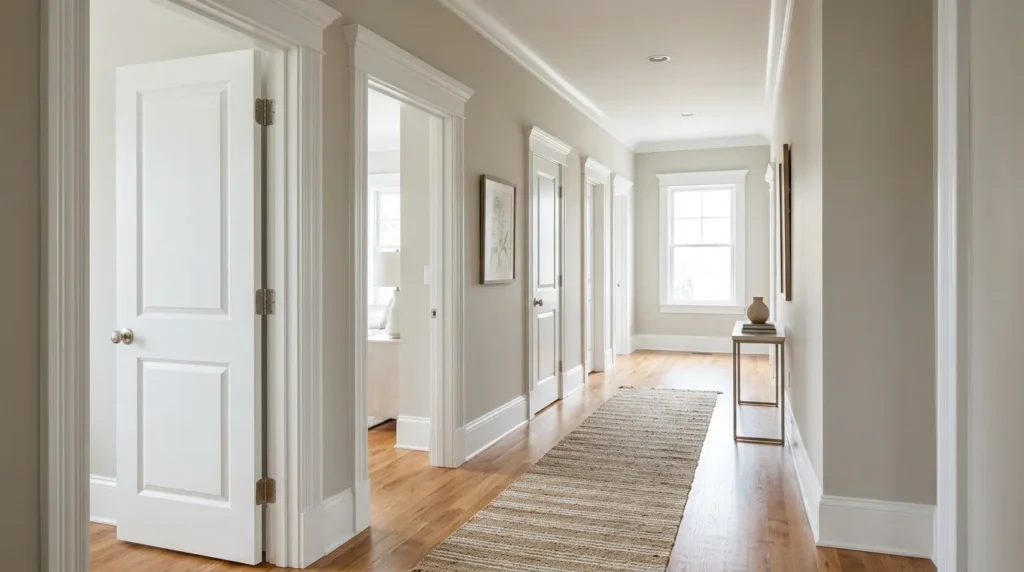
- Makes doorways look more substantial and finished
- Helps hallway openings feel intentional
- Works in older homes and new builds
- Adds character without changing the layout
- Best with matching trim profiles, caulk, nails, and paint
Upgraded door casings can transform a hallway because doors often dominate the view. This idea works especially well in bedroom hallways, bathroom corridors, and entry passages where multiple doors line the walls. Thin builder-grade casing can make the space feel plain, while wider or more detailed casing adds weight and character. Since the hallway naturally frames each doorway, better trim makes the entire area feel more custom.
For a cohesive look, choose casing that coordinates with baseboards, crown trim, and any wall moulding. Simple flat casing feels modern, stepped trim feels traditional, and slightly rounded profiles feel softer. Replace damaged trim, fill gaps, and paint everything consistently so the hallway feels fresh. If the doors themselves are plain, updated casing can still make them look more intentional. This upgrade is practical because it does not reduce space, yet it gives the hallway a stronger architectural presence and a cleaner finished edge.
8. Painted Trim
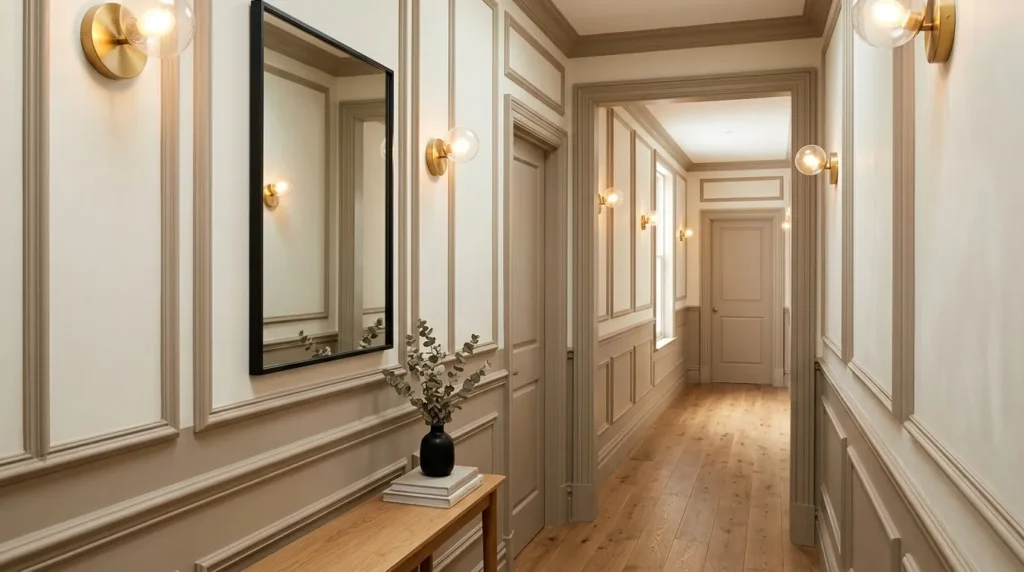
- Adds color and contrast without major construction
- Makes moulding details stand out beautifully
- Works with soft neutrals, moody tones, and classic whites
- Helps connect hallway trim to nearby rooms
- Best with primer, durable paint, angled brushes, and clean prep
Painted trim can completely change the mood of a hallway without replacing the woodwork. This idea works because trim color controls contrast, style, and visual rhythm. White trim feels crisp and classic, black trim feels bold and modern, and warm greige or taupe trim feels soft and designer-inspired. If the hallway already has Timber Mouldings, paint can highlight the details and make them feel more intentional.
Prep is the most important step because trim shows every drip, bump, and rough edge. Clean the surface, sand lightly, fill dents, prime if needed, and use a durable finish that can handle traffic. A two-tone look with darker trim and lighter walls can feel very current, while matching trim and wall color creates a seamless built-in effect. This upgrade is especially helpful when the hallway needs personality but the budget does not allow a full remodel. It feels fresh, polished, and highly customizable.
9. Ceiling Beams
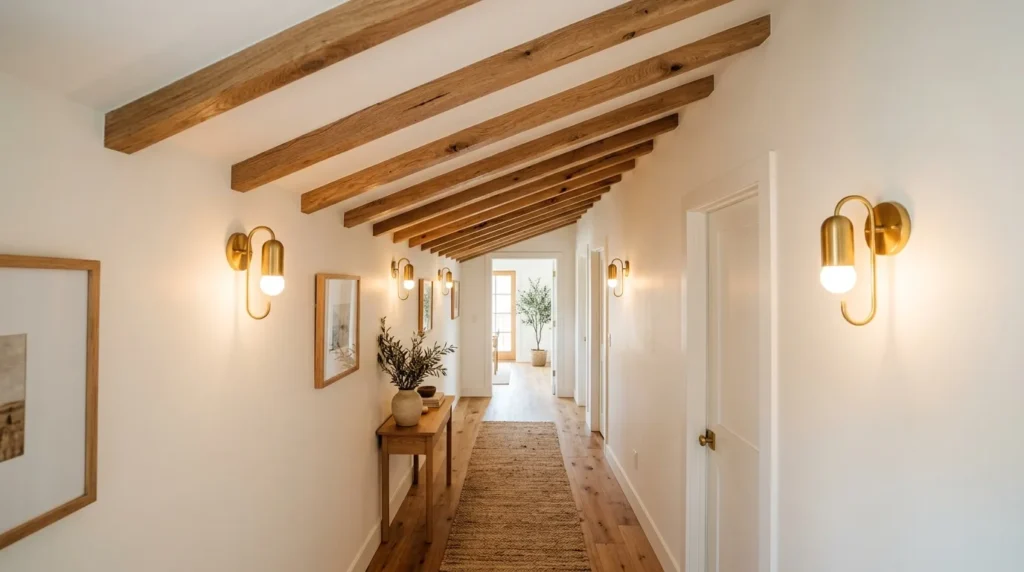
- Adds warmth and architectural interest overhead
- Works best in wider halls or entry corridors
- Creates a rustic, modern organic, or cottage mood
- Helps long hallways feel more intentional
- Best with lightweight beams, stain, anchors, and warm lighting
Ceiling beams can make a hallway feel warm, grounded, and full of character. This idea works by drawing attention upward and adding texture where the ceiling might otherwise feel plain. It is especially effective in entry hallways, transitional spaces, or wider corridors where wall treatments alone may not be enough. Wood beams add a natural material that pairs beautifully with white walls, stone floors, oak furniture, and warm lighting.
For practical installation, scale matters. Heavy oversized beams can make a narrow hallway feel crowded, so lightweight faux beams or slim stained wood details may be better. Choose a stain that relates to nearby flooring or furniture so the beams feel connected rather than random. Add simple ceiling lights or sconces to avoid dark shadows. This idea is more dramatic than basic trim, but when used carefully, it gives the hallway a custom, high-end feeling that feels cozy rather than overly formal.
10. Stair Trim
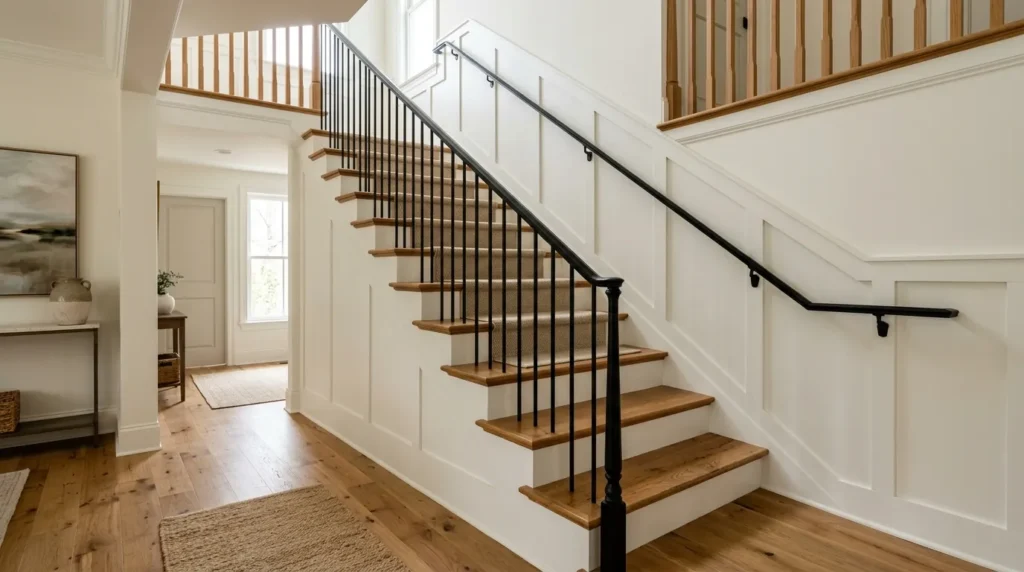
- Creates a polished transition near stairways
- Adds structure to angled hallway walls
- Works with wainscoting, battens, and picture moulding
- Helps connect upstairs and downstairs spaces
- Best with precise measurements, trim boards, caulk, and paint
Stair trim can make the hallway feel more connected when the space meets a staircase. This idea works because stair walls often have large angled sections that look unfinished without detail. Adding trim along the stair line, lower wall, or landing creates a cleaner architectural transition. It also helps connect the hallway design with the stairs, making both areas feel like part of one intentional remodel instead of separate spaces.
For a successful design, follow the angle of the staircase carefully and keep trim lines aligned with railings, baseboards, and landings. Board and batten, picture frame moulding, or simple wainscoting can all work depending on the home’s style. Use durable paint because stair areas see handprints, scuffs, and daily traffic. This project requires patience, but the payoff is strong. The finished space feels more elegant, structured, and cohesive from the lower hallway to the upper landing.
11. Natural Finish
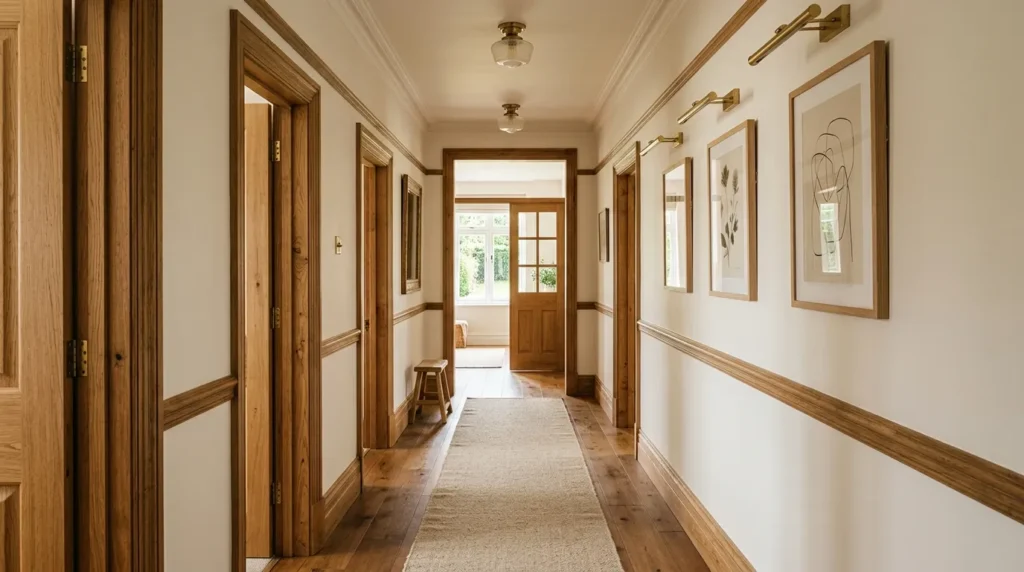
- Shows wood grain for warmth and texture
- Works with organic modern, rustic, and traditional interiors
- Adds contrast against painted walls
- Makes hallway details feel handcrafted
- Best with quality wood, stain, clear coat, and careful sanding
A natural wood finish brings warmth and authenticity to hallway trim details. This idea works because visible grain adds texture that painted trim cannot fully replicate. In homes with hardwood floors, wood doors, or warm furniture, natural moulding can help the hallway feel connected and grounded. It also creates a handcrafted look that feels especially beautiful in organic modern, cottage, rustic, or traditional interiors.
For best results, use quality wood and test stain samples before committing. Hallway lighting can change the way stain appears, so check samples in morning and evening light. Sand carefully, apply stain evenly, and finish with a protective clear coat so the wood can handle everyday traffic. Pair natural trim with warm white walls, soft runners, brass sconces, and simple artwork. This approach feels timeless and tactile, giving the hallway a rich, welcoming character without needing heavy decoration.