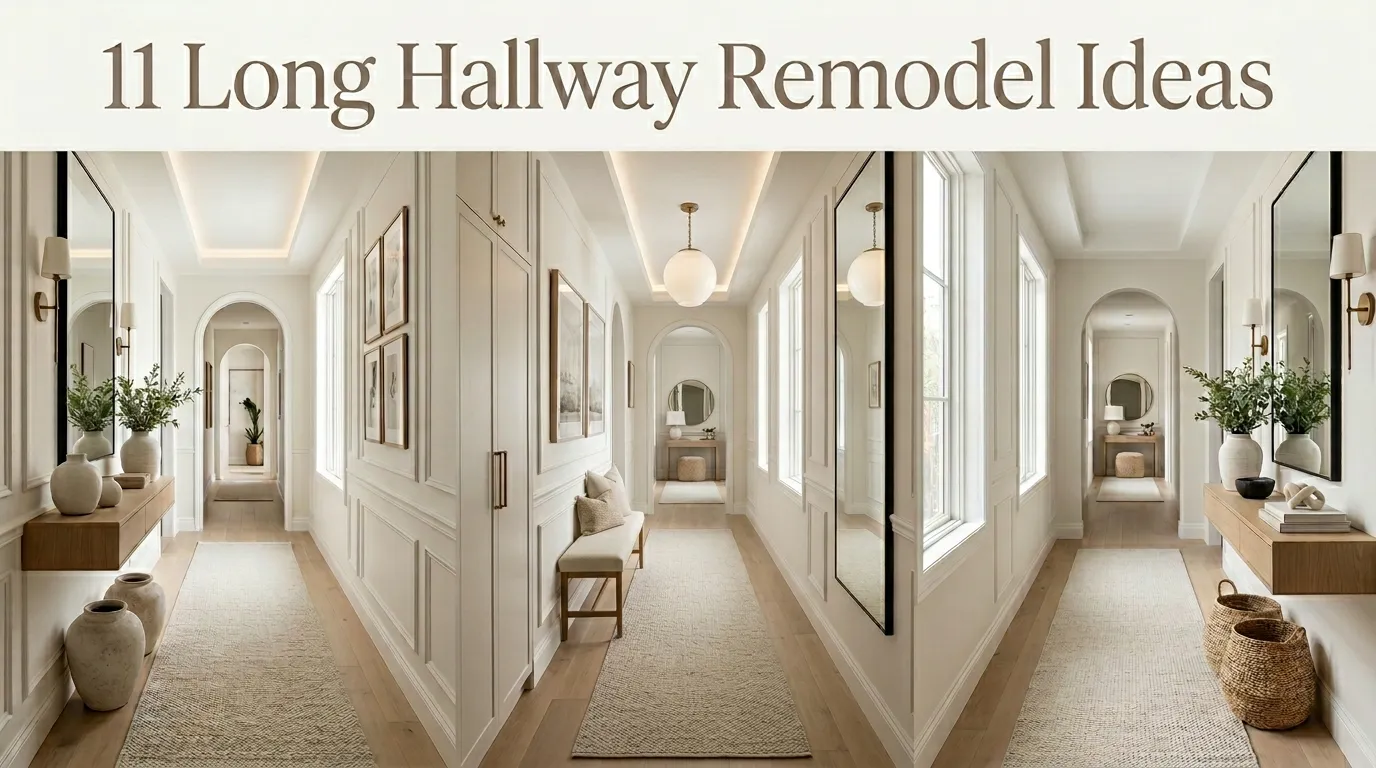
11 Long Hallway Remodel Ideas
A long hallway can feel awkward when it is left empty, but with the right remodel ideas, it can become one of the most stylish spaces in your home. Many USA homes have extended hallways that connect bedrooms, bathrooms, entryways, or living areas, yet these spaces often feel plain, dark, or unfinished.
The goal is to add warmth, flow, storage, texture, and light without making the walkway feel crowded. These ideas are practical, beautiful, and Pinterest-friendly, helping your hallway feel more intentional, welcoming, and connected to the rest of your home.
1. Runner Rug
- Adds warmth underfoot
- Breaks up empty floor space
- Reduces hallway echo
- Adds color and texture
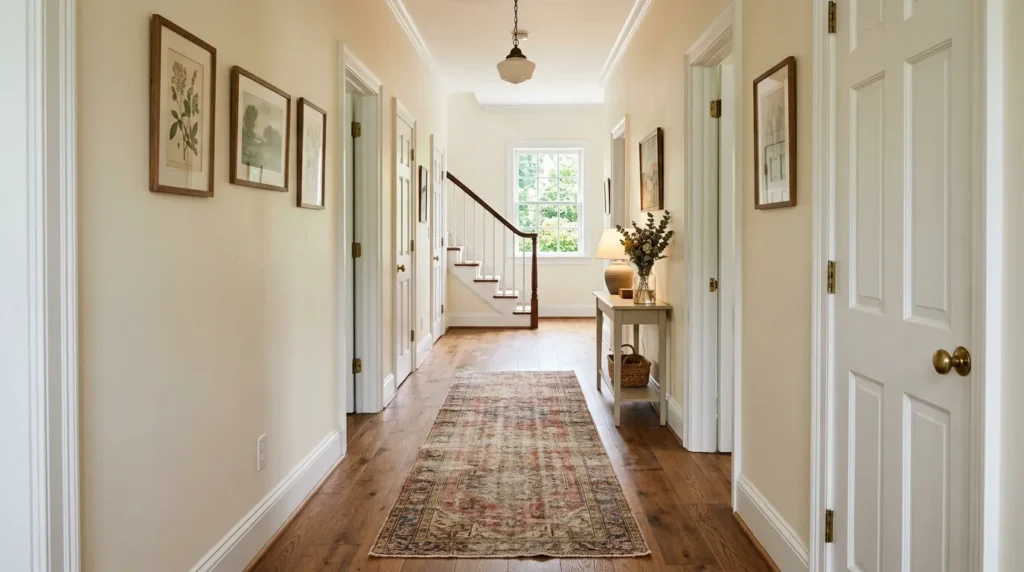
A runner rug is one of the easiest ways to soften a stretched walkway. Bare floors can make the space feel cold, loud, and unfinished, especially with hardwood, tile, or vinyl plank. A low-pile runner adds comfort while guiding the eye from one end to the other. Choose a rug that leaves a few inches of flooring visible on both sides. This keeps the hallway looking open instead of cramped, while still adding pattern and personality.
For a practical USA home, washable runners are a smart choice because they handle pets, kids, shoes, and daily traffic well. Vintage patterns, faded neutrals, subtle stripes, or woven textures all work beautifully. Use a non-slip rug pad for safety, especially near stairs or bedroom doors. In my experience, one continuous runner looks cleaner than several small rugs. It gives the hallway a finished look without adding bulky furniture or clutter.
2. Picture Gallery
- Adds personality to blank walls
- Keeps floor space open
- Works with photos or art prints
- Creates a Pinterest-style feature
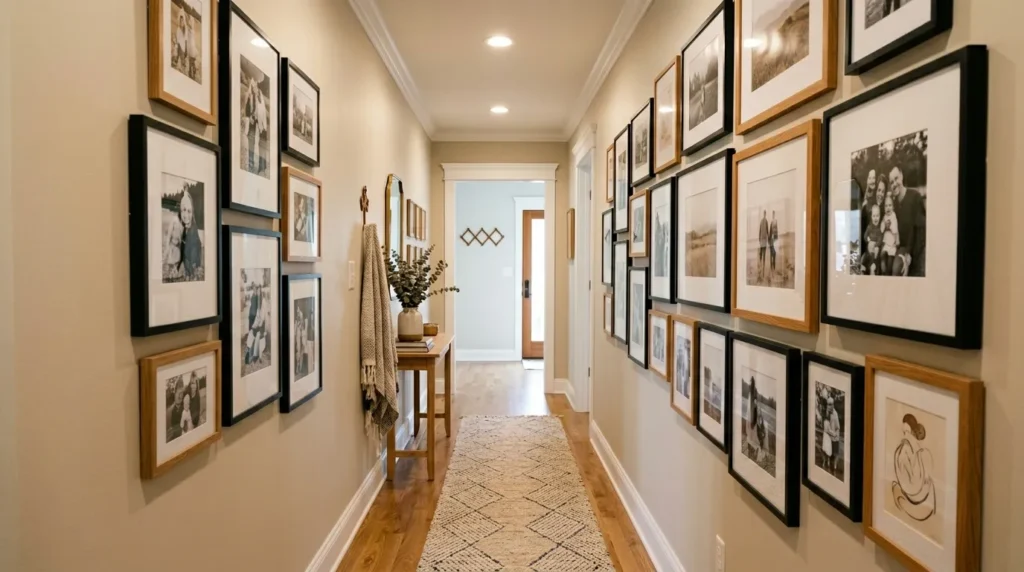
A picture gallery can turn a plain wall into a meaningful design story. Long walls are perfect for framed family photos, travel memories, vintage prints, or simple black-and-white artwork. The trick is keeping the layout balanced and easy on the eyes. Matching frames create a clean modern look, while mixed wood and black frames feel warm and collected. Wide mats can also make affordable prints look more polished and custom.
Before hanging anything, plan the arrangement with painter’s tape or paper templates. This helps you avoid uneven spacing and random placement. A straight grid feels neat and classic, while a collected layout feels relaxed and personal. I’ve noticed gallery walls look best when one detail repeats, such as frame color, photo style, or art tone. This adds charm without blocking the walkway, making the hallway feel personal, warm, and thoughtfully designed.
3. Warm Wall Sconces
- Adds soft layered lighting
- Makes the hallway safer at night
- Creates visual rhythm
- Gives a designer finish
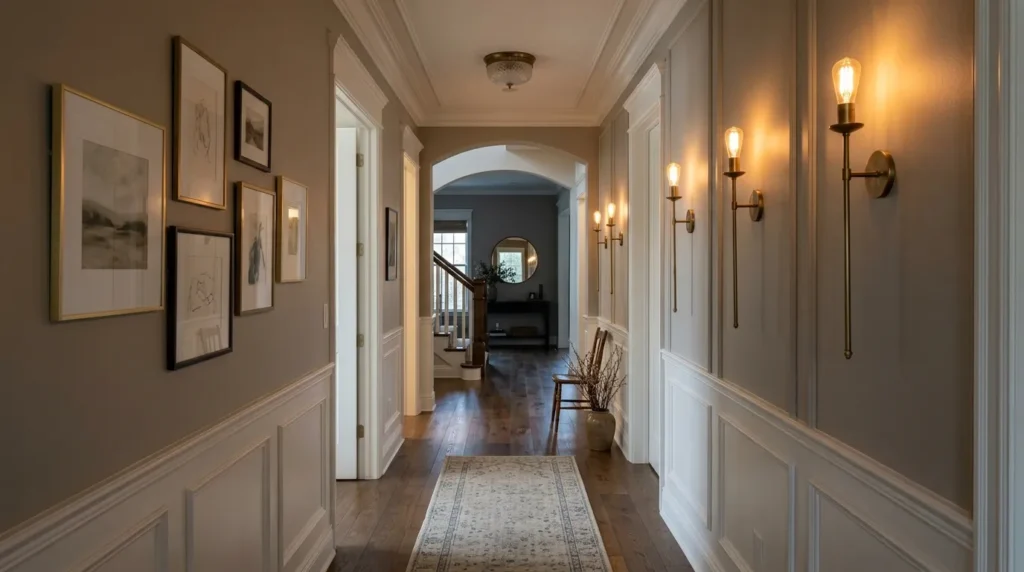
Lighting can completely change how a hallway feels in the evening. Many extended corridors rely on one ceiling fixture, which often leaves dark corners and flat shadows. Wall sconces add warmth, depth, and rhythm along the walls. Choose slim fixtures so they do not stick out too far. Brass, matte black, bronze, and soft white finishes work well in farmhouse, coastal, modern, and traditional American homes.
If hardwiring is not possible, battery-operated sconces can still give a beautiful look. Use warm white bulbs instead of harsh cool lighting for a softer home feeling. Place sconces evenly if the space is very stretched, or use one pair near a focal point. That’s why many designers recommend layered lighting in transition areas. It improves safety, mood, and style while making the hallway feel less forgotten.
4. Painted Ceiling
- Adds interest without clutter
- Draws the eye upward
- Works with soft colors
- Makes the space feel custom
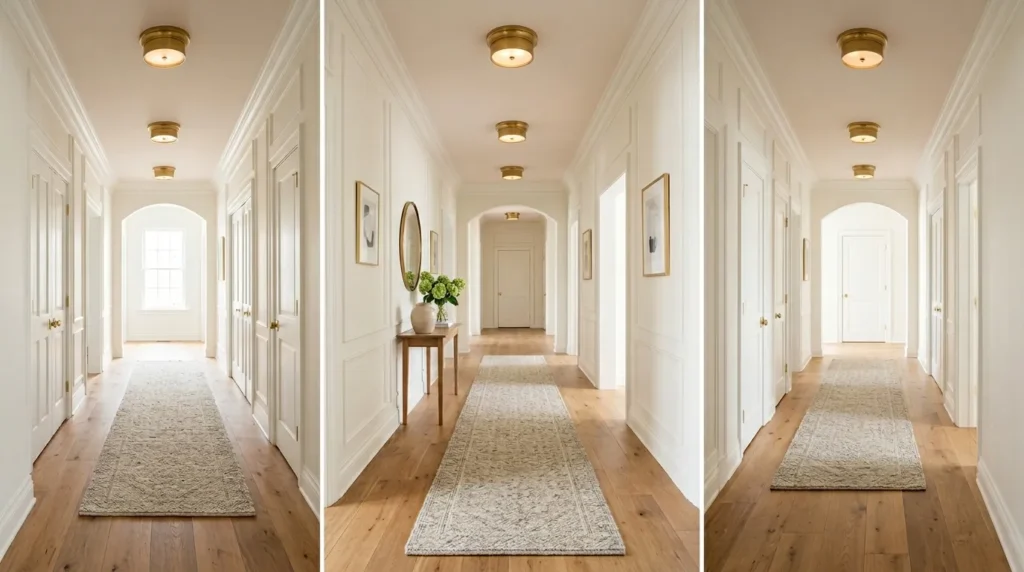
The ceiling is a powerful design surface that many homeowners forget. In a long hallway, it stretches across the entire space and can add style without taking up any walking room. A soft painted ceiling, beadboard detail, subtle wallpaper, or simple wood beams can make the passage feel more finished. Pale blue, warm taupe, creamy white, or soft greige can add character while still keeping the area calm.
Keep the ceiling treatment connected to the rest of your home. If your style is coastal, beadboard feels natural. If your home leans modern, a smooth painted ceiling may look cleaner. Avoid very dark colors if the ceiling is low, unless you want a dramatic effect. This remodel idea works well when the walls already have doors or artwork. It adds depth overhead while keeping the walkway open and practical.
5. Slim Console
- Creates a styled focal area
- Works in wider hallways
- Adds space for decor
- Breaks up empty walls
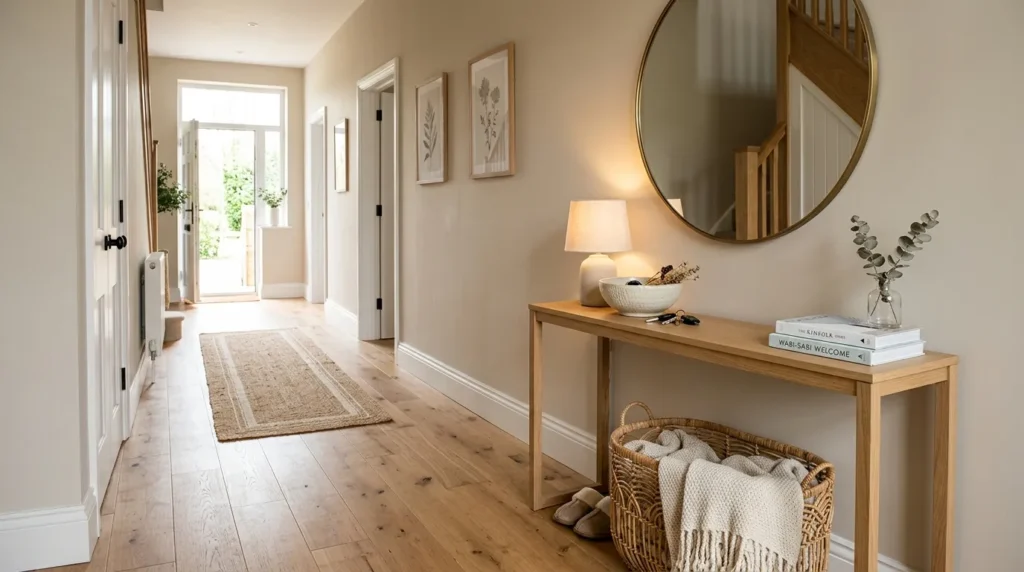
A slim console table can create a beautiful pause in a stretched space. Instead of one endless blank wall, a narrow console gives the eye a place to rest. Use it for a lamp, small bowl, framed print, books, or greenery. The most important detail is depth. Choose a shallow table that does not block movement. Open-leg designs feel lighter, while floating consoles keep the floor clear and modern.
This idea works best near an entry, landing, or wider section of the hallway. Keep the styling simple so the table does not become a clutter zone. A round mirror above the console can reflect light and make the area feel wider. A woven basket below can hold shoes, scarves, or pet items. When styled carefully, this small setup makes a long hallway feel useful, welcoming, and more connected to nearby rooms.
6. Two-Tone Walls
- Adds structure and depth
- Protects lower wall areas
- Works with trim or paint
- Makes the hallway feel styled
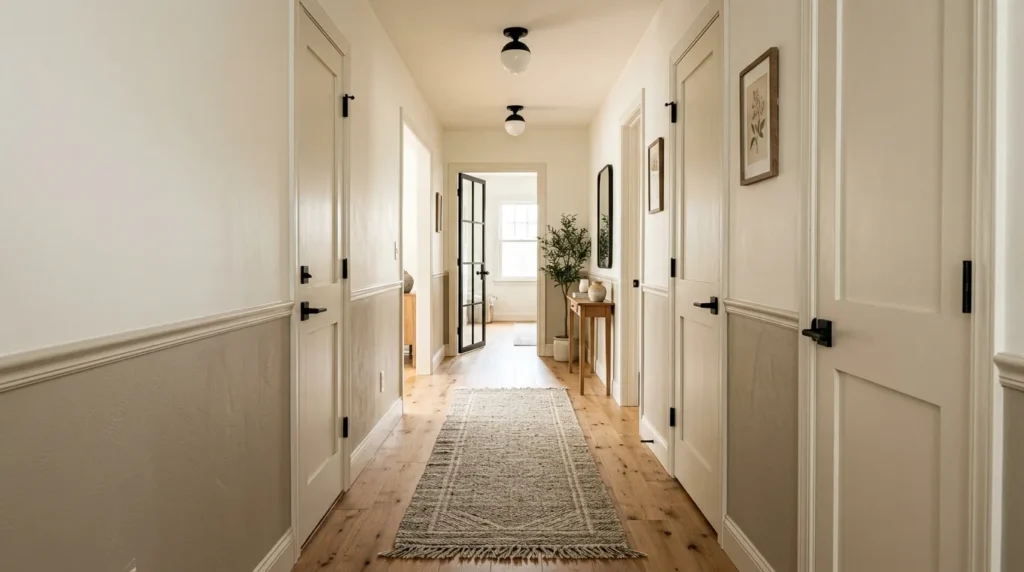
Two-tone walls can make a stretched corridor feel more balanced and designed. This look usually pairs a lighter upper wall with a deeper or warmer lower section. You can create it with paint only, or add chair rail, beadboard, picture molding, or board and batten. The lower color helps hide scuffs, which is useful in busy homes where kids, pets, bags, and laundry baskets move through the space daily.
Choose colors that feel soft and connected. Warm white with greige, cream with sage, or beige with taupe can look calm and timeless. Use eggshell or satin paint so the walls are easier to clean. This remodel gives the hallway character without adding furniture or taking up floor space. It works especially well when you want the area to feel decorated, but still open, bright, and easy to walk through.
7. End Wall Feature
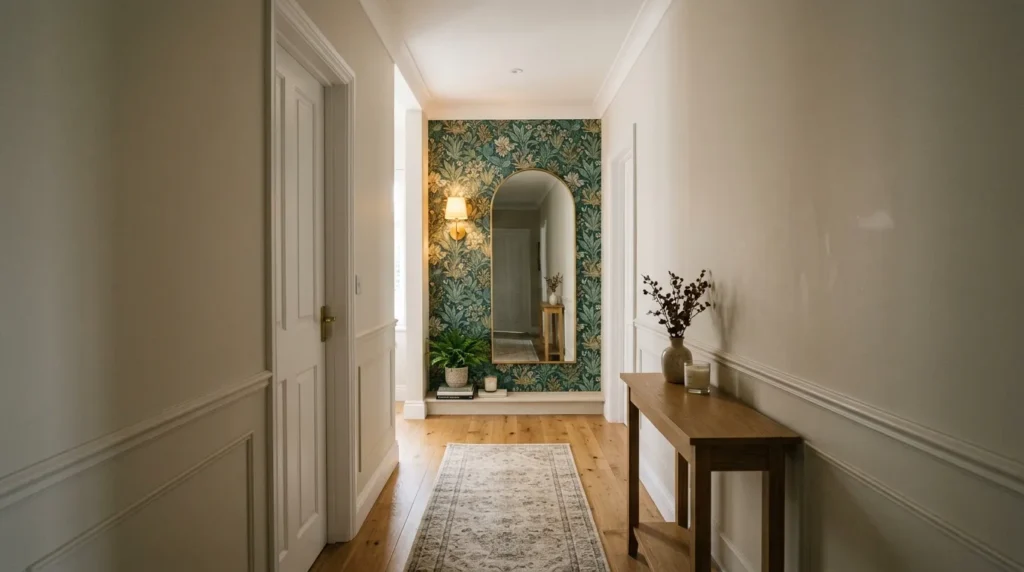
- Creates a natural focal point
- Makes the hallway feel shorter
- Works with mirrors or wallpaper
- Adds strong visual impact
The end wall is the perfect place to create a memorable design moment. When someone looks down a long hallway, their eye naturally lands at the far end. Instead of leaving that wall blank, use a large mirror, framed artwork, wallpaper panel, painted arch, or small shelf. This gives the hallway direction and makes the whole layout feel more intentional. It also helps the space feel less like a plain tunnel.
Keep the side walls simpler if the end wall has bold detail. This balance lets the feature stand out without overwhelming the space. Botanical wallpaper, a warm accent color, an arched mirror, or landscape art can all work beautifully in USA homes. This is a smart remodel because it focuses effort on one area but changes the feeling of the entire hallway. It adds style, depth, and a polished finish.
8. Built-In Cabinets
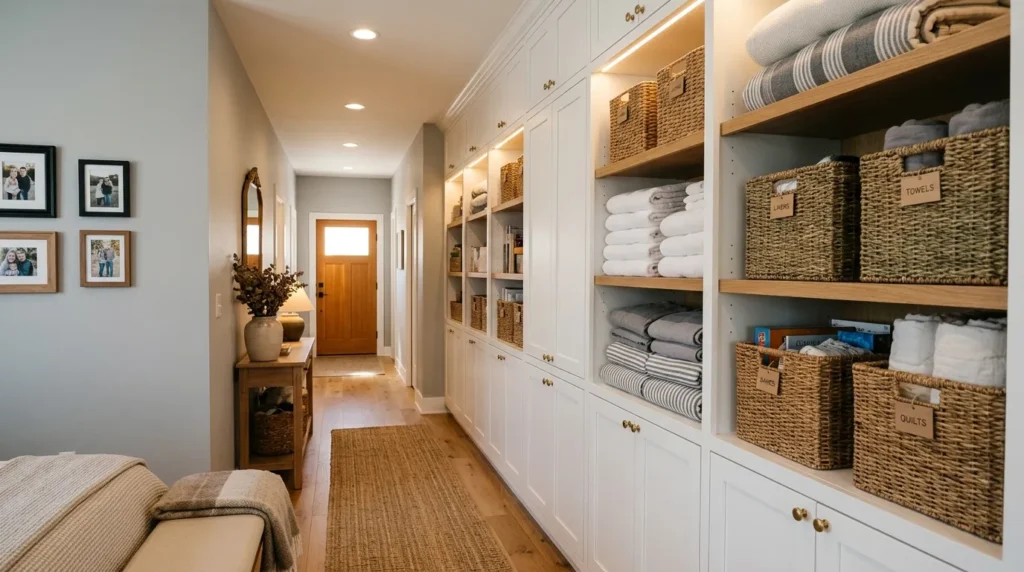
- Adds hidden storage
- Works in wider spaces
- Reduces clutter in nearby rooms
- Makes the hallway feel custom
Built-in cabinets can turn unused hallway space into real everyday storage. If the walkway is wide enough, shallow cabinets, linen drawers, recessed shelves, or open cubbies can add function without blocking traffic. Use them for towels, blankets, books, board games, cleaning supplies, or seasonal decor. Keep the depth slim so the walkway remains comfortable. White, cream, light gray, or natural wood finishes usually look bright and timeless.
The best built-ins combine closed and open storage. Closed cabinets hide clutter, while open shelves work for baskets, books, and pretty decor. In my experience, labeled baskets help families keep the space organized much longer. Add simple knobs, soft-close doors, and warm lighting for a finished look. This remodel adds practical value and makes the hallway feel more like a designed room instead of leftover space.
9. Door Makeover
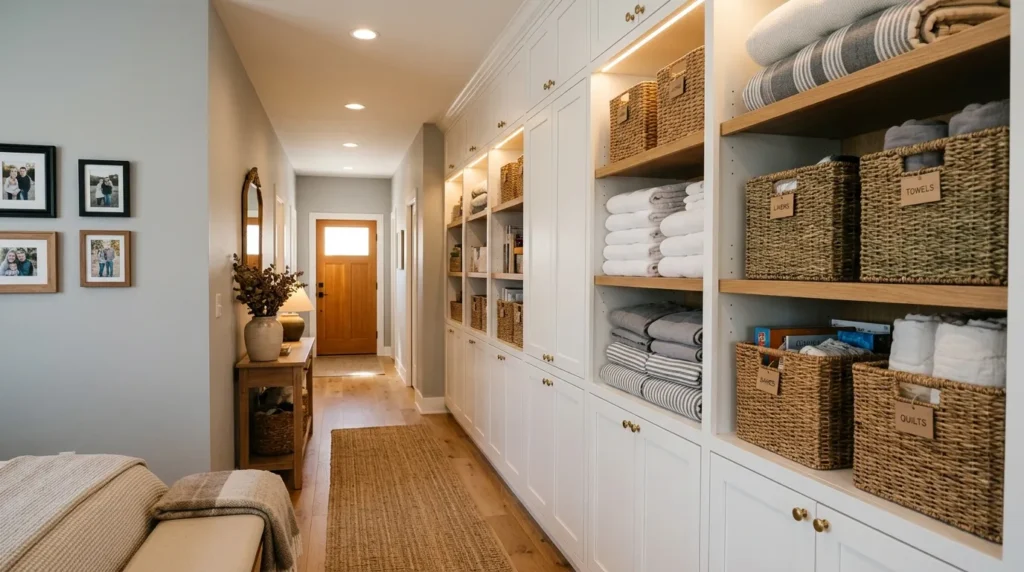
- Updates the whole hallway view
- Creates a cleaner look
- Works with paint and hardware
- Adds style without major renovation
Doors take up more visual space than most people realize. In a stretched hallway, outdated doors can make the entire area feel older, even if the walls and floors are clean. Fresh paint, new knobs, updated hinges, or simple trim molding can make a big difference. White doors feel classic, black doors feel bold, and soft greige doors create a warm designer-style look without feeling too dark.
Keep all hallway doors consistent for the calmest result. Matching hardware helps the view feel connected from one end to the other. Matte black, brushed nickel, brass, and aged bronze are popular choices in many American interiors. Use durable paint because doors get touched every day. This idea is budget-friendly and high-impact. It refreshes the whole space without changing the floor plan, adding furniture, or doing heavy construction.
10. Flooring Refresh
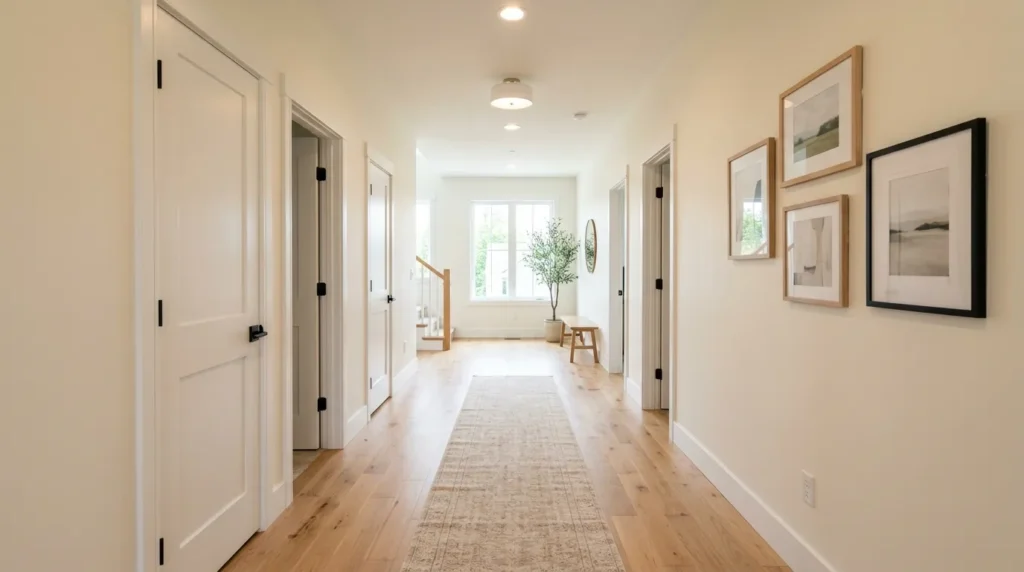
- Improves the base of the space
- Makes the hallway feel cleaner
- Connects nearby rooms better
- Works with wood, vinyl, carpet, or tile
Flooring has a huge effect on whether a hallway feels fresh or outdated. Scratched wood, old carpet, dark tile, or mismatched flooring can make the space feel heavy. Refinishing hardwood, installing luxury vinyl plank, replacing carpet, or updating tile can instantly improve the look. If a full flooring project is not possible, a runner rug can still hide wear and add softness while giving the hallway a stronger design direction.
Pay attention to transitions between rooms. Smooth thresholds and similar tones help the hallway connect naturally with bedrooms, living areas, and entry spaces. Light oak, warm walnut, soft neutral carpet, and durable vinyl plank all work well depending on your home style and budget. Because a long hallway shows so much flooring, this update has major visual impact. When the floor looks clean and intentional, the whole area feels more polished.
11. Layered Styling
- Adds warmth without clutter
- Combines texture, lighting, and decor
- Makes the hallway feel complete
- Allows simple seasonal updates
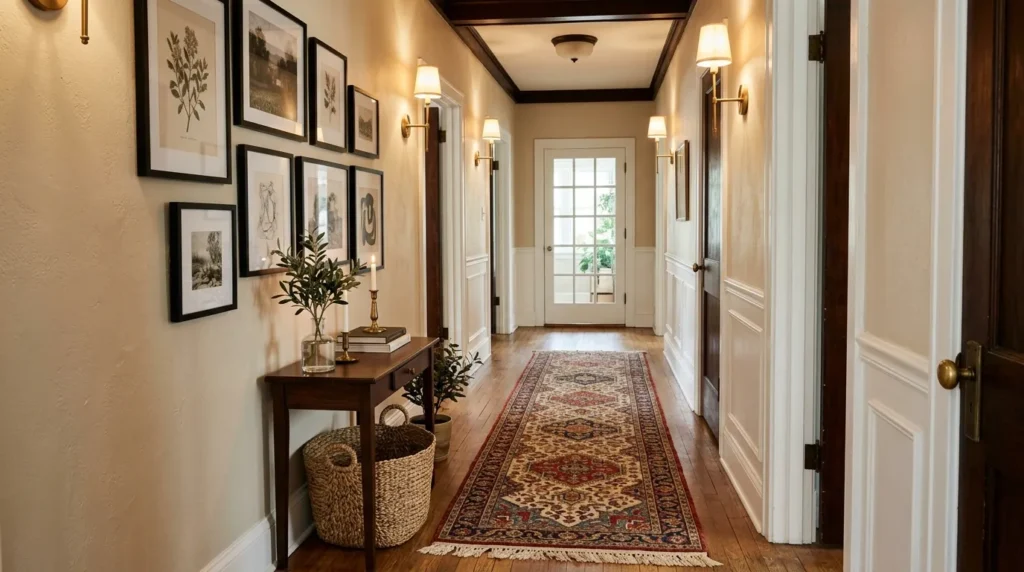
Layered styling is what makes a hallway feel finished instead of empty. The goal is not to decorate every inch. Instead, combine a few thoughtful details like a runner, framed art, soft lighting, a mirror, small greenery, and maybe one slim furniture piece. Materials like wood, linen, woven baskets, glass, and metal create warmth without making the walkway feel crowded. This is where the whole remodel starts to feel personal.
Repeat colors and textures for a cleaner look. For example, black frames, brass lights, and a faded runner can create a connected design story. Keep the walking path open and avoid oversized decor. Small seasonal changes can refresh the space, such as swapping greenery, adding a basket, or changing prints. This final layer helps the hallway feel welcoming, useful, and ready for Pinterest-style photos without losing everyday function.