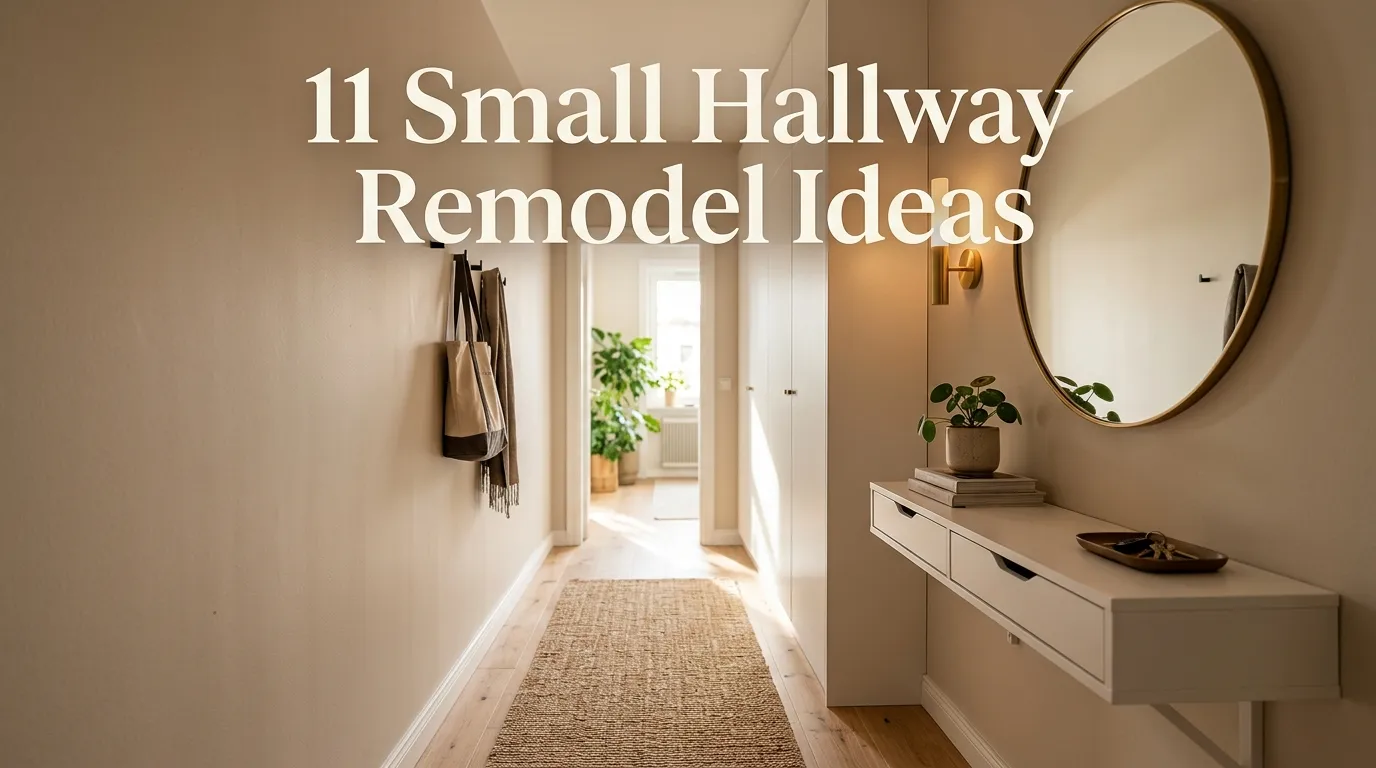
Small hallway remodel ideas
A hallway may seem like a pass-through space, but it quietly shapes the way a home feels every single day. It is the first path guests follow, the route family members use constantly, and often the area that connects bedrooms, bathrooms, kitchens, stairs, and living rooms. When it feels dark, narrow, cluttered, or unfinished, the whole home can feel less polished. But with the right remodel choices, even a small hallway can become brighter, more useful, and more beautiful.
For many USA homes, especially townhouses, ranch houses, apartments, older suburban homes, and compact entry layouts, hallway space is limited. That means every decision matters. Paint color, lighting, flooring, wall texture, storage, mirrors, trim, and decor all need to work together without crowding the walkway. A smart remodel does not simply decorate the space. It improves movement, adds function, and creates a clean visual flow from one room to the next.
These ideas are designed for real homes, not oversized magazine spaces. Each section gives practical styling logic, material suggestions, and Pinterest-friendly inspiration so your hallway can feel intentional, fresh, and easy to maintain.
1. Bright Paint
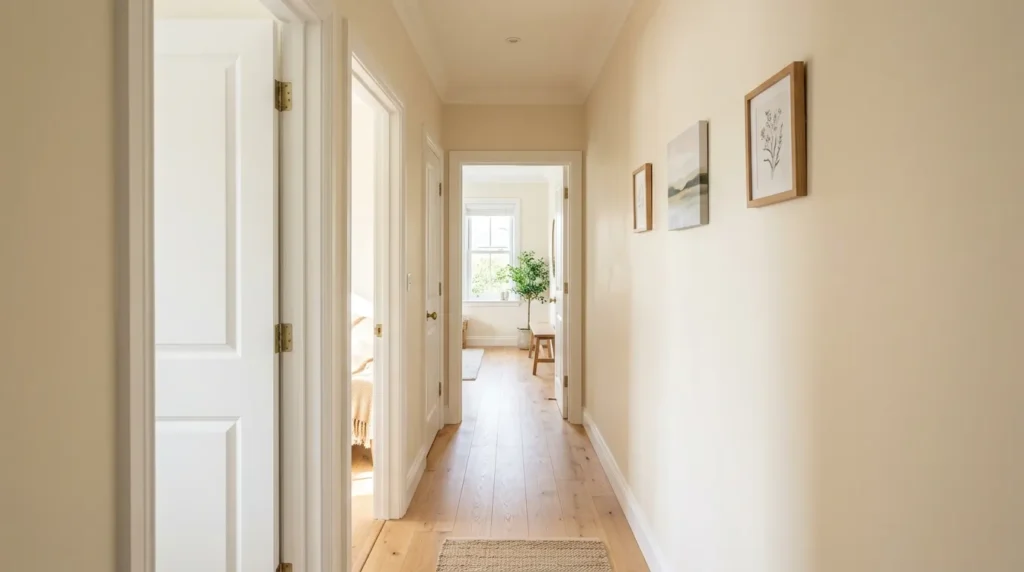
- Makes narrow spaces feel lighter and more open
- Works well in homes with limited natural light
- Helps connect rooms with a cleaner visual flow
- Pairs beautifully with white trim and warm wood floors
- Best with washable eggshell or satin wall paint
Bright paint can completely change the way a tight hallway feels before anything else is added. This idea works because lighter colors reflect available light, making the walls feel less closed in. A small hallway often suffers from shadows, especially when there are few windows nearby. Soft white, warm ivory, pale greige, light beige, and gentle taupe can all brighten the space without making it feel cold. In my experience, warm undertones usually feel more inviting than stark white in family homes.
The practical transformation is simple but powerful because paint gives the hallway a cleaner background for every other detail. Choose a washable finish so scuffs, fingerprints, and bag marks can be cleaned easily. If the home has kids, pets, or heavy traffic, durability matters as much as color. Pair the paint with crisp trim, simple wall decor, and updated lighting for the best effect. This upgrade is budget-friendly, beginner-friendly, and one of the fastest ways to make the hallway feel refreshed.
2. Statement Runner
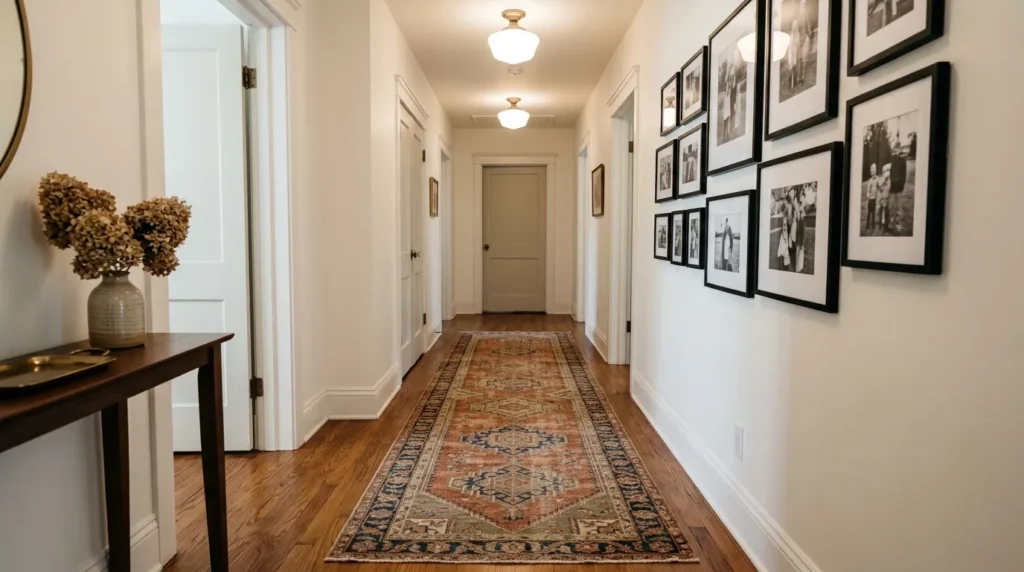
- Adds color, pattern, and softness underfoot
- Helps visually lengthen a narrow hallway
- Protects flooring in high-traffic areas
- Works with traditional, modern, farmhouse, or vintage decor
- Best with washable rugs and non-slip rug pads
A statement runner brings instant personality to a hallway without taking up wall or floor space awkwardly. This idea works because the long shape naturally guides the eye forward, making the hallway feel more finished and intentional. A runner can soften hardwood, warm up tile, and protect floors from daily traffic. Patterns are especially helpful because they hide small marks better than solid colors. That’s why many designers recommend runners for narrow spaces that need style and function together.
For real-life use, measure the walkway carefully before buying so the rug leaves visible floor on both sides. This keeps the hallway from feeling cramped. Washable runners are practical for USA households with kids, pets, snow, rain, or muddy shoes. Choose muted vintage patterns for a cozy look, stripes for length, or soft neutrals for calm texture. Always use a quality non-slip rug pad so the runner stays safe. The result feels layered, welcoming, and much more complete.
3. Wall Sconces
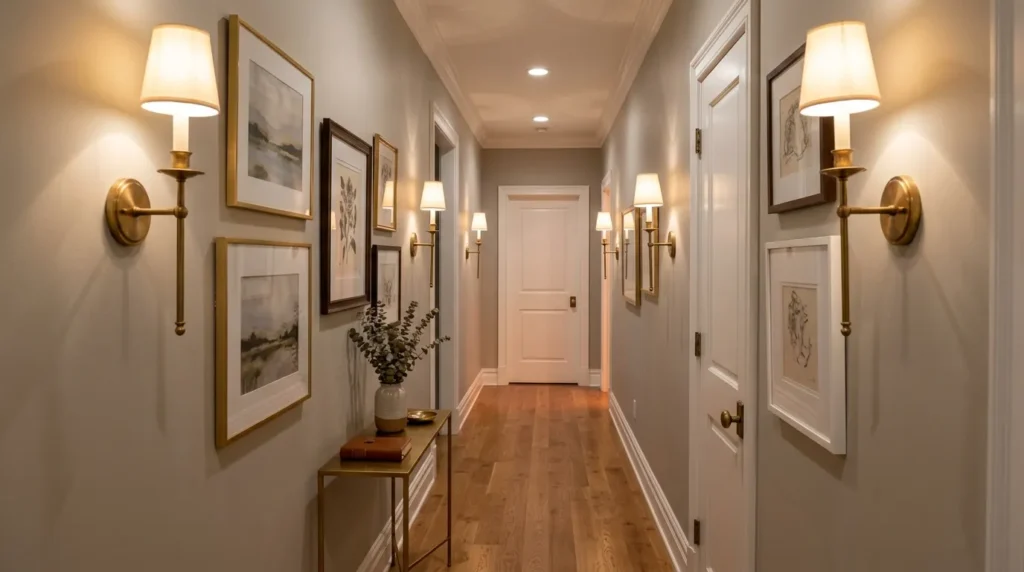
- Adds warm light without using floor space
- Makes the hallway feel custom and elevated
- Works well in long, dark, or windowless areas
- Creates a cozy evening glow
- Best with hardwired or plug-in sconce options
Wall sconces can make a hallway feel designed instead of forgotten. This upgrade works because lighting at eye level creates warmth and depth that overhead lights alone often miss. In a narrow hallway, floor lamps and table lamps usually do not fit, so sconces are a smart space-saving option. They can highlight artwork, brighten dark corners, and make the walkway feel safer at night. I’ve noticed that even simple sconces can make older hallways feel more updated.
For a remodel, decide whether hardwired sconces fit the budget or whether plug-in or battery-operated options make more sense. Place them evenly so the light feels balanced rather than random. Brass sconces add warmth, matte black feels modern, and fabric shades soften the glow. Use warm-white bulbs instead of harsh cool bulbs for a more welcoming effect. This update works beautifully with painted walls, picture frames, mirrors, or trim details. It adds both function and a polished designer-style finish.
4. Slim Console
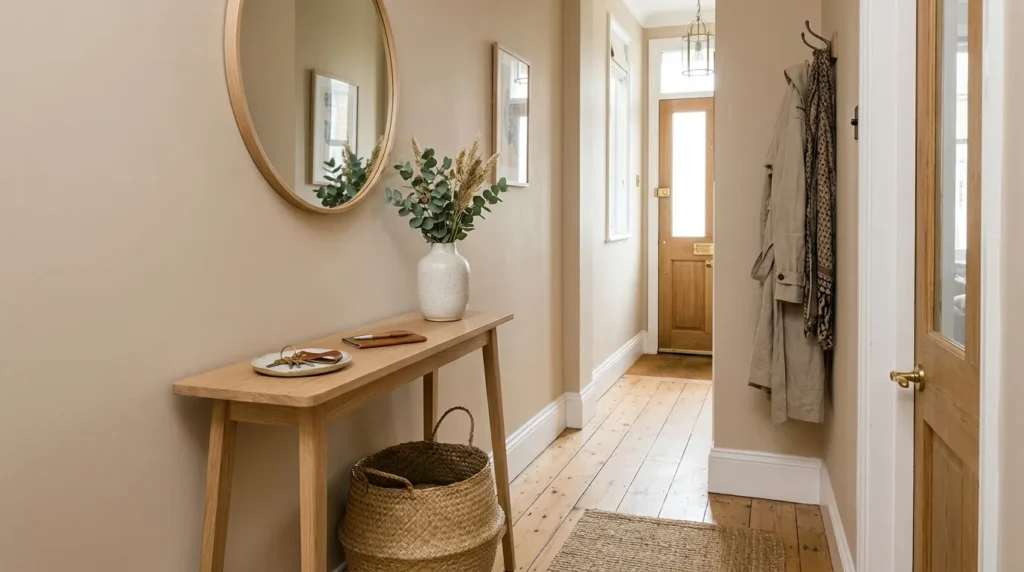
- Adds a landing zone without blocking movement
- Works well near entries or wider hallway sections
- Provides space for keys, mail, flowers, or decor
- Makes the area feel more styled and useful
- Best with narrow-depth furniture and wall anchoring
A slim console can turn an empty hallway wall into a practical and beautiful moment. This idea works best when the hallway has enough width for furniture without interrupting the walkway. A narrow console gives the space purpose, especially near an entry, stairway, or transition between rooms. It can hold a small lamp, tray, vase, framed art, or seasonal decor. The key is choosing a piece with shallow depth so the hallway still feels open.
For safety and comfort, leave enough walking clearance around the console. In tighter areas, wall-mounted shelves or floating consoles can give a similar look with less bulk. Choose wood for warmth, black metal for contrast, or painted finishes for a clean built-in feeling. A mirror or artwork above the console helps create height and balance. This idea is especially helpful when the hallway connects to the front door because it creates a small drop zone without needing a full mudroom.
5. Gallery Wall
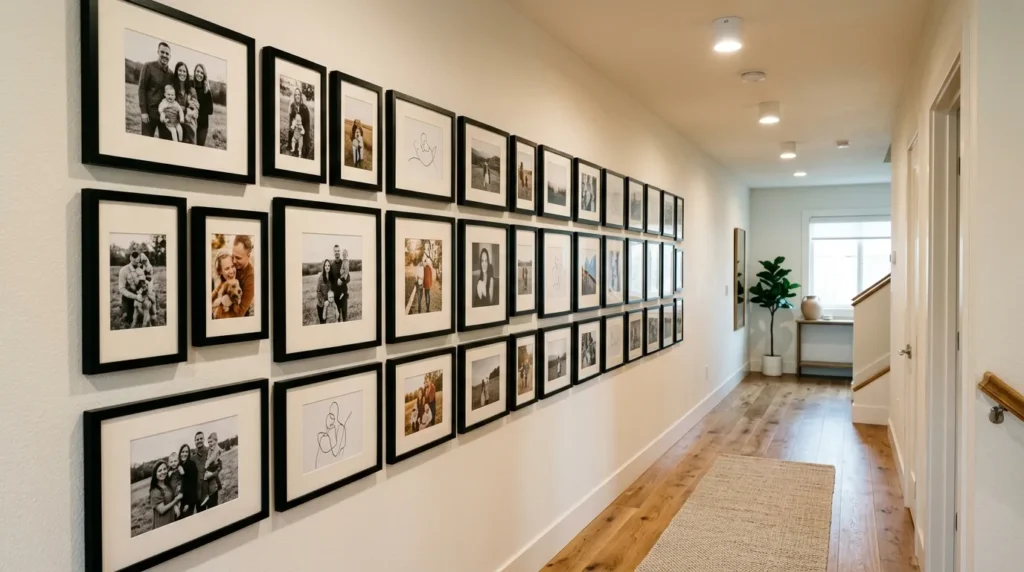
- Adds personality without using floor space
- Works beautifully in long blank hallways
- Helps connect family photos, prints, and artwork
- Can make the hallway feel curated and personal
- Best with consistent frames and simple spacing
A gallery wall gives a hallway personality while keeping the floor completely clear. This idea works because walls are often the largest unused surface in a narrow passage. Instead of leaving them blank, framed art, family photos, sketches, or prints can turn the hallway into a meaningful transition space. The trick is keeping the arrangement organized so it feels intentional. In a small hallway, too many mismatched pieces can quickly look busy.
For a polished look, choose one frame color or a limited palette of finishes. Black frames feel classic, brass adds warmth, and light wood feels casual and airy. Lay the arrangement on the floor first or use paper templates before hanging. Keep frames at eye level and leave enough breathing room between pieces. This remodel detail is affordable and easy to update over time. It makes the hallway feel more personal, lived-in, and connected to the rest of the home.
6. Mirror Moment
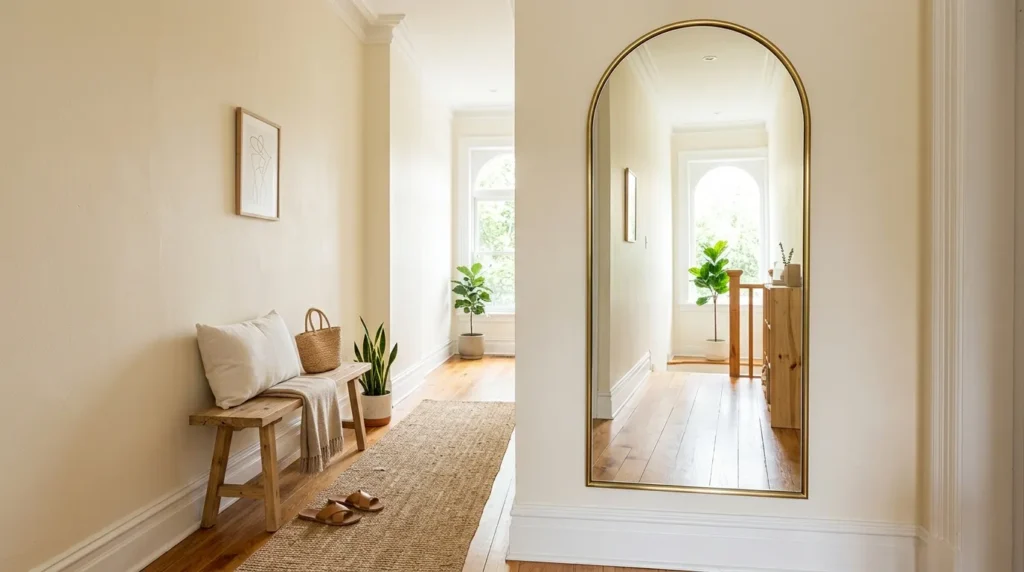
- Reflects light and makes the hallway feel wider
- Adds function for quick outfit checks
- Works well near entries, bedrooms, or stair landings
- Creates visual depth in narrow spaces
- Best with round, arched, or full-length mirrors
A mirror is one of the most effective tools for visually expanding a tight hallway. This idea works because mirrors reflect light, movement, and nearby rooms, making the space feel less boxed in. A small hallway can often feel flat because there is not much room for furniture or layered decor. A mirror solves that problem by adding depth without adding clutter. Round and arched mirrors are especially useful because they soften straight hallway lines.
To use this idea well, place the mirror where it reflects something attractive, such as a window, artwork, light fixture, or clean doorway. Avoid reflecting cluttered corners if possible. A full-length mirror works near bedrooms or entries, while a smaller decorative mirror looks good above a console or bench. Choose a frame that matches the home’s style, such as brass, black, wood, or white. This upgrade is practical, stylish, and especially helpful in darker hallways that need extra brightness.
7. Built-In Hooks
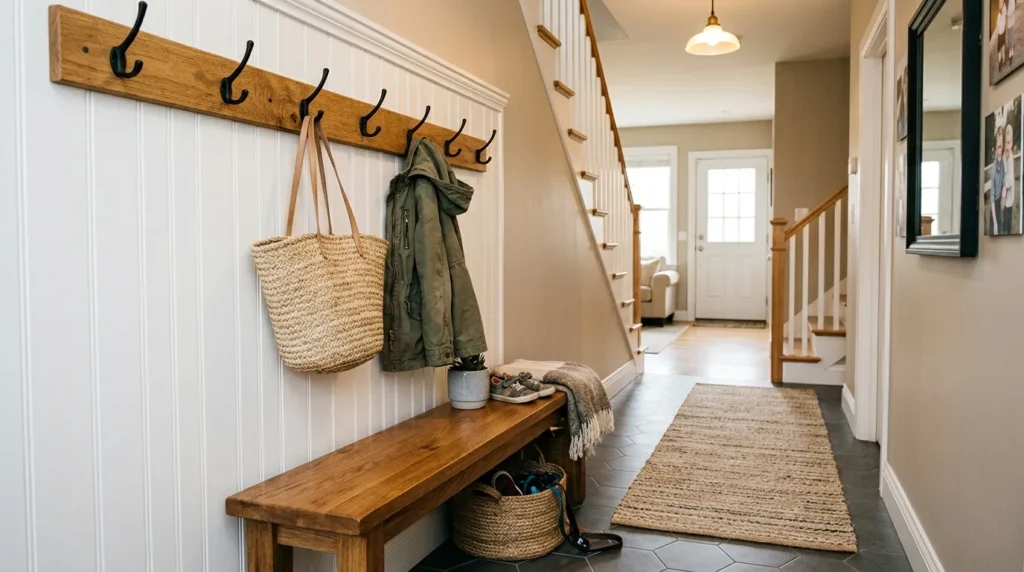
- Adds storage without bulky furniture
- Keeps bags, coats, and hats organized
- Works well near entry halls and bedroom corridors
- Makes daily routines smoother
- Best with sturdy hooks, backing boards, and simple spacing
Built-in hooks can make a hallway more useful without making it feel crowded. This idea works because hooks use vertical wall space instead of floor space, which is valuable in narrow layouts. They are perfect for coats, backpacks, hats, dog leashes, umbrellas, and everyday bags. In homes without a mudroom, hallway hooks can create a simple organization zone. That’s why many designers recommend them for busy family homes where clutter builds quickly near doors.
For the cleanest look, mount hooks on a painted board, beadboard panel, or wood rail instead of scattering them randomly. Space them evenly so items hang neatly and do not overlap too much. Choose brass for warmth, matte black for contrast, or brushed nickel for a classic finish. If kids use the space, install a lower row for easy access. This remodel idea improves function immediately and makes the hallway feel more organized, intentional, and family-friendly.
8. Floor Refresh
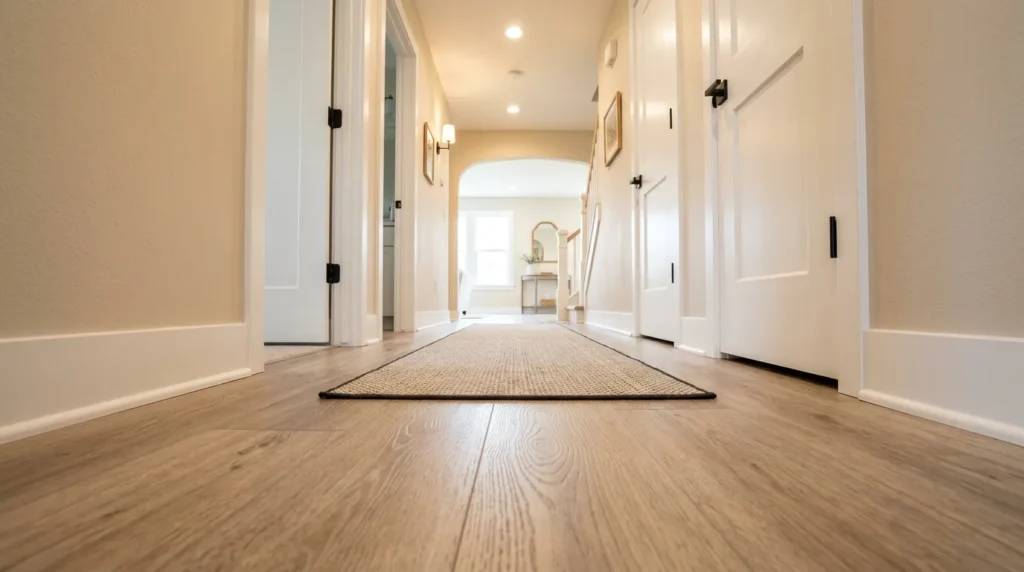
- Updates the hallway without changing the whole layout
- Creates cleaner flow between connected rooms
- Improves durability in high-traffic areas
- Works with hardwood, luxury vinyl, tile, or refinishing
- Best with materials that handle shoes, pets, and daily wear
Fresh flooring can make a hallway feel newer, cleaner, and more connected to the rest of the home. This idea works because hallways take a lot of daily abuse from shoes, pets, bags, and constant movement. Worn carpet, scratched wood, or outdated tile can make the entire area feel tired. Updating the flooring creates a strong foundation for the rest of the remodel, especially when the hallway connects several rooms.
For a practical remodel, choose flooring based on traffic and maintenance needs. Luxury vinyl plank is popular because it is durable, budget-conscious, and water-resistant. Hardwood refinishing keeps character in older homes, while tile works well near entries. If replacing flooring is not possible, deep cleaning, refinishing, or adding a runner can still improve the look. Keep transitions between rooms smooth so the hallway does not feel chopped up. This upgrade adds visual polish and long-term everyday function.
9. Trim Detail
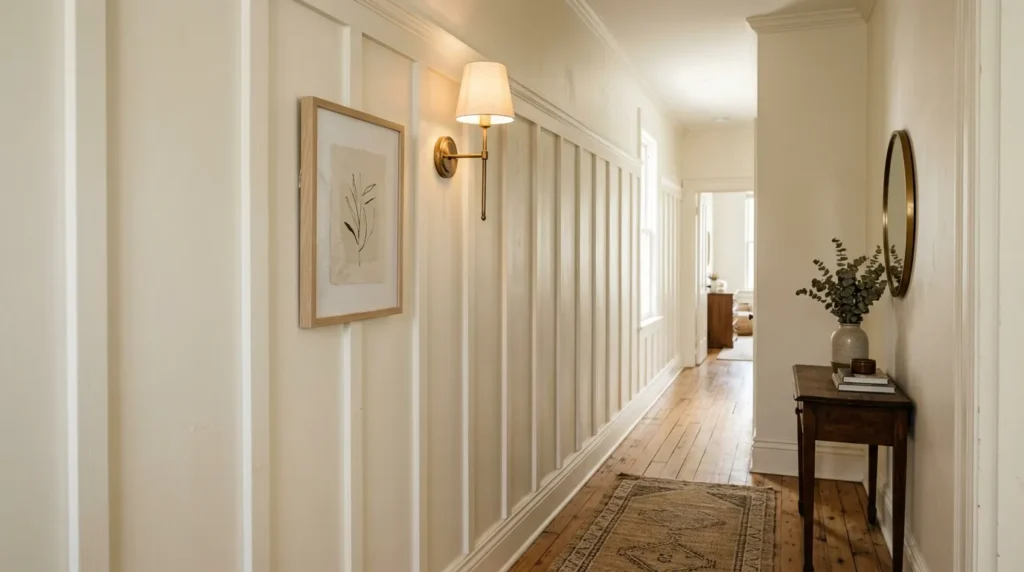
- Adds architectural character to plain walls
- Works with traditional, modern, cottage, and transitional homes
- Makes the hallway feel more custom
- Protects lower walls from scuffs when using wainscoting
- Best with picture molding, board and batten, or beadboard
Trim detail can make a plain hallway feel custom without requiring a major renovation. This idea works because architectural molding adds depth and shadow to flat walls. In a narrow space, that texture creates interest without needing bulky decor. Board and batten feels clean and modern, beadboard feels cozy and cottage-inspired, while picture molding feels elegant and traditional. I’ve seen this work well in many homes where the hallway needed character but had limited room for furniture.
10. Hidden Storage
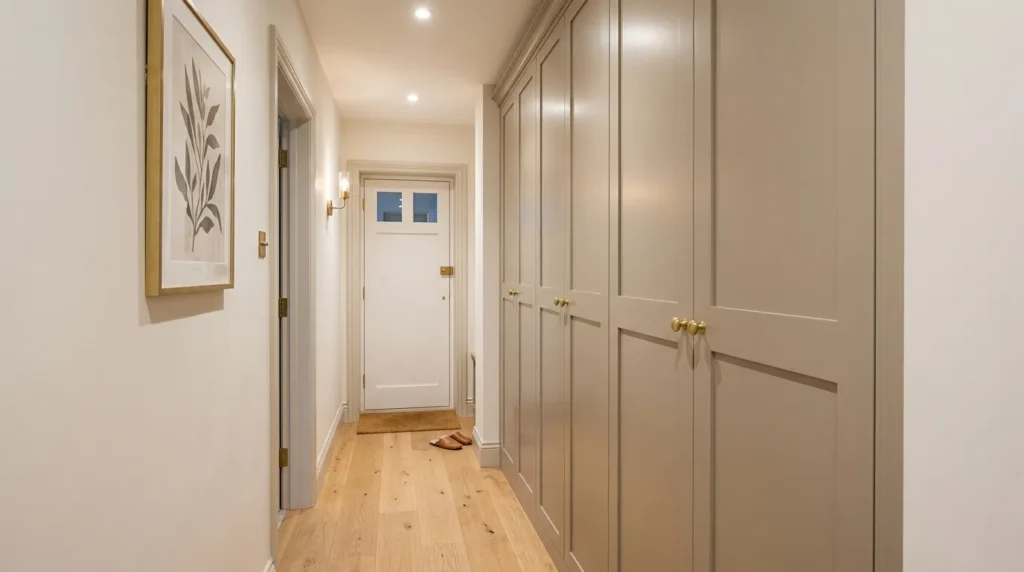
- Reduces clutter in tight connecting spaces
- Works well for shoes, cleaning supplies, linens, or seasonal items
- Helps small homes function better
- Keeps the hallway visually calm
- Best with shallow cabinets, recessed shelves, or storage benches
Hidden storage is one of the smartest ways to make a hallway more functional without sacrificing style. This idea works because visible clutter can make a narrow area feel even smaller. Shoes, bags, mail, chargers, cleaning supplies, and linens all need places to live. If the hallway has even a little unused wall depth, corner space, or dead space under stairs, storage can make the entire home feel more organized.
11. Styled End
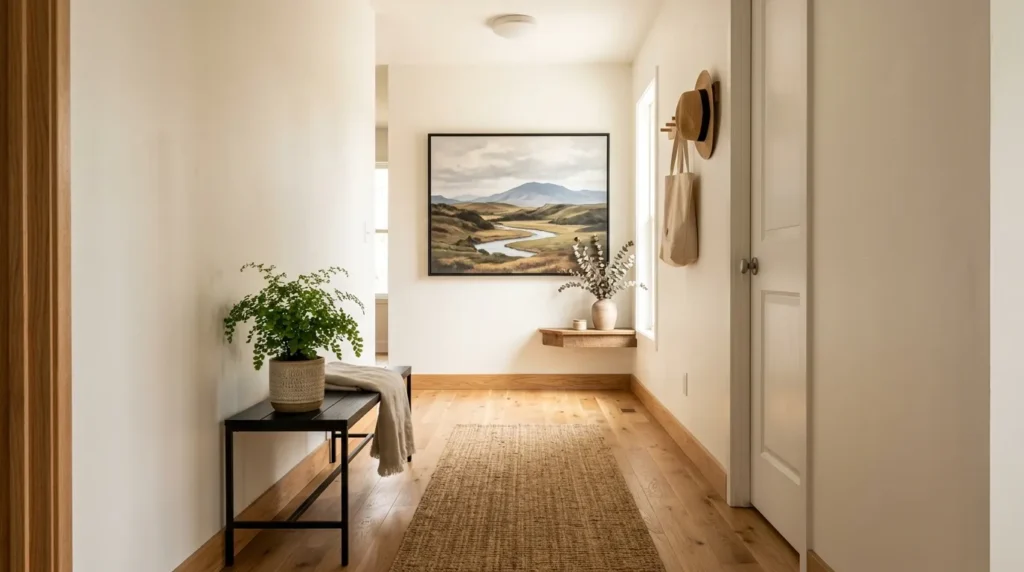
- Creates a focal point at the end of a hallway
- Makes long narrow layouts feel intentional
- Works with art, mirrors, benches, plants, or lighting
- Helps the eye move through the space naturally
- Best with one strong feature rather than clutter
A styled end point can make a hallway feel finished instead of forgotten. This idea works because the eye naturally travels to the end of a narrow space. If that spot is blank, dark, or cluttered, the hallway feels unfinished. But a framed artwork, mirror, small bench, plant, or accent light can create a destination. In a small hallway, one thoughtful focal point often looks better than too many decorative pieces along the sides.
To style the end well, choose a feature that fits the space and does not block movement. A large art print adds color, a mirror adds brightness, and a slim bench adds function if there is enough depth. Add a small plant only if there is natural light or use realistic faux greenery. Keep the palette connected to nearby rooms so the hallway feels cohesive. This finishing detail is simple, but it gives the entire remodel a more designer-level sense of completion.