Build a DIY Mud Kitchen for Outdoor Play Kids Will Love
There is something timeless about kids mixing mud, pouring water, collecting leaves, and turning ordinary backyard mess into imaginative play. A mud kitchen gives that energy a real home. Instead of random bowls and toys scattered across the yard, you create a dedicated outdoor station where children can scoop, stir, pretend cook, and stay engaged for long stretches. For many families in the USA, that kind of setup is especially valuable because it supports screen-free play, gets kids outside more often, and makes the backyard feel more purposeful without requiring a huge budget.
In my experience, the best outdoor play areas are the ones that feel simple, sturdy, and easy to use every day. They do not need to look overly complicated or perfectly styled to be successful. They just need to work well for kids and fit naturally into family life. This first part focuses on six core ideas that help you build a play kitchen that is practical, attractive, and genuinely fun. You will find layout guidance, material suggestions, and styling logic that make the whole setup feel more useful, more durable, and easier to enjoy through the seasons.
1.Sturdy Base
- Gives the whole setup better stability and safety
- Helps the play area last through weather and daily use
- Makes sinks, hooks, and shelves easier to attach
- Reduces wobbling during active outdoor play
- Creates a cleaner, more finished backyard look
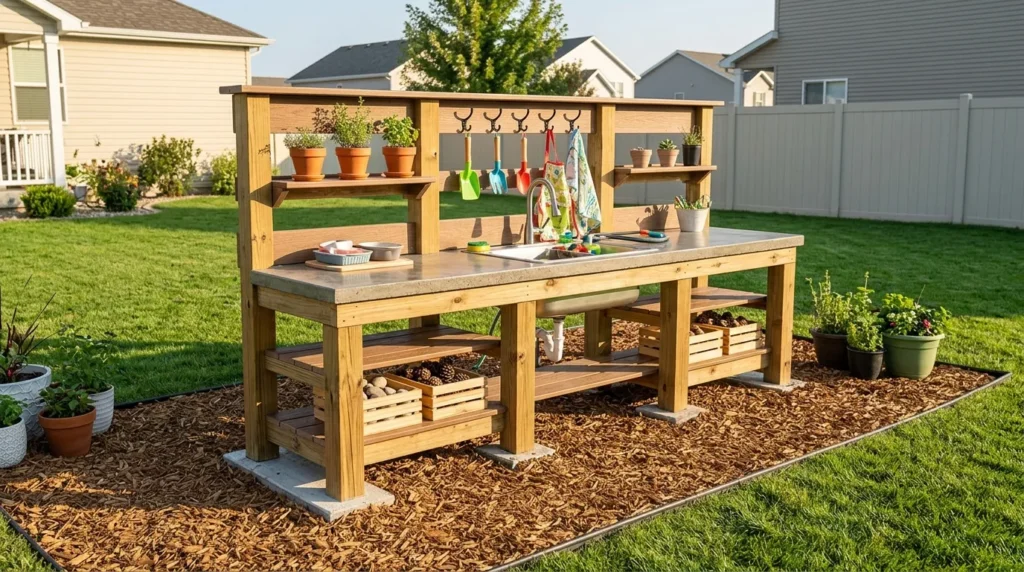
A strong base is the one thing that makes every other part of the project easier. Whether you use an old wooden bench, a repurposed cabinet, or a simple frame built from treated lumber, the structure needs to feel stable enough for scooping, mixing, splashing, and leaning. Kids rarely play gently for long, so a wobbly station quickly becomes frustrating. Sand rough edges, tighten every screw, and test it on level ground before adding accessories. When the frame feels secure, the entire space becomes more inviting and more practical for repeated outdoor use across different seasons.
The biggest transformation comes from knowing the kitchen can actually handle real play. In many homes, outdoor projects look cute at first but fall apart once they are used daily. I have noticed that when the base is well built, parents are more willing to leave the setup outside and let it become part of the yard routine. Choose weather-friendly wood, exterior screws, and a finish that can handle rain and sun. That simple effort makes the whole kitchen feel more intentional, more durable, and much easier to build on later.
Low Countertop
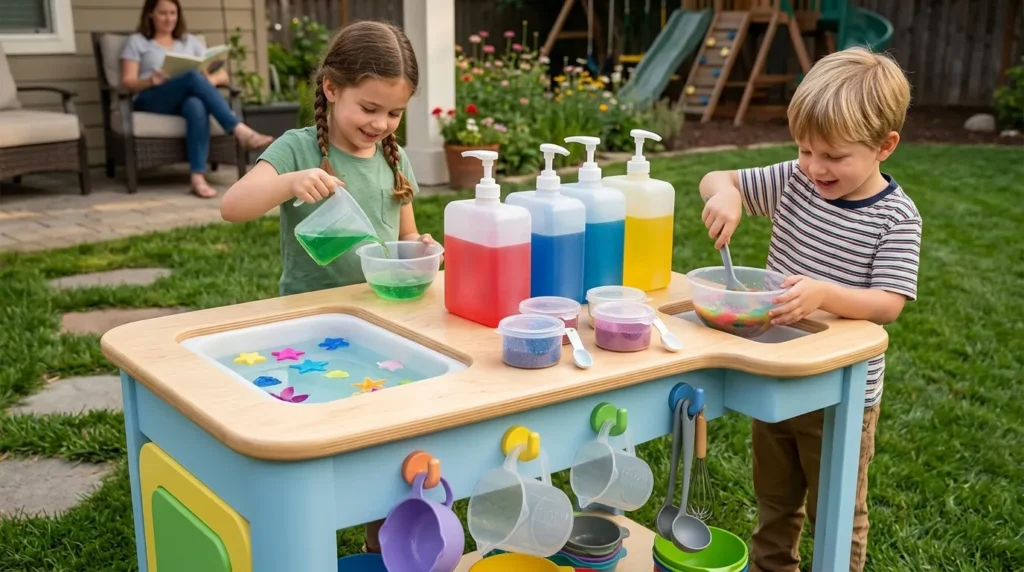
- Makes the station easier and safer for kids to use
- Supports independent play without constant adult help
- Creates a more comfortable stirring and pouring height
- Helps younger children stay engaged longer
- Makes the setup feel designed for them, not adults
A child-height counter changes the entire experience because it allows kids to move naturally through play without stretching or climbing. The best height depends on the age group, but in general, the work surface should let children stand comfortably with their elbows slightly bent while mixing and pouring. This matters more than many people expect. If the counter is too high, they lose interest faster and start pulling in random objects to stand on. A lower surface keeps the activity flowing and makes the kitchen feel like their own space instead of a leftover adult project.
This idea works because comfort drives creativity. Once the setup fits their size, children can focus on pretend recipes, mud pies, and messy experiments instead of struggling with reach and balance. I have seen this work well in many homes because it encourages longer, more independent play sessions. If you are building for siblings of different ages, a slightly wider layout or nearby crate can help bridge the gap without changing the main design. A well-sized countertop gives the space a more thoughtful feel and helps it stay useful as part of everyday backyard play.
Water Station
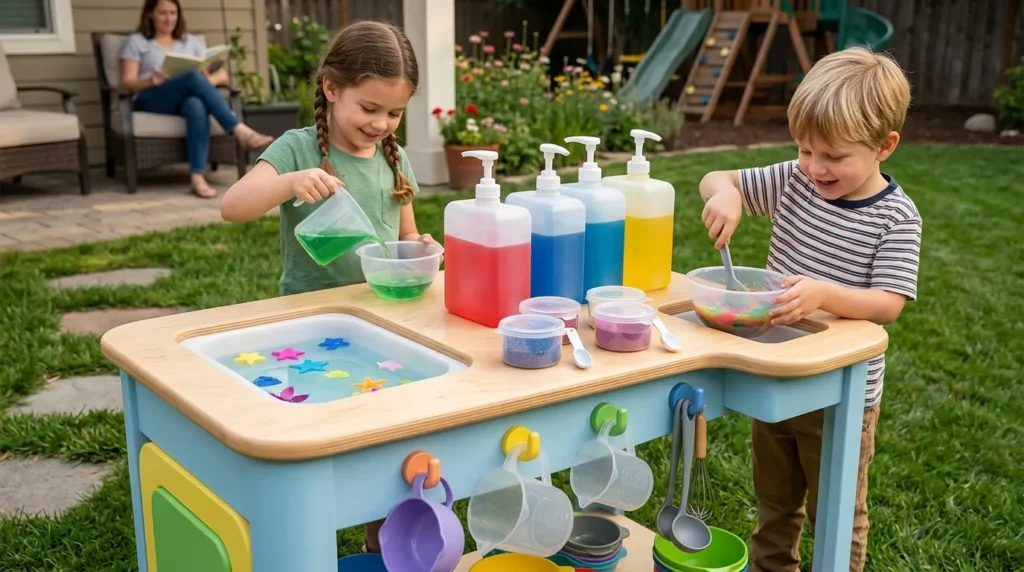
- Adds sensory play and keeps the setup more interactive
- Helps children mix, pour, rinse, and experiment freely
- Makes the kitchen feel more realistic and engaging
- Supports longer play sessions with simple materials
- Easy to build with tubs, bowls, or small dispensers
Water is what turns a basic mud table into a real play destination. A simple basin, removable sink insert, or large metal bowl can give kids a dedicated place to pour water into dirt, herbs, sand, or pebbles. You do not need plumbing to make it work. A refillable water container with a spout, a pitcher, or even a large outdoor jug can do the job beautifully. The key is keeping it easy to refill and easy to empty. When water is built into the setup, the whole station becomes more dynamic and much more exciting for everyday use.
What makes this feature so valuable is the extra range of play it creates. Instead of only scooping dry dirt, children can make soups, wash leaves, rinse spoons, and invent all kinds of little routines. I have noticed that kids stay focused longer when water is part of the station because it adds movement and change. That is why many designers recommend including one active sensory element in outdoor play zones. Use a removable insert or bowl if cleanup matters to you. This keeps the area practical while still giving children the messy, hands-on experience they love.
Open Shelving
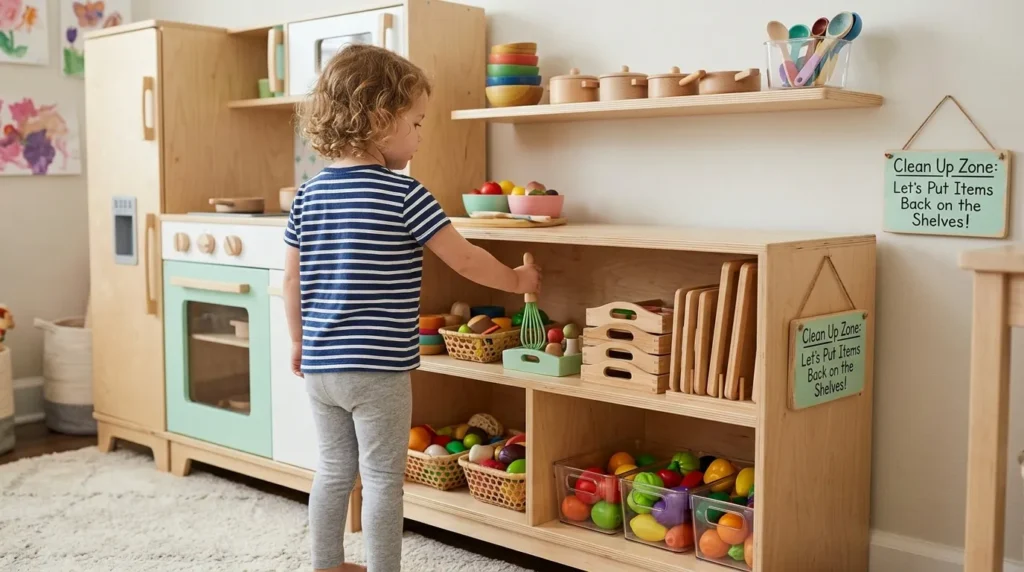
- Keeps tools visible and easy for kids to reach
- Helps organize bowls, pots, scoops, and trays
- Encourages kids to reset the space after play
- Makes the kitchen look more styled and complete
- Adds useful storage without making it feel bulky
Open shelves make the mud kitchen easier to use because kids can actually see what is available. A lower shelf for pots and buckets, plus a higher shelf for tins, cups, or pretend ingredients, helps create a simple rhythm in the setup. Instead of tossing everything into one deep bin, you give each object a place. That makes the kitchen feel more inviting and easier to maintain. Wood planks, crate shelves, or even reused cabinet shelves can work well here, as long as the structure stays sturdy and items remain easy for small hands to grab.
The beauty of open storage is that it supports independence while improving the look of the whole project. In my experience, children are much more likely to put things back when the layout feels obvious and accessible. A shelf also gives you a chance to style the area with old measuring cups, enamel bowls, or galvanized containers that feel playful and charming outdoors. Keep the arrangement light rather than crowded so the station still feels relaxed. This kind of simple organization can make the kitchen look far more polished while staying completely practical for daily use.
Hanging Hooks
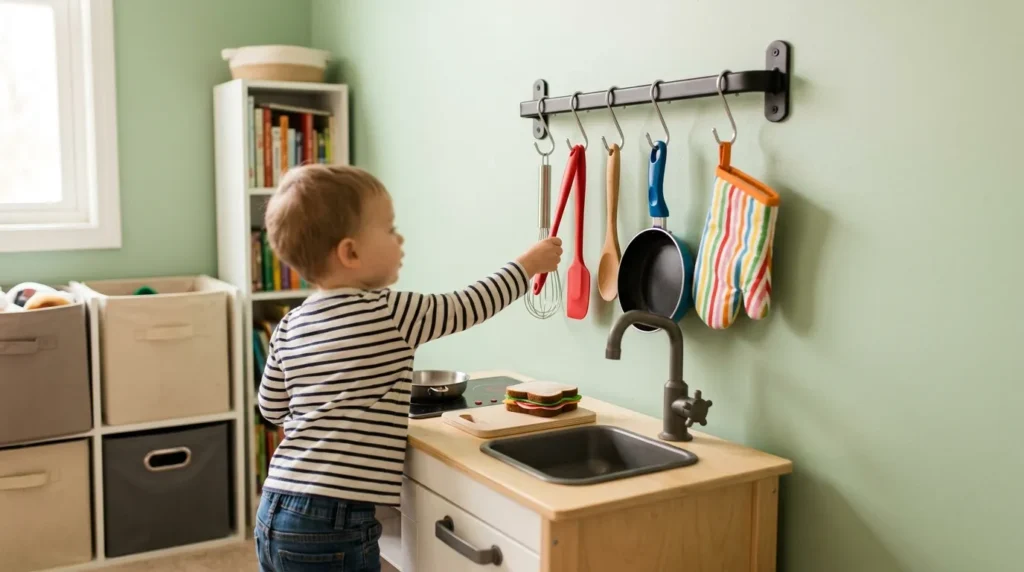
- Frees up counter space for active play
- Keeps spoons, pans, and tools easy to grab
- Adds vertical interest to the overall design
- Helps the setup feel more like a real kitchen
- Supports tidier storage between play sessions
Hooks are one of the easiest upgrades because they make the kitchen more functional without requiring much space. Install a short rail or a row of simple metal hooks across the back panel or side frame, then hang utensils, mini pans, watering cans, or small baskets. This clears the counter and helps children move through the setup more naturally. Instead of digging through a bin for everything, they can spot what they need instantly. Even a few hanging tools can make the station feel more complete and create that playful, realistic kitchen look kids respond to quickly.
This works so well because it adds order without making the area feel too controlled. Children still get the freedom to mix, carry, and create, but the tools have a clear home when play is done. I have seen this work well in many homes because it also improves cleanup without turning it into a chore. Choose hooks that are smooth, secure, and safe for outdoor use. Light metal finishes, black hardware, or even painted wooden pegs can all work beautifully. It is a small feature, but it brings a lot of function to the setup.
Mud Mixing Zone
- Creates a dedicated area for the messiest part of play
- Helps protect the rest of the station from overload
- Encourages creative scooping, stirring, and pretend recipes
- Makes cleanup easier by containing the activity
- Adds a true sensory focus to the setup
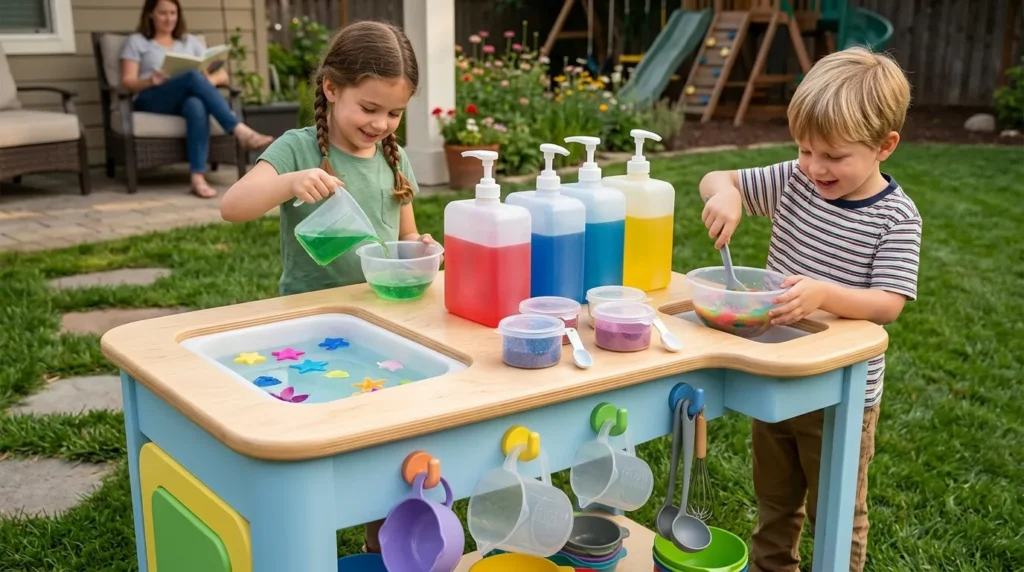
A dedicated mud mixing area gives the kitchen its real personality. This can be as simple as a large shallow bin, a removable tray, or a sectioned basin where kids combine soil, water, grass clippings, petals, and pebbles. Without a defined place for the messy part, the whole station can become chaotic fast. A mixing zone gives the activity structure while still feeling playful and free. It also helps children understand where the main action happens, which makes the kitchen feel more intuitive and easier to use without constant direction from adults nearby.
The reason this area matters so much is that it supports both imagination and cleanup. Children want a place where they can really stir, splash, and experiment, and parents usually want the mess somewhat contained. I have noticed that when one section is clearly meant for mixing, the overall setup stays more usable through the week. Use a tray that can be lifted out and rinsed if possible. This small planning choice makes the whole kitchen more realistic, more functional, and much easier to keep ready for the next day of outdoor play.
A great outdoor play setup becomes even better when it feels complete, easy to use, and inviting day after day. Once the base, counter, water area, and storage pieces are in place, the next step is adding the details that make the whole kitchen more creative and more practical. This is where the space starts to feel less like a simple backyard project and more like a favorite destination children return to again and again.
In my experience, the most-loved play kitchens are not always the biggest ones. They are the ones with thoughtful touches that support real play. A little shade, a clear cleanup plan, and a few natural materials can completely change how often kids use the space. This second part focuses on the finishing ideas that help the setup look better, function better, and last longer. These details make the entire area feel easier for families to enjoy in everyday life.
Nature Ingredients
- Gives kids free materials for pretend cooking and messy play
- Makes the space feel more creative without extra cost
- Encourages outdoor collecting and observation
- Works well with leaves, petals, stones, and seed pods
- Adds color, texture, and variety to each play session
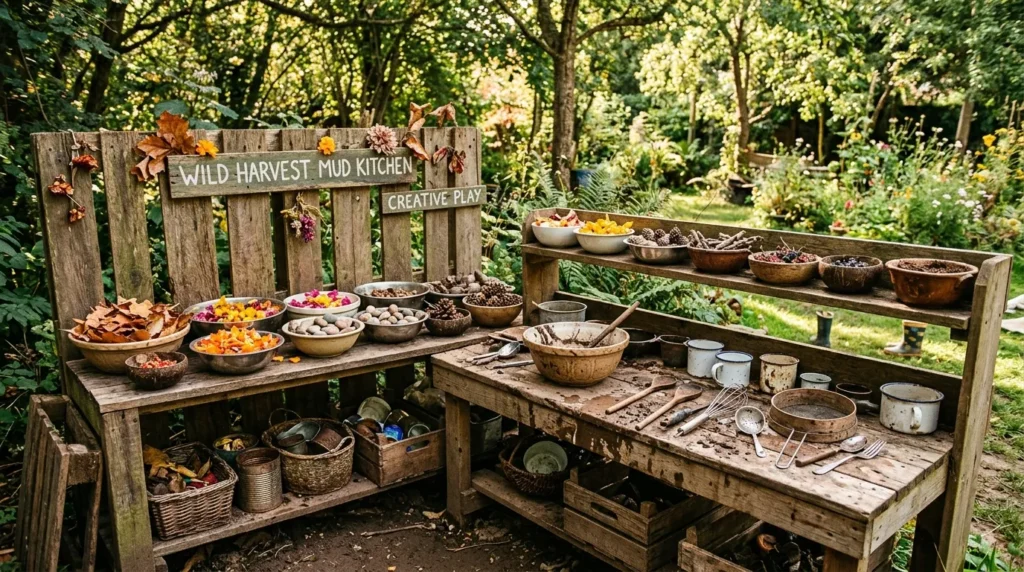
Natural loose parts can completely transform the kitchen from a simple play station into an imaginative outdoor world. Pinecones, flower petals, leaves, pebbles, grass clippings, and seed pods all become ingredients in pretend soups, pies, and potions. The beauty of this idea is how easily it changes from day to day. Kids can gather materials from the yard, neighborhood walks, or garden beds and bring them back to the kitchen for a new round of play. This makes the setup feel fresh without requiring you to constantly buy more accessories or rotate toys every week.
What makes this feature so valuable is the creativity it unlocks. I have seen this work well in many homes because children naturally enjoy collecting, sorting, and mixing real textures. A few small baskets or metal tins can help organize the ingredients without making the area feel overly styled. Try keeping tougher items like stones and seed pods in one container, while softer pieces like petals and grass stay in another. This small bit of order helps the station feel more usable and gives kids a richer, more hands-on experience every time they play.
Weather Protection
- Helps the kitchen last longer outdoors
- Reduces damage from rain, sun, and changing temperatures
- Keeps wood, hardware, and accessories in better condition
- Makes the station easier to use across seasons
- Protects the time and effort you put into building it
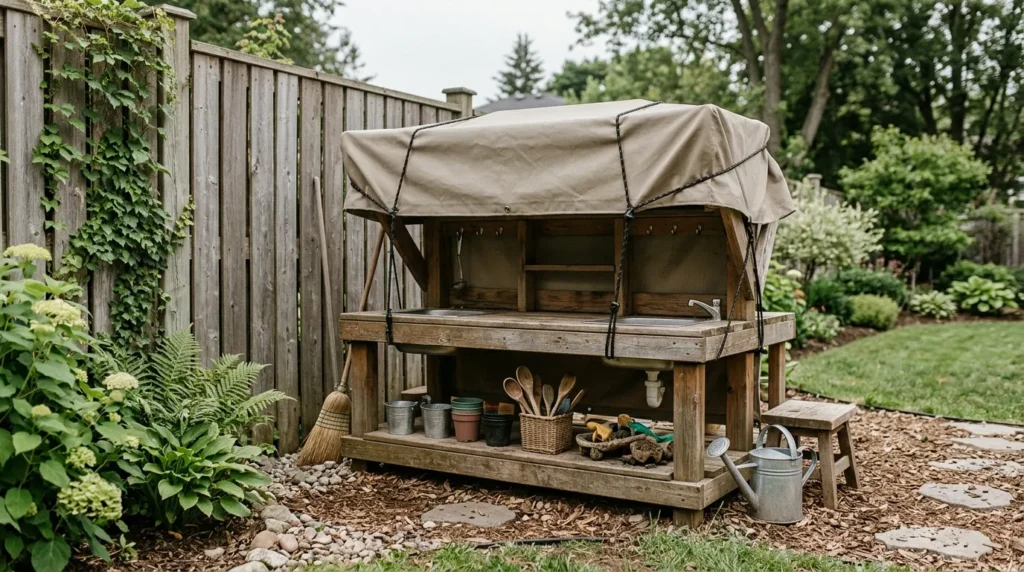
Outdoor play stations need a little protection if you want them to stay attractive and functional through changing weather. A weather-resistant finish on wood, rust-resistant hardware, and a simple waterproof cover can make a huge difference over time. Even if your kitchen is tucked near a fence or wall, it will still face sun exposure, dampness, and shifting temperatures. Sealing the wood and choosing durable materials from the start helps prevent cracking, fading, and premature wear. This is one of those steps that seems small at first but saves a lot of frustration later.
The real benefit here is consistency. When the kitchen stays in good condition, children can use it more often without you having to keep fixing or replacing parts. I have noticed that outdoor projects last much longer when families think about weather early instead of treating it as an afterthought. A fitted grill cover, outdoor furniture cover, or simple tarp can work well between play sessions. If you live in a wetter part of the USA, raising the legs slightly off the ground can also help. That extra care keeps the station looking better and feeling ready to use.
Shade Corner
- Makes outdoor play more comfortable in warm weather
- Helps protect kids from strong afternoon sun
- Keeps surfaces cooler to the touch
- Encourages longer play sessions outside
- Makes the whole area feel more welcoming and intentional
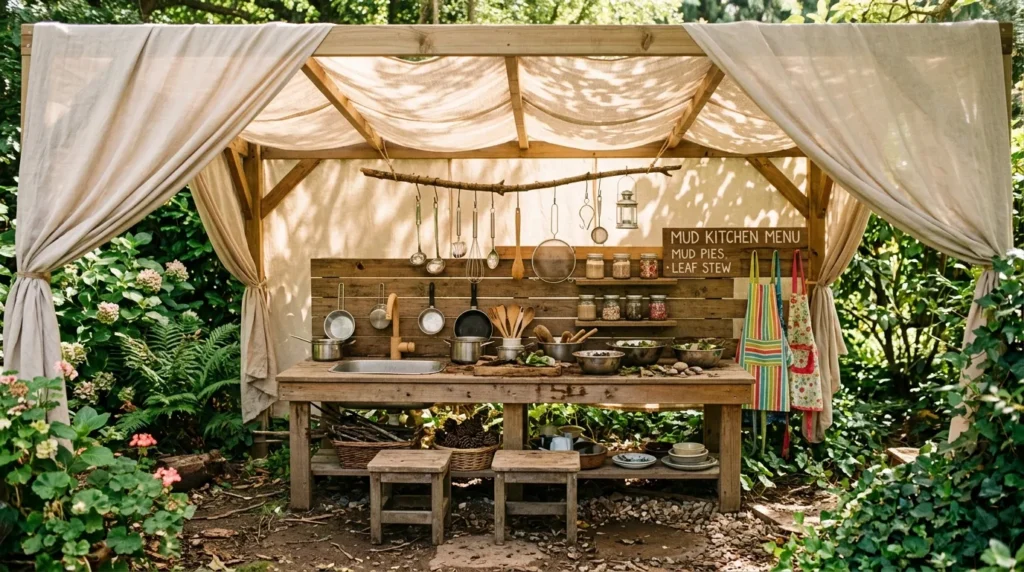
A little shade can make the difference between a kitchen kids use for ten minutes and one they stay with for an hour. If the setup sits in direct sun, the counter, bowls, and tools can get too hot, especially in summer. Positioning the station under a tree, beside a fence line, near a covered patio, or beneath a simple canopy helps keep it more comfortable. Shade also softens the visual look of the area, making it feel calmer and more integrated into the backyard instead of exposed in the middle of the lawn.
This idea matters because comfort always affects how children play. I have noticed that when outdoor stations feel cooler and less glaring, kids settle in faster and stay engaged longer. A shade sail, patio umbrella, or pergola edge can all work beautifully depending on your yard. If full shade is not possible, aim for morning light instead of late afternoon exposure. That is why many designers recommend thinking about sun direction before final placement. A shaded kitchen feels more inviting, more usable, and much easier for families to enjoy through the hottest months.
Simple Seating
- Gives kids a place to pause, sort, or work more comfortably
- Helps support siblings or friends playing together
- Adds flexibility for quieter, slower play moments
- Makes the area feel more complete and child-friendly
- Useful for setting down baskets or extra tools
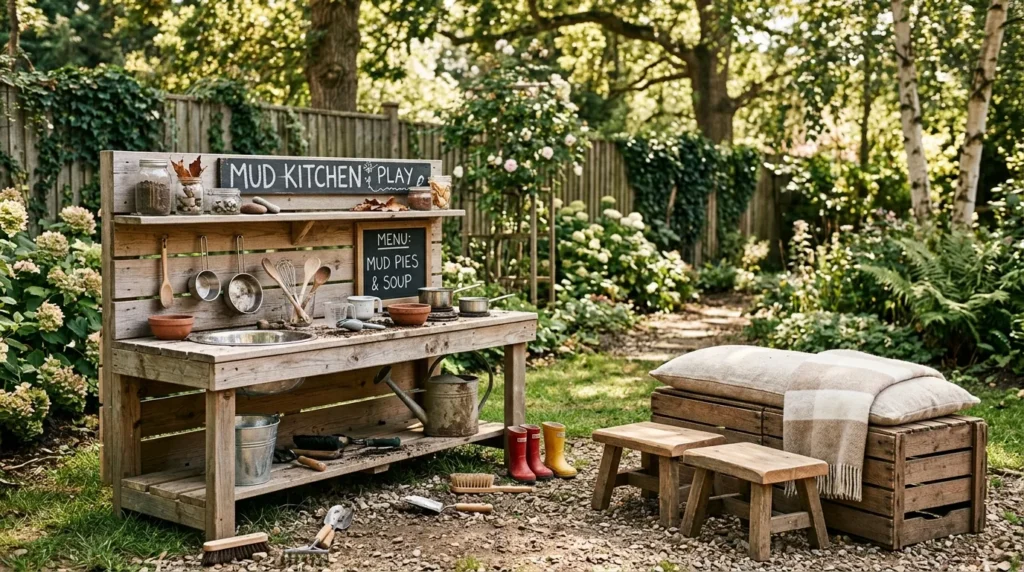
A small bench, tree stump, crate seat, or low stool can add a lot of function to an outdoor play kitchen. Even though many children prefer to stand while mixing and pouring, seating creates a place to pause, organize collected items, or shift into calmer activities. It also helps when more than one child is using the space and someone wants to sit nearby with bowls, spoons, or nature finds. A simple seat makes the area feel more welcoming and gives the setup a more thoughtful, finished look without requiring much extra room.
The biggest benefit is flexibility. In my experience, children use outdoor spaces in more ways than adults expect, and seating often becomes part of the pretend play itself. It can turn into a restaurant bench, a market stall seat, or a prep station for collected ingredients. Choose something sturdy, easy to move, and weather-friendly so it fits the rest of the setup naturally. Wooden stools, sealed crates, or low outdoor benches work especially well. This kind of small addition helps the kitchen feel more usable, more social, and more connected to the way children actually play.
Easy Cleanup
- Makes the setup simpler for parents to maintain
- Helps kids learn basic reset habits after play
- Keeps mud and tools from spreading across the yard
- Supports more frequent use without feeling overwhelming
- Protects the station from buildup and clutter
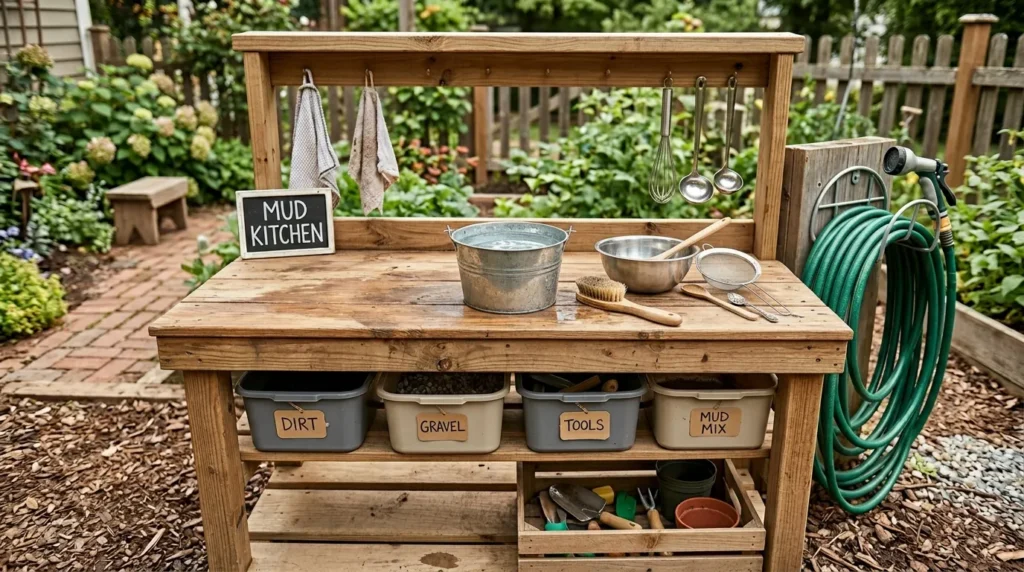
Cleanup is one of the most important parts of a successful mud kitchen because it affects whether the space feels fun or frustrating over time. A bucket for rinsing tools, a brush for sweeping surfaces, and a simple bin for loose materials can make the whole area much easier to reset. When cleanup tools are built into the design, families are more likely to use the kitchen regularly without dreading the mess afterward. This does not mean the setup needs to be spotless. It just needs a simple system that keeps everything manageable.
What makes this idea work is that it supports real-life use. I have seen this work well in many homes because parents are much more likely to keep outdoor projects going when cleanup feels quick and realistic. A removable tray, hose access, or nearby gravel area can make rinsing easier after wetter play sessions. You can also hang a small hand towel or keep a plastic tub underneath for muddy tools. These simple details keep the station ready for next time and help children learn that outdoor play can be both messy and organized.
Painted Finish
- Gives the kitchen a more polished and playful look
- Helps coordinate the setup with your backyard style
- Adds another layer of surface protection to wood
- Makes repurposed materials feel more intentional
- Easy to customize with soft, natural, or cheerful colors
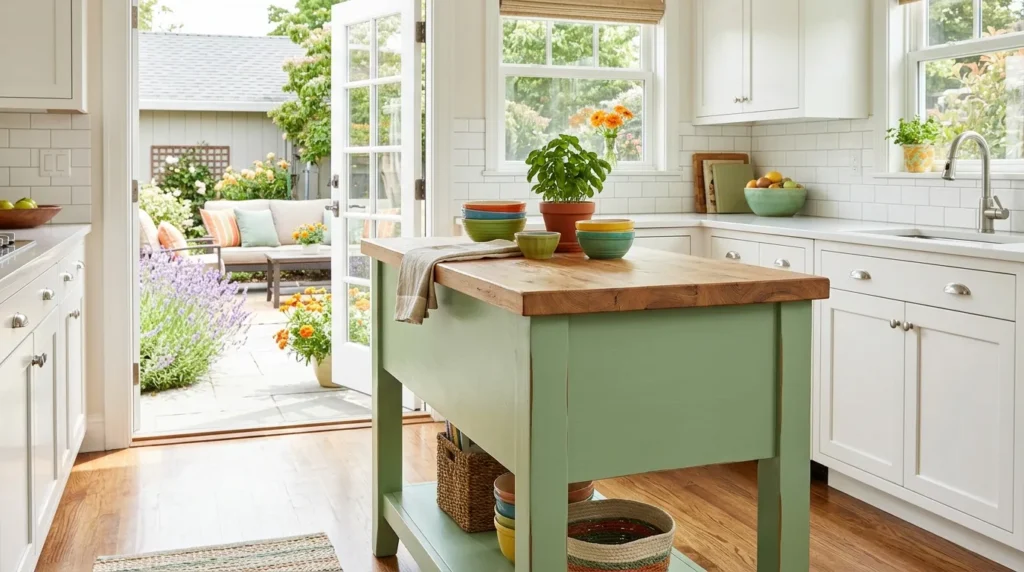
A painted finish can completely change the personality of the kitchen. Even a simple structure made from reused wood looks more thoughtful once it is painted in a color that suits the yard. Soft sage, dusty blue, creamy white, charcoal, or muted clay tones tend to work especially well because they feel playful without being too loud. Paint can also help unify mismatched materials, making old cabinets, shelves, and scrap wood look like one cohesive project. That visual consistency gives the station a stronger presence and helps it feel more like a purposeful feature.
The reason paint matters is that it bridges the gap between practical and attractive. In my experience, families enjoy backyard spaces more when the play areas look like they belong there instead of feeling temporary or unfinished. Choose an exterior-safe paint and sand surfaces well before applying it. If you want a more natural look, you can paint only the back panel or shelves and leave the counter wood exposed. This balance keeps the station charming and usable while giving it a cleaner, more styled appearance that works beautifully in a family yard.
Pretend Menu Board
- Encourages imagination, language, and pretend restaurant play
- Gives children a space to name recipes and creations
- Adds a fun visual detail to the setup
- Easy to update with chalk or washable markers
- Helps the station feel more interactive and complete
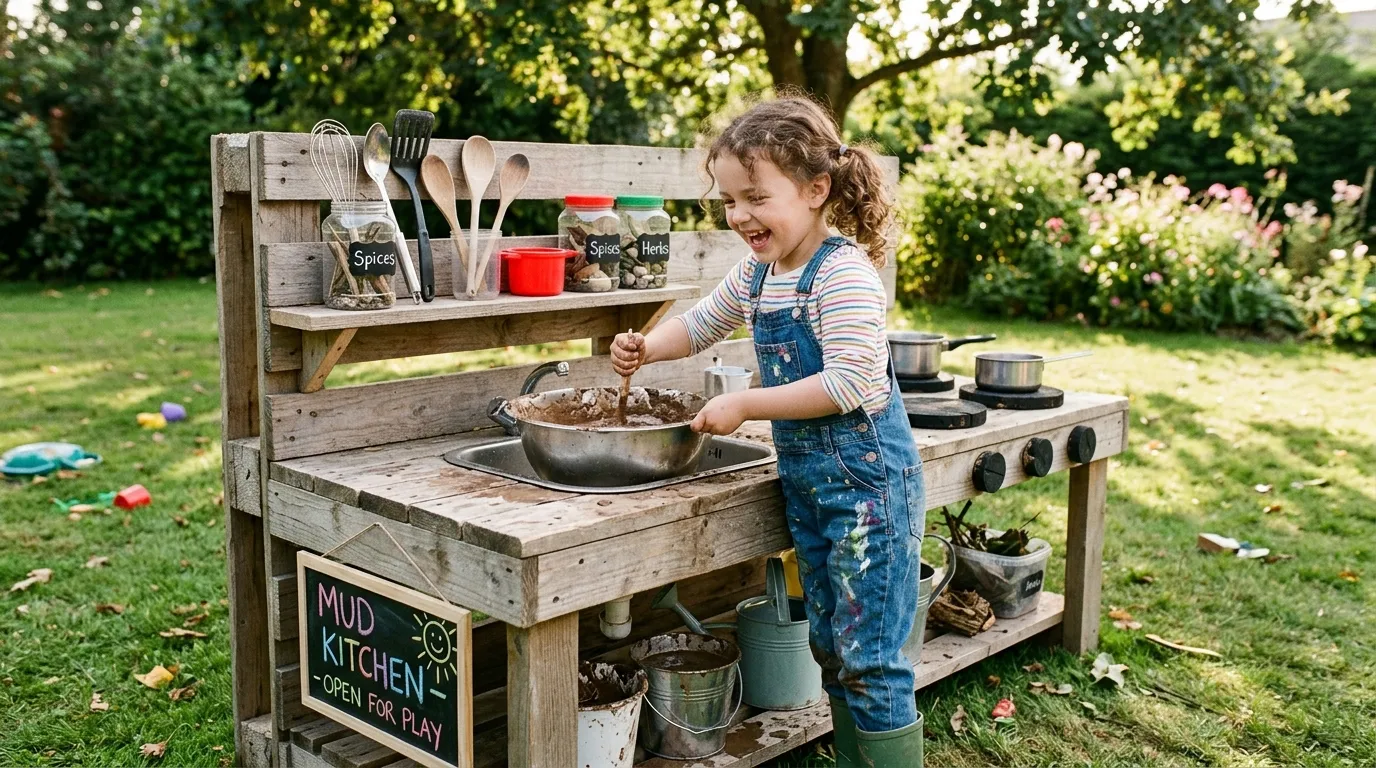
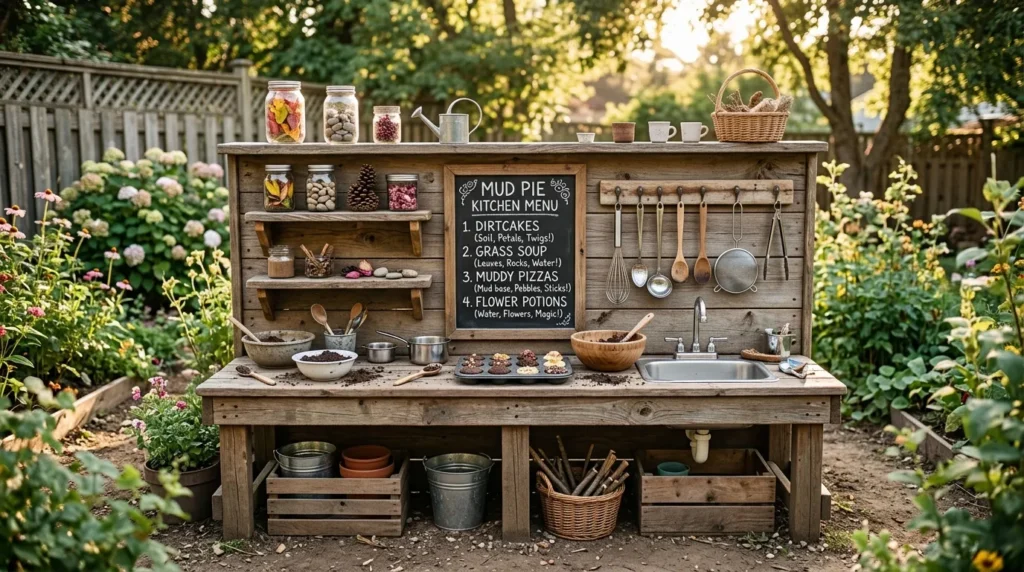
A menu board brings storytelling into the kitchen and gives children one more reason to stay engaged. A small chalkboard, painted wood panel, or clip-on sign can become a place for writing pretend recipes, daily specials, ingredient lists, or funny food names. This feature works especially well for kids who enjoy role play, especially when the kitchen turns into a café, bakery, or outdoor restaurant. It adds personality without requiring much space and helps the play area feel more complete, especially when siblings or friends are pretending to cook and serve together.
What makes this feature so useful is that it supports a different kind of creativity beyond scooping and mixing. I have noticed that children often move naturally between physical play and imaginative storytelling, and a board gives them a visible way to expand those ideas. Keep a few chunky chalk pieces in a weather-safe tin or basket nearby so the board is always easy to use. You can also write the day’s pretend menu for younger kids to spark ideas. This simple detail adds charm, interaction, and a playful sense of purpose to the kitchen.