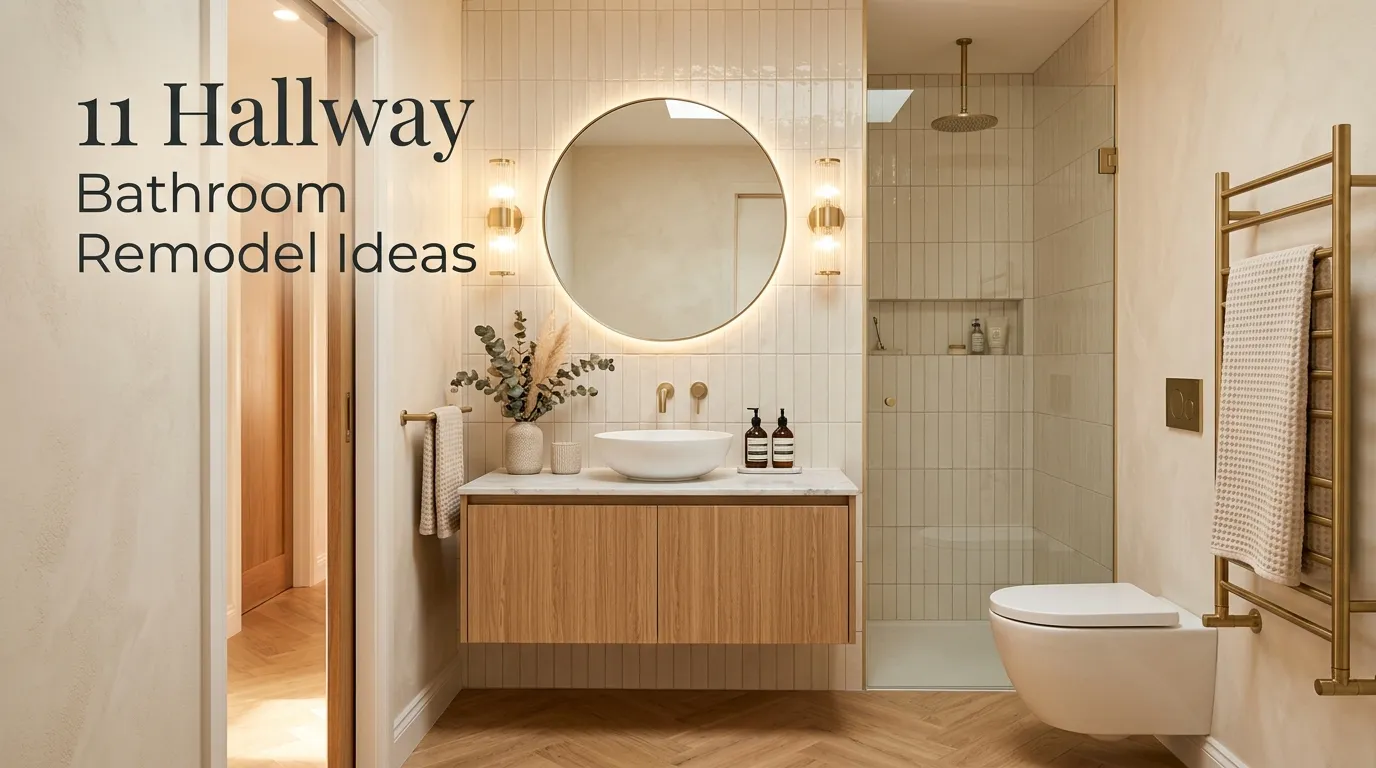
11 hallway bathroom remodel ideas
A hallway bathroom may be one of the smallest rooms in the home, but it often works harder than almost any other space. It is the bathroom guests see, the one kids use before school, the quick-stop powder space during parties, and sometimes the only full bath shared by several bedrooms. Because it sits near main traffic areas, the design has to feel clean, welcoming, durable, and easy to maintain without losing style.
For USA homeowners, remodeling this type of bathroom is often about smart choices rather than oversized luxury. A better vanity, brighter lighting, durable tile, hidden storage, a cleaner shower layout, and warmer finishes can completely change how the room feels. The goal is not just making the bathroom prettier. It is making it function better for real daily routines.
These hallway bathroom remodel ideas focus on practical upgrades with Pinterest-worthy style. Each idea is designed to help the space feel brighter, more organized, more current, and more comfortable while still working for busy families, guests, and everyday home life.
1. Floating Vanity
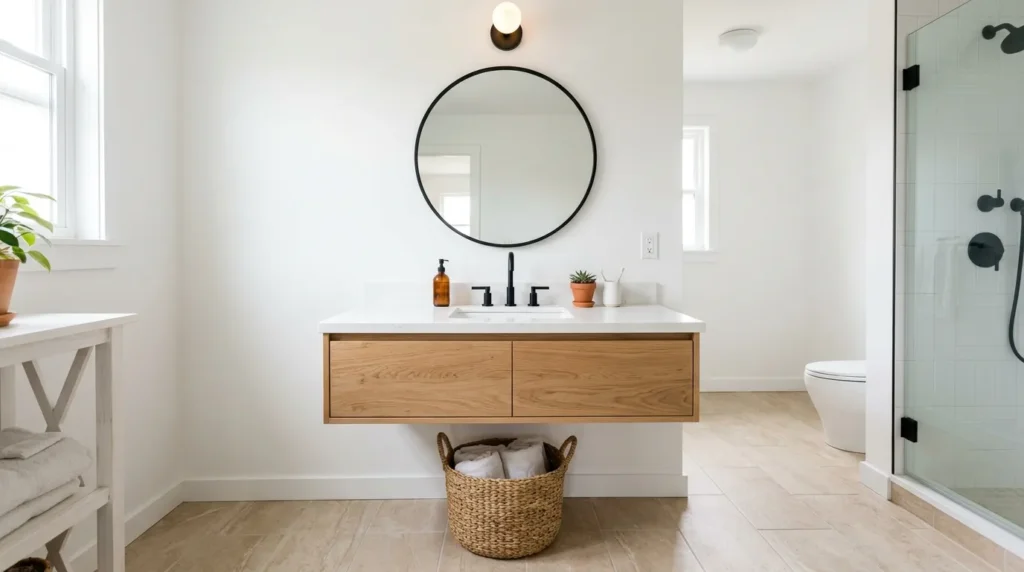
- Opens floor space and makes the room feel larger
- Works well in narrow or compact bathrooms
- Adds a clean modern look without heavy cabinetry
- Allows baskets, lighting, or open space underneath
- Best with wall-mounted plumbing and durable countertop materials
A floating vanity can instantly make a small bathroom feel lighter, cleaner, and more spacious. This idea works because lifting the cabinet off the floor exposes more visible flooring, which helps the eye read the room as larger. In a hallway bathroom, where square footage is often limited, that visual openness matters. A floating vanity also gives the space a modern edge without needing dramatic construction. In my experience, warm wood tones or soft white finishes work especially well because they feel fresh but still inviting.
The practical benefit is that the bathroom becomes easier to clean and less visually crowded. Choose a vanity with drawers instead of deep cabinet doors if daily storage is important, because drawers keep toiletries easier to reach. Pair it with a quartz countertop, matte black faucet, brushed nickel hardware, or a simple vessel sink depending on the style. If plumbing allows, under-vanity lighting can add a subtle glow at night. The result feels polished, functional, and ideal for a busy shared bathroom.
2. Large Mirror
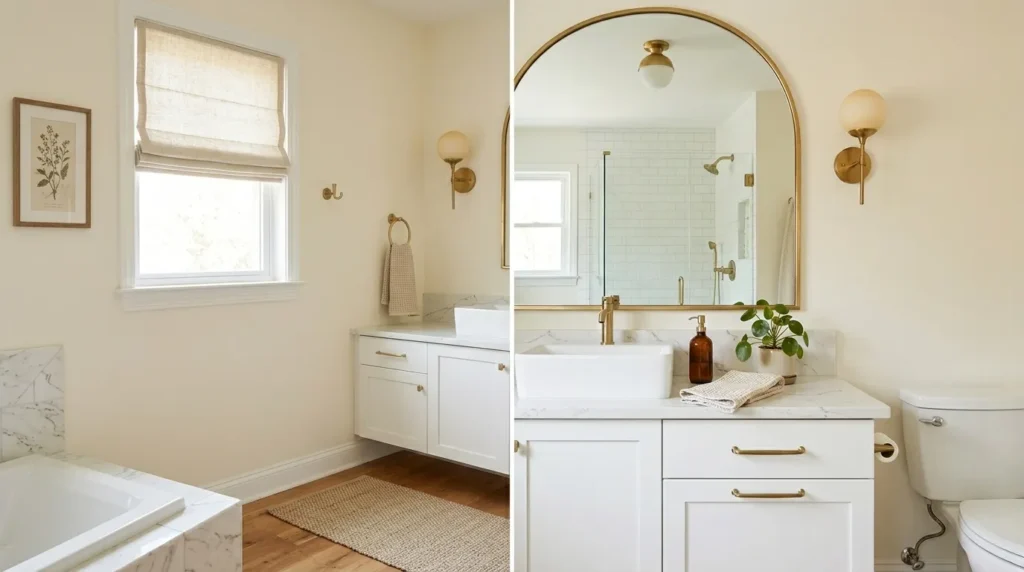
- Reflects light and visually expands the space
- Makes narrow bathrooms feel brighter and wider
- Works with modern, classic, or farmhouse styles
- Helps improve daily routines like shaving and makeup
- Best with framed, arched, or backlit mirror designs
A large mirror is one of the most effective upgrades for making a bathroom feel more open. This works because mirrors reflect both natural and artificial light, helping small spaces feel brighter without changing the footprint. If the bathroom has no window, the mirror becomes even more important because it can soften shadows and make the room feel less enclosed. That’s why many designers recommend choosing the largest mirror that still fits comfortably above the vanity.
For a simple remodel, replace a small builder-grade mirror with a framed rectangle, rounded-edge mirror, arched mirror, or LED-backlit style. A black frame adds contrast, brass warms the space, and wood brings texture. Make sure the mirror width feels balanced with the vanity rather than overpowering it. When paired with sconces or a clean overhead light, the mirror improves both style and function. This change is especially useful for guest bathrooms because it gives the room a finished, thoughtful appearance.
3. Statement Tile
- Adds personality without needing a large footprint
- Works beautifully on floors, shower walls, or vanity backsplashes
- Helps create a Pinterest-worthy focal point
- Can make simple fixtures feel more custom
- Best with porcelain, ceramic, marble-look, or patterned tile
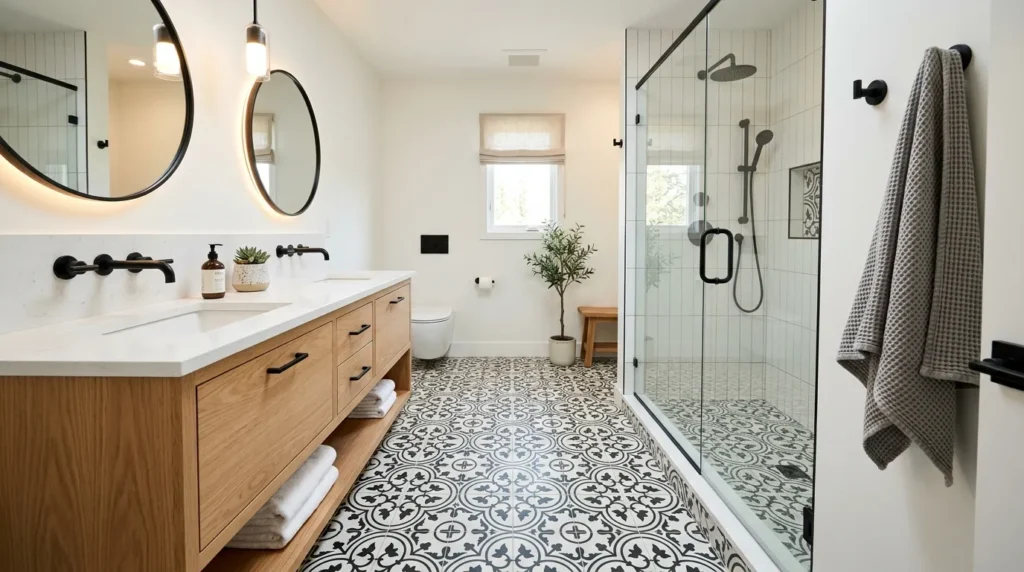
Statement tile can turn a plain bathroom into a designed space with just one strong surface. This idea works because small bathrooms do not need many decorative elements when the tile already carries visual interest. A patterned floor, vertical shower tile, zellige-style backsplash, or marble-look wall can create enough detail to make the entire remodel feel custom. I’ve noticed this works especially well when the rest of the finishes stay simple, allowing the tile to stand out clearly.
The key is choosing one main tile moment rather than using bold patterns everywhere. For a family bathroom, porcelain is often practical because it resists moisture and is easier to maintain than many natural stones. Use patterned tile on the floor for charm, stacked subway tile for a clean modern look, or vertical tile in the shower to visually heighten the room. Pair it with simple grout lines and coordinated hardware. The result feels stylish, durable, and memorable without becoming overwhelming.
4. Glass Shower
- Makes the bathroom feel more open and brighter
- Shows off tile work instead of hiding it
- Works well for tub-to-shower conversions
- Gives the room a cleaner, updated finish
- Best with frameless glass, clear panels, and proper ventilation
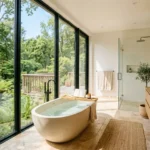
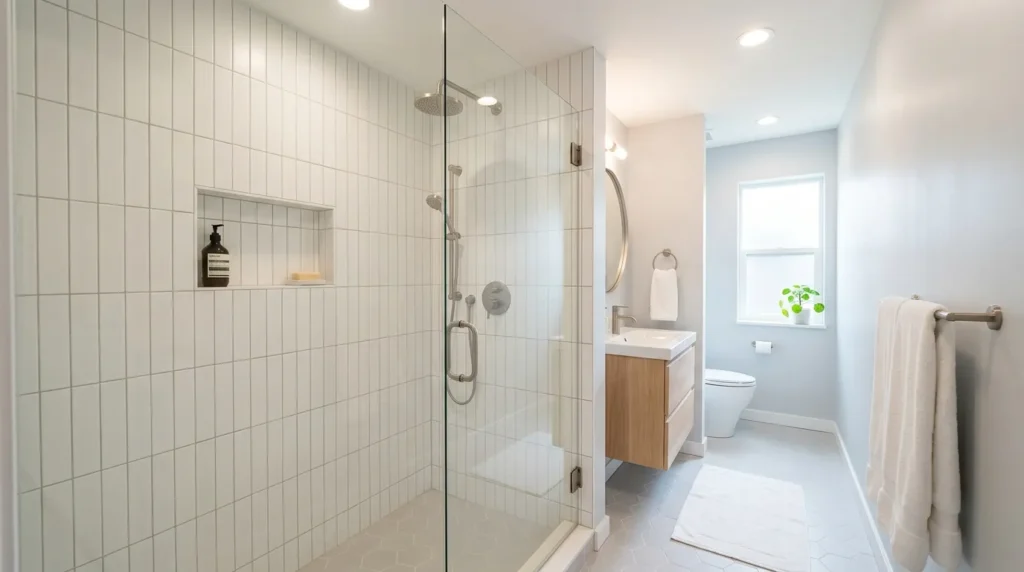
A glass shower can make a compact bathroom feel more spacious because it removes visual barriers. Traditional curtains or bulky framed doors can break up the room and make it feel smaller. Clear glass lets the eye travel all the way to the shower wall, which creates a more open layout. This is especially helpful in a hallway bathroom where guests may notice the room quickly and small details make a big difference.
For a remodel, consider frameless glass if the budget allows, or a semi-frameless option for a more affordable update. Make sure the shower has proper slope, waterproofing, and ventilation before focusing on finishes. If privacy matters, lightly textured glass can work, but clear glass usually gives the brightest effect. Pair it with vertical tile, niche storage, and a handheld showerhead for better function. This upgrade makes the bathroom feel cleaner, newer, and more spa-like while still being practical for everyday use.
5. Warm Neutrals
- Creates a calm and welcoming bathroom palette
- Works with wood, stone, brass, black, or chrome finishes
- Helps small spaces feel soft instead of sterile
- Easy to style with towels, art, and natural textures
- Best with beige, ivory, greige, taupe, cream, and soft brown tones
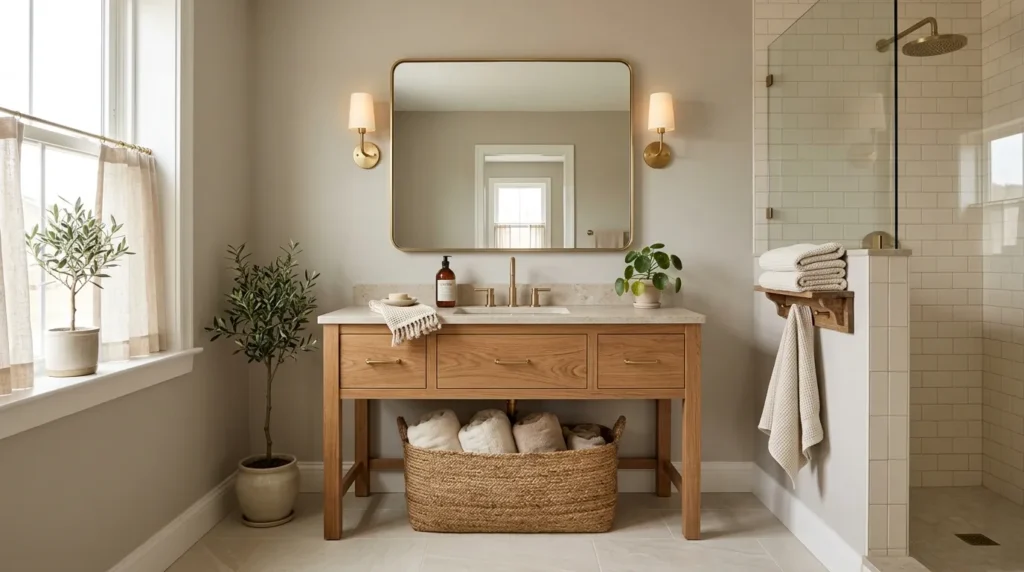
Warm neutrals can make a bathroom feel cozy, polished, and timeless without looking boring. This palette works because it softens hard surfaces like tile, mirrors, counters, and plumbing fixtures. Instead of bright white everywhere, warm tones create depth and comfort. A hallway bathroom often needs to feel guest-friendly, and warm neutrals help the space look clean while still feeling inviting. They also photograph beautifully for Pinterest because the mood feels calm and easy to imagine.
To use this idea well, layer several tones instead of choosing one flat beige. Try creamy walls, a light oak vanity, greige floor tile, ivory towels, and brushed brass or matte black hardware. Add texture through woven baskets, ribbed glass, stone-look counters, or a small framed print. Warm neutrals are practical because they are easy to update seasonally with accessories. This remodel direction is especially smart if you want a bathroom that feels current now but will not age quickly.
6. Built-In Storage
- Reduces counter clutter and improves daily function
- Works well for shared family bathrooms
- Makes small spaces feel more organized
- Can be added through niches, cabinets, shelves, or recessed units
- Best with moisture-resistant materials and easy-access layouts
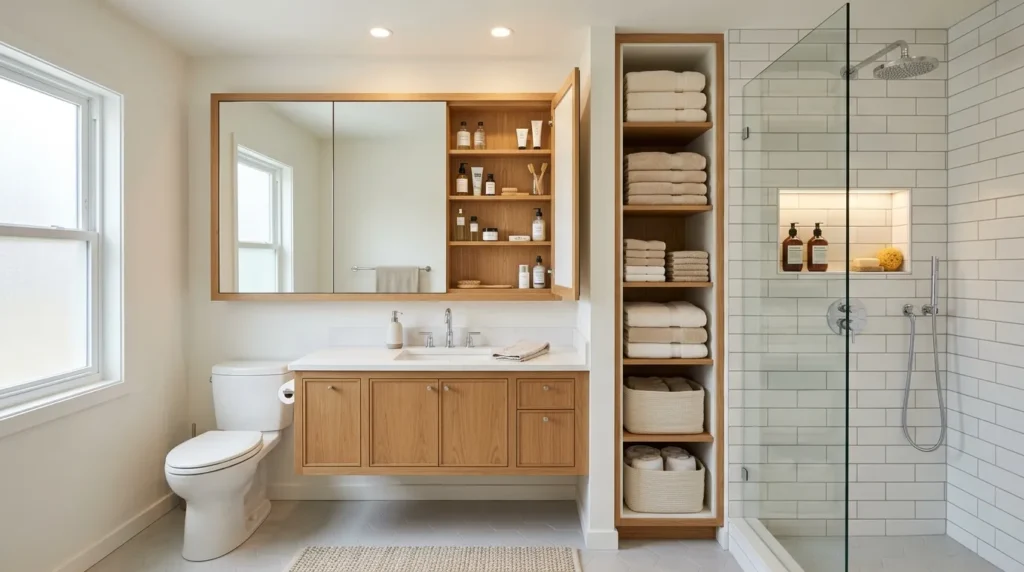
Built-in storage can completely change how a bathroom functions, especially when space is limited. This idea works because clutter makes small bathrooms feel smaller, even when the finishes are beautiful. A recessed medicine cabinet, shower niche, tall linen tower, or built-in shelf can give everyday items a proper place. In my experience, storage upgrades are often what homeowners appreciate most after the remodel because they improve daily routines, not just appearance.
For a practical layout, think about what the bathroom actually needs to hold. Kids’ products, guest towels, toilet paper, cleaning supplies, hair tools, and skincare all need different storage zones. A recessed medicine cabinet keeps essentials hidden, while a shower niche removes bottles from the floor or tub edge. Floating shelves can work if styled lightly, but closed storage is better for busy households. The finished bathroom feels calmer, cleaner, and easier to maintain because everything has a clear purpose and place.
7. Better Lighting
- Improves makeup, shaving, and daily grooming
- Makes the bathroom feel brighter and more expensive
- Helps small rooms avoid harsh shadows
- Works with sconces, ceiling lights, pendants, or backlit mirrors
- Best with layered lighting and warm-white bulbs
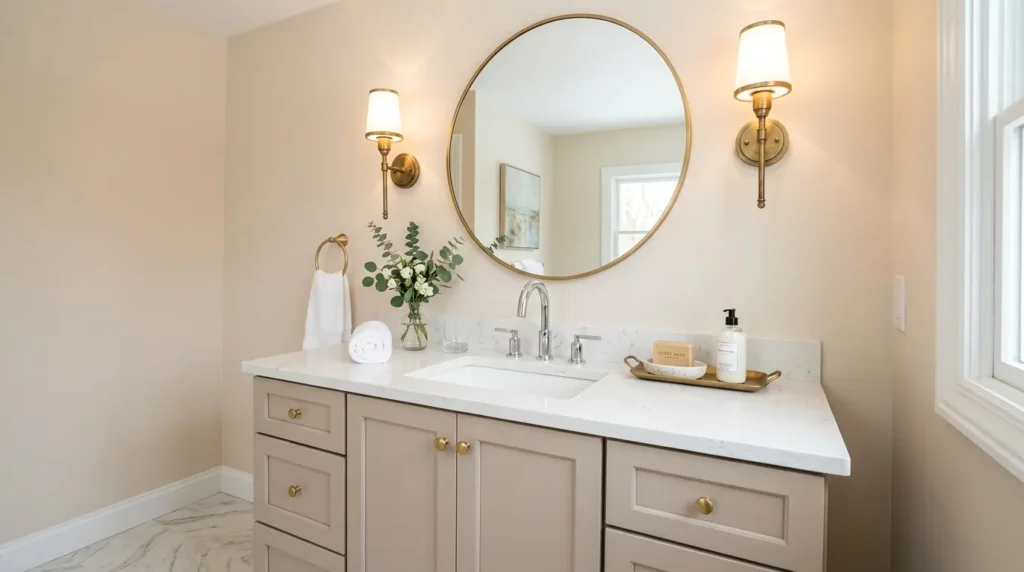
Better lighting can make a bathroom remodel feel more expensive even when the layout stays the same. This works because lighting affects color, mood, mirror clarity, and how finishes appear. A single overhead bulb often creates shadows on the face and makes the room feel flat. Layered lighting, especially around the mirror, makes the space more functional and much more flattering. That is why designers often prioritize lighting early in a remodel plan.
For best results, use sconces on both sides of the mirror when space allows, or choose a wide vanity light above the mirror if the wall is narrow. Warm-white bulbs usually feel more inviting than cool blue-toned lighting. Add a ceiling fixture for general brightness and consider a dimmer for evening use. If the bathroom has no window, lighting becomes even more important. This upgrade makes the room feel cleaner, more welcoming, and easier to use every single day.
8. Compact Fixtures
- Helps small bathrooms feel less crowded
- Improves movement around the vanity, toilet, and shower
- Works well for narrow layouts and older homes
- Allows style upgrades without wasting space
- Best with slim vanities, round toilets, and smaller-scale sinks
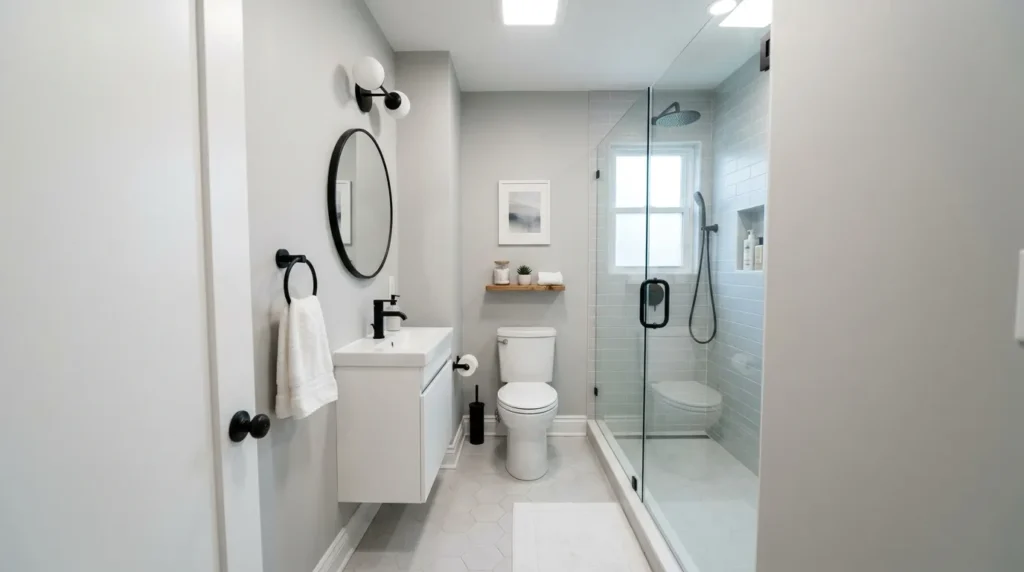
Compact fixtures can make a tight bathroom feel more comfortable without requiring a major expansion. This idea works because many older bathrooms have fixtures that are too bulky for the room. A slimmer vanity, rounded toilet, smaller sink, or space-saving shower door can improve flow immediately. In a hallway bathroom, every inch matters because the room often serves guests and family members throughout the day. Better proportions can make the space feel intentional instead of cramped.
When remodeling, measure clearances before choosing anything decorative. Make sure cabinet doors open comfortably, the toilet area feels usable, and the shower entry does not block movement. A 24- or 30-inch vanity may work better than a wide cabinet if the room is narrow. Wall-mounted faucets and corner shelves can also save space. The finished result is not only prettier but easier to navigate. This is a smart upgrade for small homes, townhouses, condos, and older suburban layouts.
9. Moody Accent
- Adds depth and drama to a small bathroom
- Works well on vanities, walls, tile, or hardware
- Makes simple rooms feel more custom
- Beautiful with brass, black, wood, and marble-look finishes
- Best with deep green, navy, charcoal, espresso, or clay tones
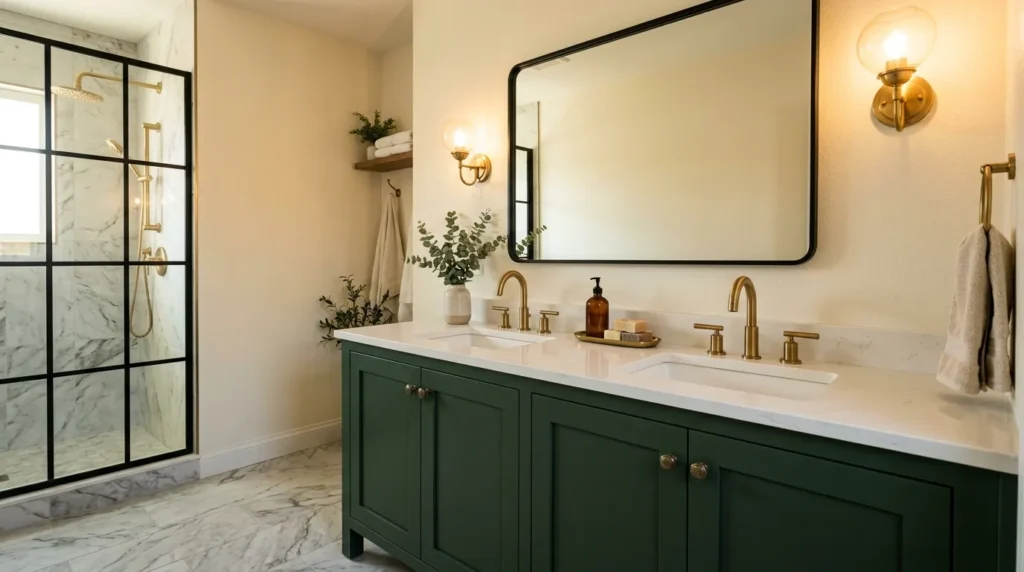
A moody accent can make a small bathroom feel stylish, bold, and carefully designed. This idea works because compact rooms can handle drama when it is used with balance. A deep green vanity, navy wall, charcoal tile floor, or dark bronze mirror can create a rich focal point without overwhelming the whole home. Since the bathroom is usually seen in short visits, it is a great place to try more personality than you might use in a larger room.
To keep the look practical, balance darker finishes with good lighting, reflective surfaces, and lighter counters or tile. A dark vanity with a white quartz top feels crisp, while a navy wall with brass sconces feels classic. If the room has no natural light, use the moody color on one feature instead of every wall. This approach creates depth and contrast while keeping the space usable. It is especially good for homeowners who want a Pinterest-worthy bathroom with character.
10. Textured Walls
- Adds visual interest without taking up floor space
- Works with paint, wallpaper, tile, paneling, or plaster finishes
- Helps small bathrooms feel more designed
- Great for powder-style guest bathrooms
- Best with moisture-aware materials and balanced patterns
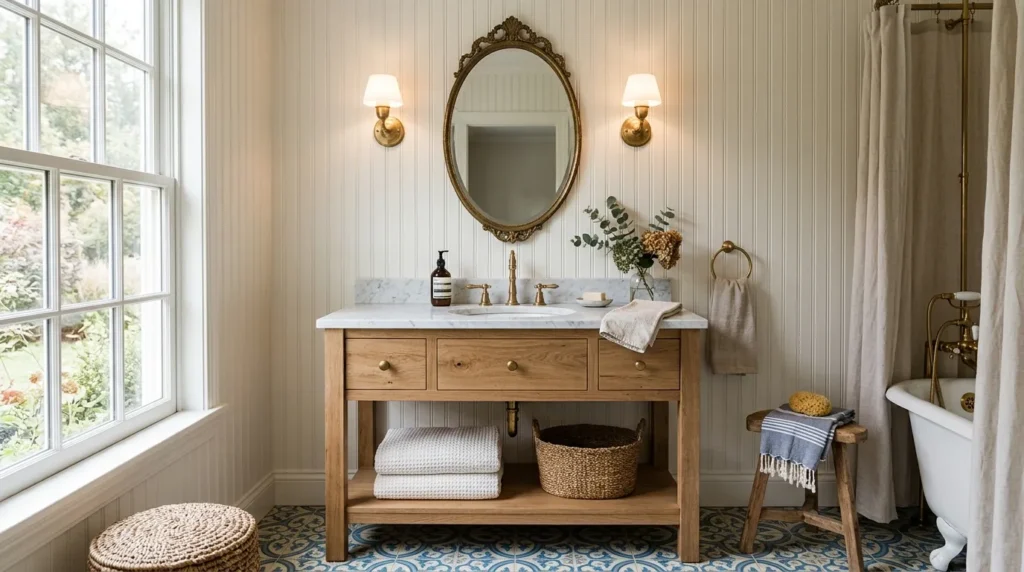
Textured walls can give a bathroom personality without adding clutter or bulky decor. This idea works because wall treatments use vertical space, which is valuable in small bathrooms. Beadboard, shiplap, limewash-style paint, waterproof wallpaper, or vertical tile can make the room feel layered and finished. I’ve seen this work well in many homes where the bathroom layout stayed simple, but the wall texture made the remodel feel custom.
For practical use, choose materials that can handle moisture and cleaning. In a full bath with a shower, use proper ventilation and avoid delicate wallpaper too close to wet zones unless it is designed for bathrooms. Beadboard on the lower wall with paint above can feel classic, while vertical paneling makes the ceiling feel taller. A subtle wallpaper can create a charming guest-bath feel. This upgrade is ideal when you want visual impact but do not want to crowd the room with extra decor.
11. Hotel Finish
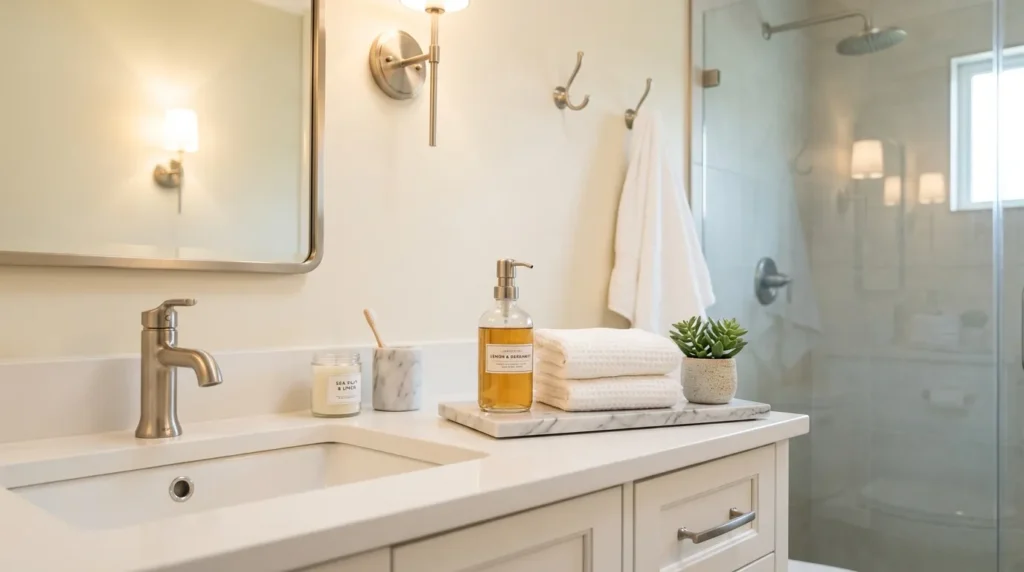
- Creates a clean, polished, guest-ready bathroom feel
- Works with white towels, simple trays, and refined hardware
- Makes everyday routines feel more elevated
- Easy to achieve after larger remodel choices are complete
- Best with matching towels, soap dispensers, hooks, and minimal decor
A hotel finish makes the bathroom feel intentionally styled, clean, and ready for guests. This idea works because the final details often decide whether a remodel feels complete. Matching towels, a simple countertop tray, coordinated hardware, fresh soap, and a clean shower setup can make even a modest bathroom feel more polished. In a hallway bathroom, this matters because guests use the space and notice whether it feels cared for.
To create the look, keep surfaces edited and choose practical accessories that match the finish palette. Use white or neutral towels, a quality hand soap dispenser, a small lidded jar for essentials, and hooks that match the faucet or mirror frame. Add one piece of art or greenery if the room needs warmth, but avoid crowding the counter. This final layer is affordable compared to construction changes, yet it creates a strong transformation. It gives the bathroom a calm, finished, welcoming feel.