10 Garden Ideas Minimalist
A minimalist garden can make even a small outdoor space feel calm, polished, and expensive without needing constant maintenance. For many USA homeowners, the goal is not a crowded yard filled with random plants, but a clean outdoor area that feels intentional, easy to enjoy, and simple to maintain through changing seasons. This guide focuses on practical minimalist outdoor concepts that work for patios, side yards, front entries, townhomes, suburban backyards, and compact spaces. You will find layouts, materials, styling logic, and visual details that make each idea feel Pinterest-ready while still being realistic for everyday living.
Minimalist outdoor design works because it removes clutter and highlights what matters most: shape, texture, balance, and breathing room. Instead of buying more decor, you choose fewer pieces that look better together. Think smooth gravel, warm wood, clean planters, sculptural plants, soft lighting, and defined walking paths. These ideas are especially useful if you want a backyard that photographs beautifully, feels peaceful after work, and does not demand every weekend. Each section below gives you a clear concept, practical tips, and a visual direction you can adapt to your own home.
1. Calm Stone Border
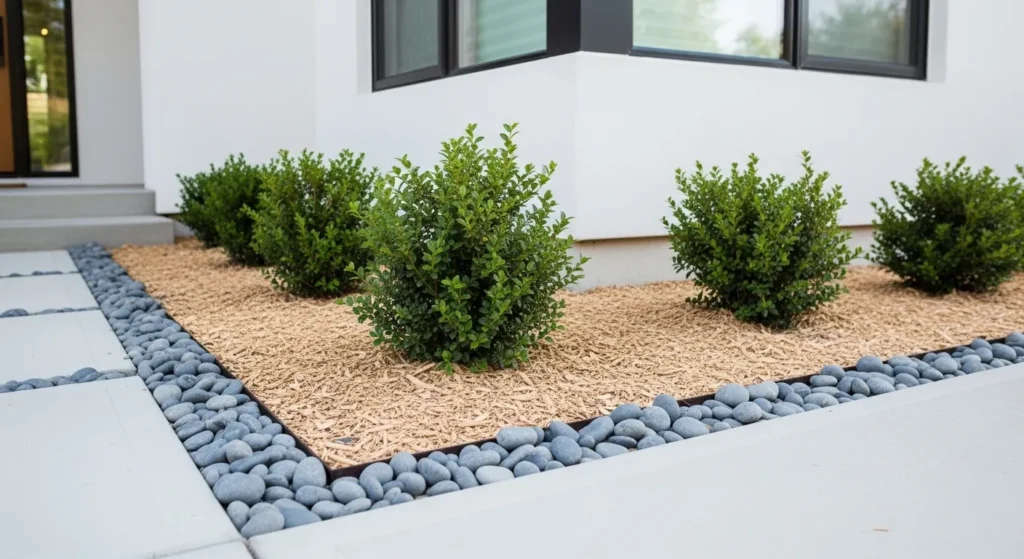
- Creates a clean frame around plants, walkways, and garden beds.
- Works well with gravel, mulch, shrubs, and modern home exteriors.
- Helps reduce a messy, unfinished look in small yards.
- Adds structure without needing bold colors or heavy decor.
A stone border instantly makes a garden look more organized because it gives every plant and pathway a clear visual frame. In minimalist yards, the border should feel quiet rather than decorative, so choose smooth river stones, limestone blocks, concrete edging, or pale gravel lines. This idea works beautifully around front walkways, narrow side yards, and small patio beds where loose mulch can look messy. I’ve noticed that one clean edge often improves the entire space faster than adding more plants, especially when the yard already has strong greenery and simple architecture.
The real transformation comes from how the border controls the eye and reduces visual noise. Keep the stones in one color family, such as soft gray, warm beige, charcoal, or creamy white, and repeat that color near the patio or entryway. This creates a pulled-together look without feeling overly designed. For practical use, place landscape fabric under gravel areas, leave enough room for plant growth, and avoid mixing too many stone sizes. The result is neat, durable, and easy to maintain through rain, heat, and seasonal cleanups across most American yards.
2. Sleek Raised Beds
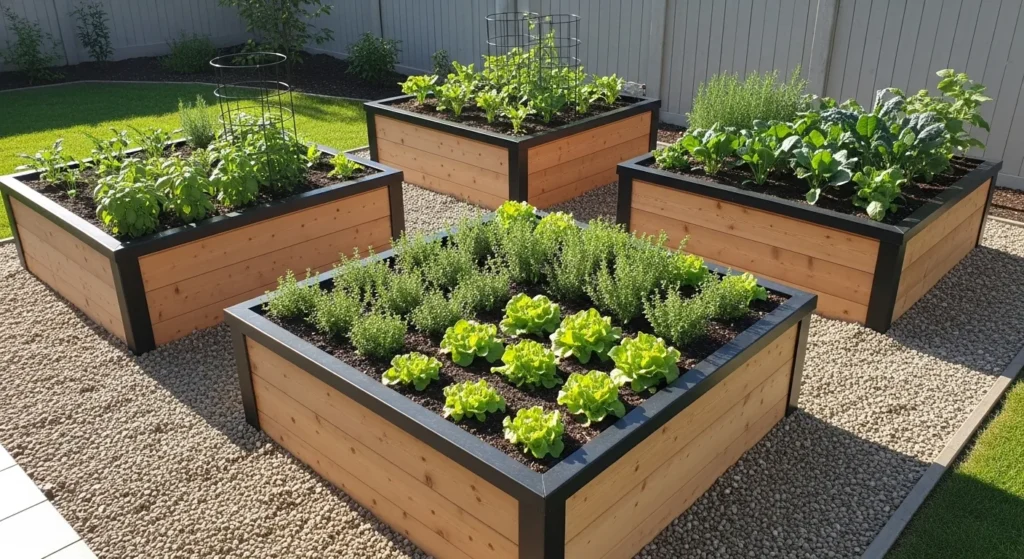
- Gives vegetable, herb, or flower areas a more organized appearance.
- Works with cedar, black metal, corten steel, concrete, or composite boards.
- Makes planting, watering, harvesting, and weeding easier.
- Adds strong lines that suit modern and minimalist outdoor spaces.
Raised beds can feel modern instead of rustic when the lines are simple, the materials are consistent, and the planting looks intentional. For a minimalist look, use cedar, black metal, corten steel, smooth concrete, or composite boards with clean square corners. This approach is perfect for vegetables, herbs, flowers, or low-maintenance greenery because it lifts the planting area and makes the yard feel structured. In my experience, raised beds also help homeowners avoid the scattered look that happens when plants are added randomly across a lawn without a clear plan.
The best layout usually starts with two or three matching beds placed with enough space to walk comfortably between them. Fill them with simple layers: tall herbs in the back, leafy greens in the center, and trailing plants near the edge. Add pea gravel, stepping stones, or compacted decomposed granite around the beds for a crisp finish. This makes watering, harvesting, and weeding easier, while the repeated shapes create a calm Pinterest-worthy rhythm. For USA climates, choose materials that handle sun, snow, and moisture without warping quickly or staining badly.
3. Gravel Lounge Corner
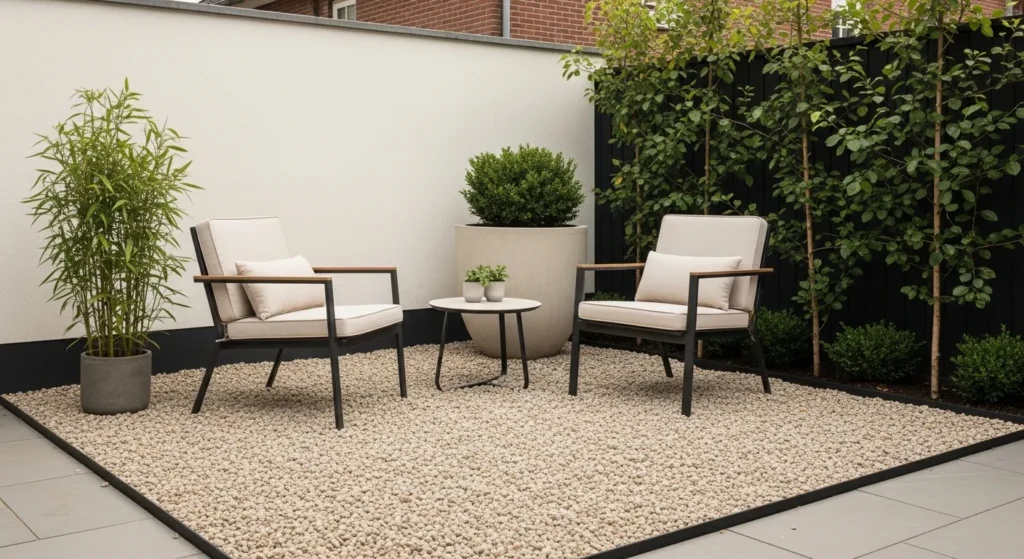
- Turns unused yard space into a peaceful sitting area.
- Costs less than many full patio or deck installations.
- Looks beautiful with neutral outdoor chairs and oversized planters.
- Helps create a low-maintenance, photo-friendly relaxation zone.
A gravel lounge corner turns an unused patch of yard into a calm outdoor room without the cost of a full deck or patio. The minimalist version keeps the palette simple: pale gravel, two lounge chairs, one small table, and a few sculptural plants. It works especially well in suburban backyards, townhouse patios, and side yards where grass struggles to grow. That’s why many designers recommend gravel for low-maintenance spaces; it adds texture, drains well, and instantly makes the area feel purposeful, relaxed, and more finished. It also photographs beautifully from above.
To make the corner feel finished, define the area with metal edging, pavers, or a low stone border before adding weed barrier and gravel. Choose chairs with clean frames, such as black metal, teak, or neutral woven styles, and keep cushions in cream, taupe, olive, or charcoal. Add one large planter rather than several small ones, because larger pieces look calmer and more expensive. This setup becomes a simple place for coffee, reading, or evening conversation, while still staying easy to clean with a rake or leaf blower after windy days.
4. Vertical Herb Wall
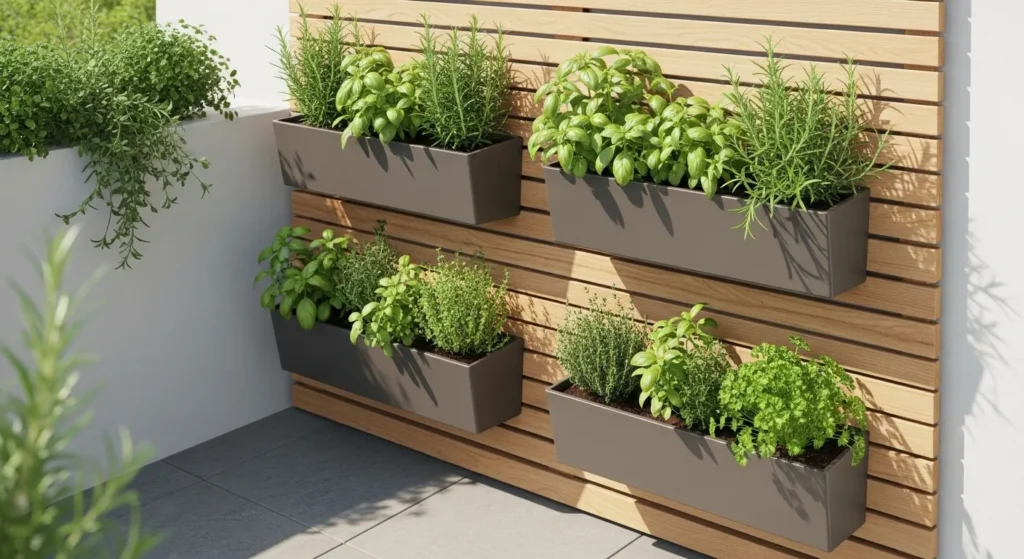
- Saves floor space in small patios, balconies, and narrow yards.
- Adds fresh greenery while staying practical for cooking.
- Works with wall planters, shelves, rails, or pocket systems.
- Creates a clean focal point without cluttering the ground.
A vertical herb wall adds life to a small garden without stealing valuable floor space. This idea is perfect for apartment patios, narrow decks, balcony corners, and compact backyards where every inch matters. Use wall-mounted planters, a slim ladder shelf, wooden rails, or pocket planters in one clean color. Herbs like rosemary, basil, thyme, mint, and parsley bring fragrance, texture, and usefulness, while the vertical layout creates a designed focal point instead of scattered pots sitting around the floor. It also keeps edible greenery within easy reach. This makes the wall feel tidy, useful, and decorative.
The key is to keep the structure simple and repeat the same container style from top to bottom. Mount the wall near the kitchen door or outdoor dining area so the herbs are easy to clip while cooking. Use lightweight potting mix, proper drainage, and labels only if they match the clean look. I’ve seen this work well in many homes because it blends beauty with function. It also gives renters a flexible option, since freestanding vertical shelves can move with them instead of becoming permanent installations on a wall.
5. Simple Water Bowl
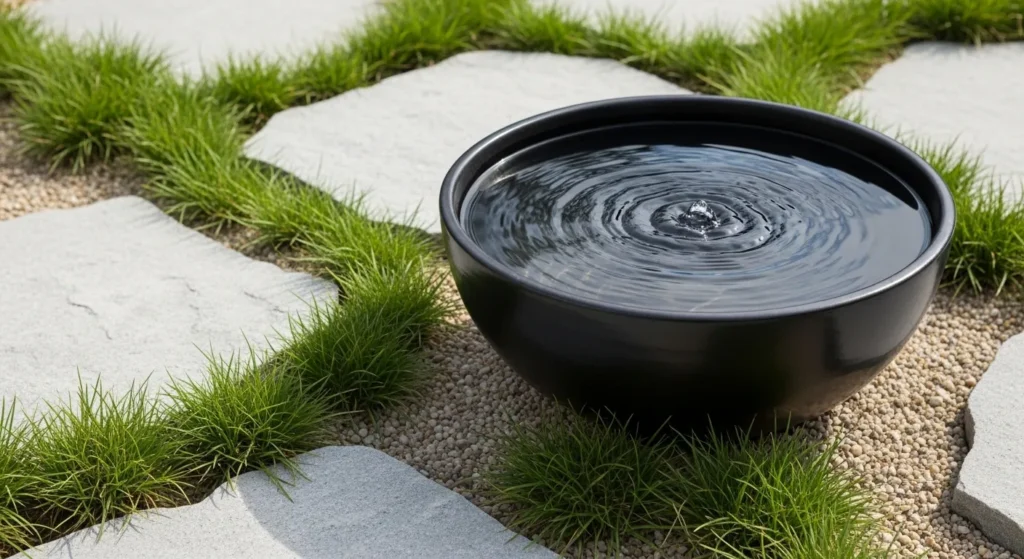
- Adds calm movement without needing a large fountain.
- Works beautifully near patios, seating areas, and shaded beds.
- Creates a spa-like feeling with very little visual clutter.
- Pairs well with gravel, flat stones, grasses, and smooth ceramics.
A simple water bowl brings softness and quiet movement to a minimalist outdoor space without overwhelming the design. Unlike large fountains, a low ceramic bowl, concrete basin, or dark stone vessel feels subtle and calming. Place it near a seating area, entry path, or shaded planting bed where the reflection can catch natural light. This idea works because water creates atmosphere even when the rest of the yard is very restrained, giving the space a spa-like quality with almost no visual clutter. It feels elegant without becoming high maintenance for busy households.
For the cleanest look, choose one bowl with a smooth shape and surround it with gravel, flat stones, or low groundcover. A small solar bubbler can add gentle sound, but it should stay quiet and discreet. Keep nearby plants simple, such as mondo grass, ferns, dwarf boxwood, or Japanese forest grass, depending on your climate. The result feels peaceful from the patio and beautiful in photos, especially during golden hour. Regular rinsing and mosquito prevention keep the feature practical, not just decorative, throughout warm American summers for families who want beauty with simple care.
6. Linear Path Lighting
- Makes walkways safer and more attractive after sunset.
- Adds soft structure without making the yard feel busy.
- Works with stake lights, bollards, step lights, or LED strips.
- Helps extend outdoor use into the evening.
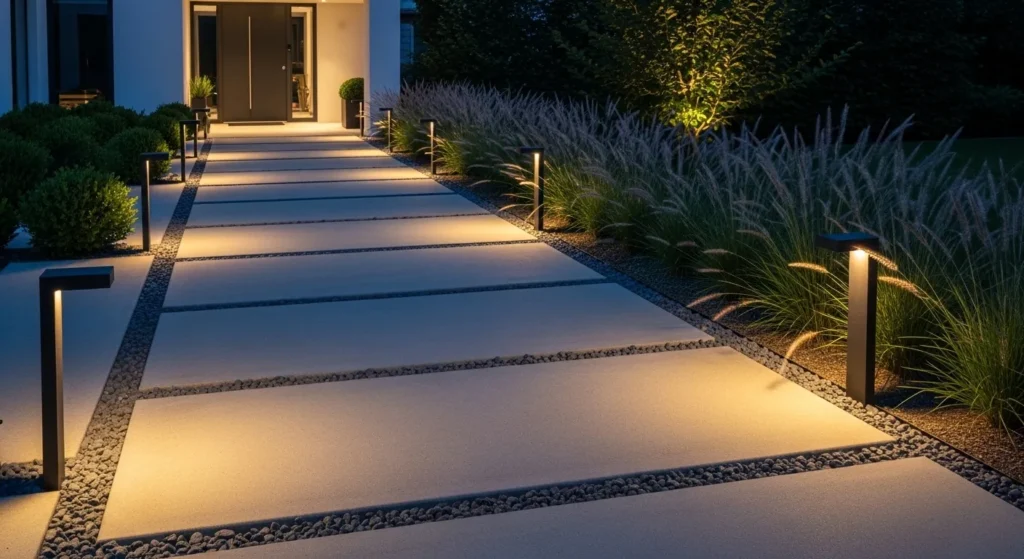
Linear path lighting can make a minimalist yard feel polished, safe, and welcoming after sunset. Instead of using many decorative fixtures, choose slim stake lights, low bollards, recessed step lights, or narrow LED strips placed along a walkway. The goal is not to flood the garden with brightness, but to guide movement with soft, even pools of light. This approach works especially well for front entries, patio paths, and side yards where clean lines already shape the outdoor layout and nighttime visibility matters for guests and family members.
Keep the fixture finish consistent with your home’s exterior hardware, such as matte black, bronze, brushed steel, or warm white. Space lights evenly, but avoid a runway effect by staggering them slightly or placing them only where direction changes. Warm light usually feels more inviting than cool light, especially near seating areas. Good lighting also extends how often you use the yard, making evening dinners, late arrivals, and weekend gatherings easier. It adds function and atmosphere while preserving the quiet, uncluttered look you want for relaxing nights outside without adding unnecessary visual clutter.
7. Minimal Patio Pots
- Adds height and structure to patios, porches, and balconies.
- Looks cleaner than using many small mismatched containers.
- Works with olive trees, boxwood, citrus, grasses, or sculptural plants.
- Helps connect furniture, exterior trim, and planting together.
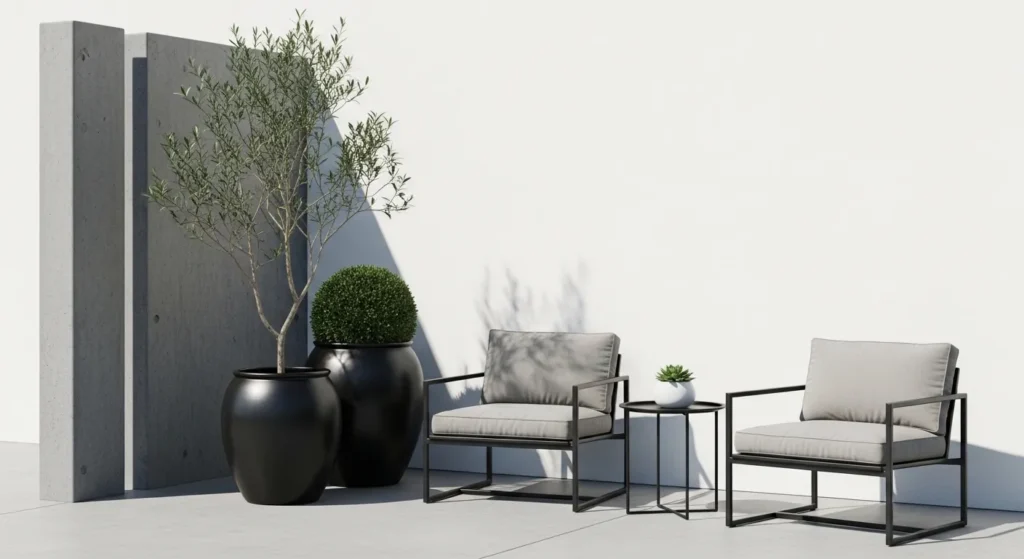
Minimal patio pots look best when the containers feel intentional rather than collected over time. Choose two or three oversized planters in matching materials, such as fiberstone, terracotta, concrete, matte ceramic, or powder-coated metal. Then fill them with strong plant shapes instead of busy combinations. A single olive tree, dwarf citrus, snake plant, ornamental grass, or clipped boxwood can look more refined than a crowded mixed planter. This idea is ideal for patios, porches, balconies, and poolside corners where strong vertical accents create instant polish and help frame outdoor furniture.
The biggest mistake is using too many tiny pots, which can make the space feel cluttered and harder to water. Instead, group large containers in odd numbers and leave open space around them. Match the pot color to your exterior trim, patio furniture, or stonework for a cohesive look. Use saucers or hidden risers when needed to protect decks and concrete. With fewer containers, maintenance becomes simpler, plants have more soil volume, and the outdoor area feels calmer, taller, and more professionally styled from every angle and doorway.
8. Native Grass Edges
- Adds soft movement while keeping the layout simple.
- Works well along paths, fences, driveways, and patios.
- Can reduce watering needs when suitable regional plants are chosen.
- Creates seasonal texture without relying on crowded flower beds.
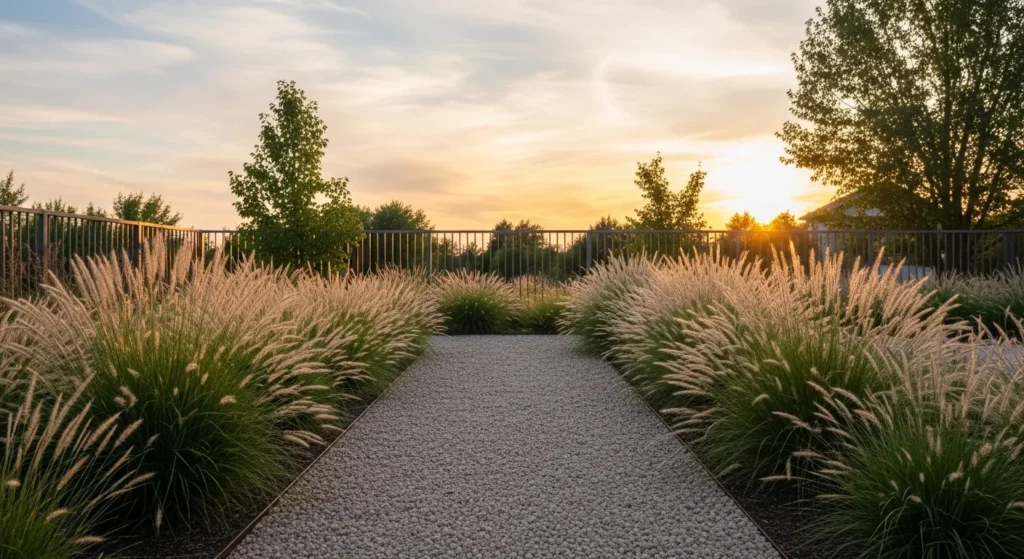
Native grass edges create movement, softness, and seasonal beauty while still fitting a clean minimalist layout. In many parts of the USA, ornamental and native grasses can handle heat, wind, and lower watering needs better than delicate flowers. Use them along fences, paths, patios, or driveway edges to create a natural border with repeated texture. Options may include little bluestem, switchgrass, prairie dropseed, muhly grass, or regionally appropriate sedges, depending on your climate and soil. Their airy shape keeps the space relaxed and natural.
The minimalist trick is repetition, not variety. Choose one or two grass types and plant them in clean drifts instead of mixing many different colors and heights. Leave enough spacing so each clump has room to mature without becoming messy. Cut them back at the right seasonal time for your area, and pair them with gravel, concrete pavers, or simple mulch. I’ve noticed these edges look especially beautiful when backlit by evening sun, creating a soft golden outline without needing flowers everywhere or constant seasonal replanting.
9. Hidden Storage Bench
- Combines seating and storage in one clean outdoor piece.
- Keeps cushions, tools, toys, and small accessories out of sight.
- Works well in compact yards where every item needs a purpose.
- Adds function without sacrificing a minimalist look.
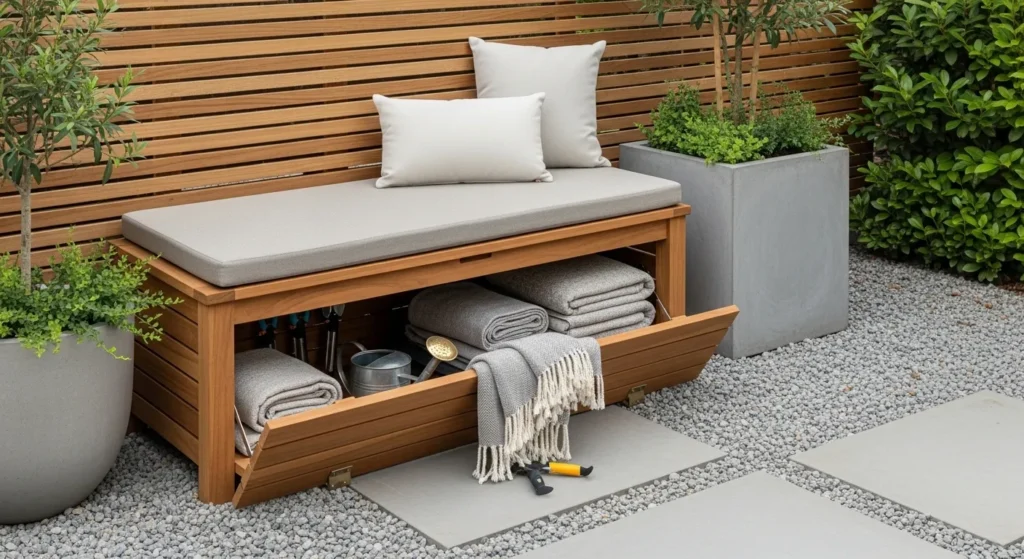
A hidden storage bench solves two common backyard problems at once: seating and clutter. For minimalist outdoor spaces, visible tools, cushions, toys, and small accessories can quickly ruin the clean look. A bench with built-in storage keeps those items close but out of sight. Choose teak, cedar, composite wood, or powder-coated aluminum with straight lines and a simple cushion. Place it against a fence, under a pergola, near a dining table, or beside a gravel lounge zone where it can serve several daily functions.
For the best result, treat the bench as part of the design rather than an afterthought. Match the cushion to your neutral palette and add only one or two pillows if needed. Inside, use waterproof bags or small bins to separate gloves, lanterns, throws, and garden tools. This keeps the space ready for guests without a last-minute cleanup. A storage bench also helps small yards work harder because every piece has a purpose, which is the heart of minimalist outdoor living and practical family-friendly design for everyday use outside daily.
10. Monochrome Plant Palette
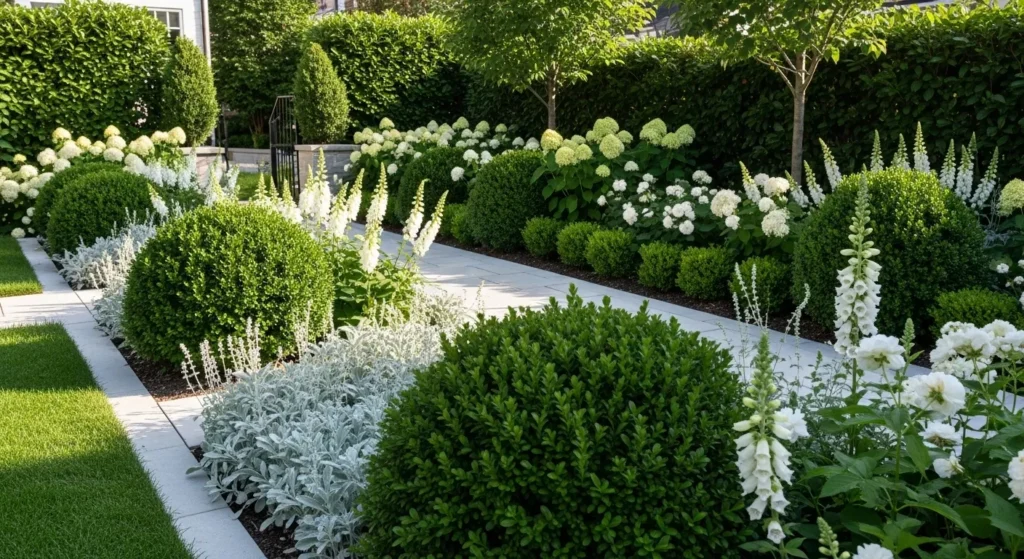
- Creates a calm, curated, designer-style garden look.
- Makes plant shopping easier by limiting color choices.
- Works beautifully with green-white, silver-green, or soft neutral palettes.
- Uses texture and shape instead of too many colors.
A monochrome plant palette makes a garden feel calm, curated, and surprisingly luxurious. Instead of choosing plants because they are all individually pretty, select them by color family and texture. A green-and-white palette with boxwood, hydrangea, lamb’s ear, white salvia, and pale stone feels classic. A silver-and-green palette with lavender, artemisia, olive, and ornamental grass feels warmer and drought-friendly. This method gives the yard a unified look even when the plant shapes are different, which is why designers rely on repetition outdoors today in modern outdoor spaces year-round beautifully outdoors.
Start by choosing one main foliage color, one flower color, and one hardscape color, then repeat them throughout the space. This makes shopping easier and prevents impulse purchases from disrupting the design. In sunny yards, silver foliage and white blooms can look bright and clean; in shaded spaces, deep green leaves with pale flowers can feel elegant. The final look is not boring, because texture creates interest. It becomes easier to decorate, photograph, and maintain because every new addition has a clear visual rule for future updates.