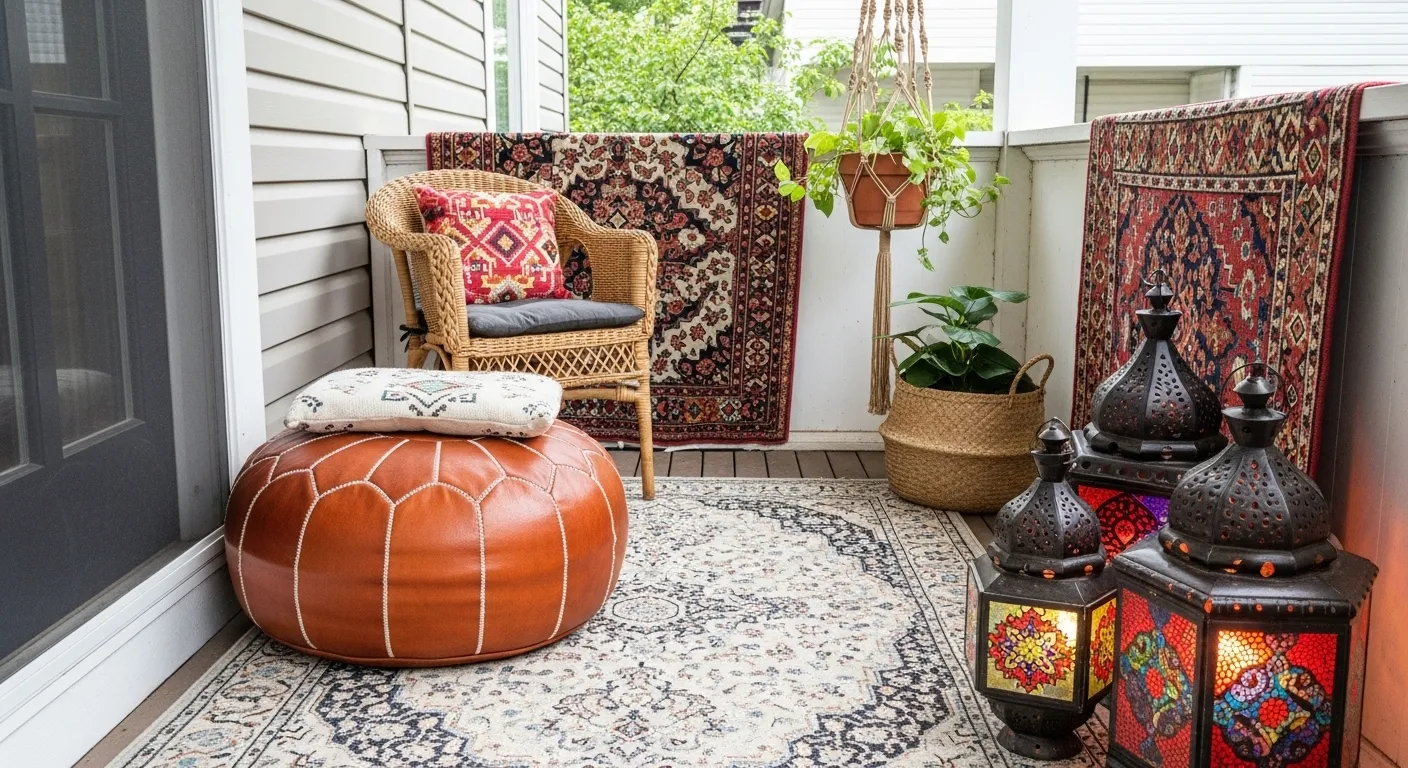
11 Small Front Porch Ideas
11 Small Front Porch Ideas
A small porch can work harder than most homeowners expect. It may be the first thing guests see, the place packages land, the spot where morning coffee feels possible, and the curb appeal moment that makes a house look loved. For many USA homes, especially townhomes, ranch houses, cottages, and narrow-entry builds, the front porch has limited square footage but huge visual potential. With the right scale, colors, textures, and layout, even a compact entry can feel charming, polished, and practical.
This guide focuses on realistic ideas that fit small spaces without making them crowded. You will find styling tips for rugs, seating, planters, lighting, doors, house numbers, and seasonal accents that look beautiful on Pinterest while still working in everyday life. A Small Front Porch should feel welcoming, easy to maintain, and suited to your home’s architecture. The goal is not to add more stuff; it is to choose the right pieces so every inch feels intentional, useful, and warmly styled.
1. Layered Rugs
Bullet Points
- Adds instant texture, pattern, and curb appeal near the front door.
- Works well on concrete, wood, brick, and tile porch floors.
- Helps define the entry without using furniture or large decor.
- Easy to change seasonally for holidays, fall, spring, or summer.
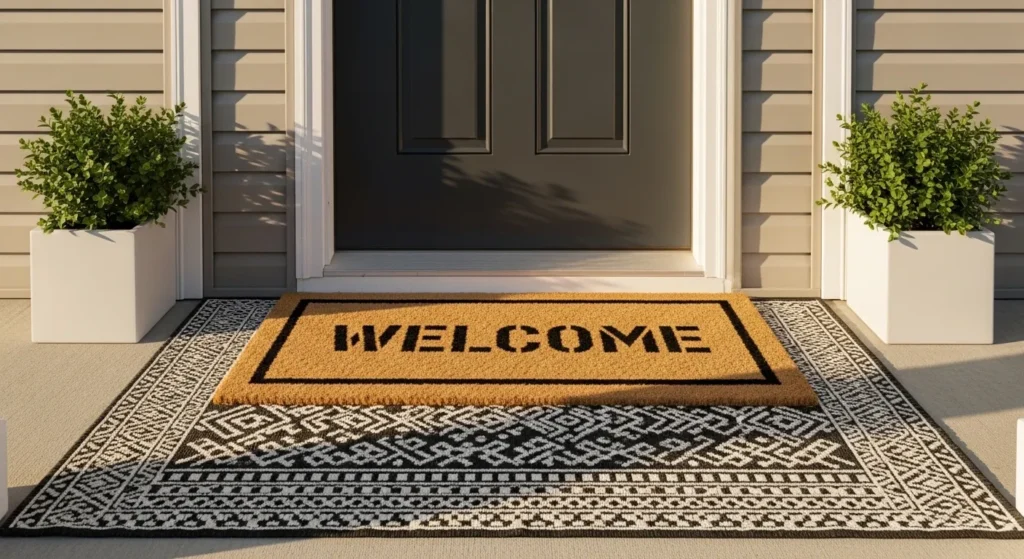
Layered rugs instantly make a compact entry feel designed instead of forgotten. The trick is to use two pieces with different purposes: a larger outdoor rug for pattern and a smaller doormat for function. Choose a base rug that sits flat, resists moisture, and fits the width of your door area without curling at the edges. Then place a durable coir or rubber mat on top. In my experience, this small styling move adds texture, color, and personality faster than almost any other porch update.
The transformation works because rugs visually anchor the doorway and make the porch feel like an outdoor room. A black-and-white stripe, natural jute-look weave, muted plaid, or classic check pattern can complement many American home styles, from farmhouse to craftsman to brick colonial. Keep the top mat easy to shake out, especially if your porch gets leaves, snow, or muddy shoes. For best results, leave a few inches of visible rug around the doormat so the layered effect looks intentional rather than accidental.
2. Slim Seating
Bullet Points
- Adds function without overwhelming a narrow porch layout.
- Gives guests a quick place to sit, pause, or set down a bag.
- Works with stools, compact chairs, armless seats, or small benches.
- Best when paired with one cushion or pillow for softness.
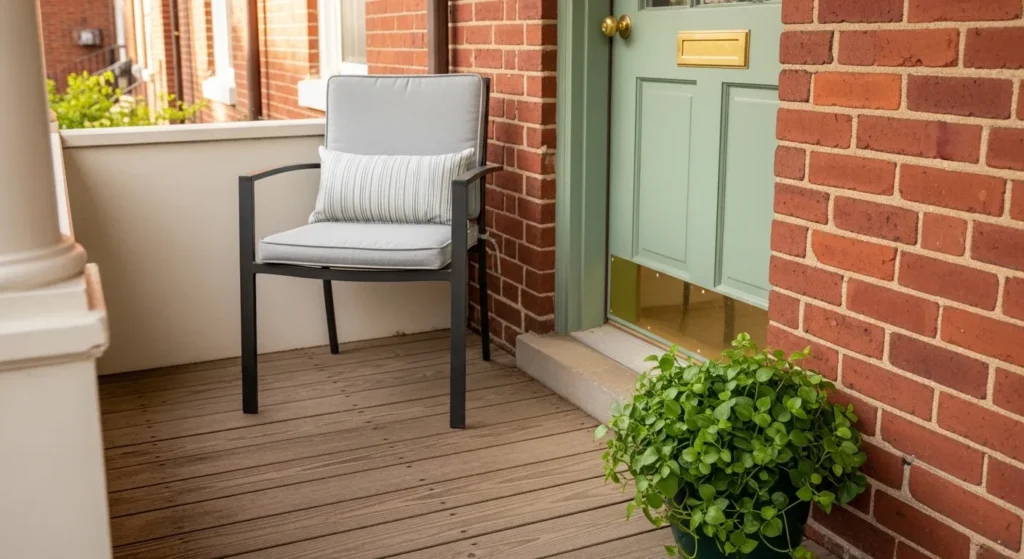
Slim seating can make a narrow porch feel useful without stealing precious walking space. Instead of forcing a full patio chair where it does not fit, look for a small stool, armless chair, narrow bench, or compact bistro seat. The piece should allow the door to open fully and still leave a clear path for guests. That’s why many designers recommend measuring the swing of the door first. Scale matters more than style when the porch footprint is tight and every inch affects comfort.
A single seat changes the mood because it suggests pause, comfort, and hospitality. Add a weather-safe cushion, a small lumbar pillow, or a folded outdoor throw in colors that echo the door, siding, or planters. Metal, teak, acacia, resin wicker, and powder-coated steel are practical choices for different climates. If the porch is uncovered, choose quick-dry fabrics and avoid thick cushions that hold water. The result is a welcoming entry that feels functional for morning coffee, package pickup, or simply tying shoes.
3. Potted Greenery
Bullet Points
- Softens hard surfaces like brick, siding, concrete, and railings.
- Adds natural color without needing a large garden bed.
- Works with seasonal flowers, evergreens, herbs, grasses, or shade plants.
- Looks best with fewer larger pots instead of many tiny containers.
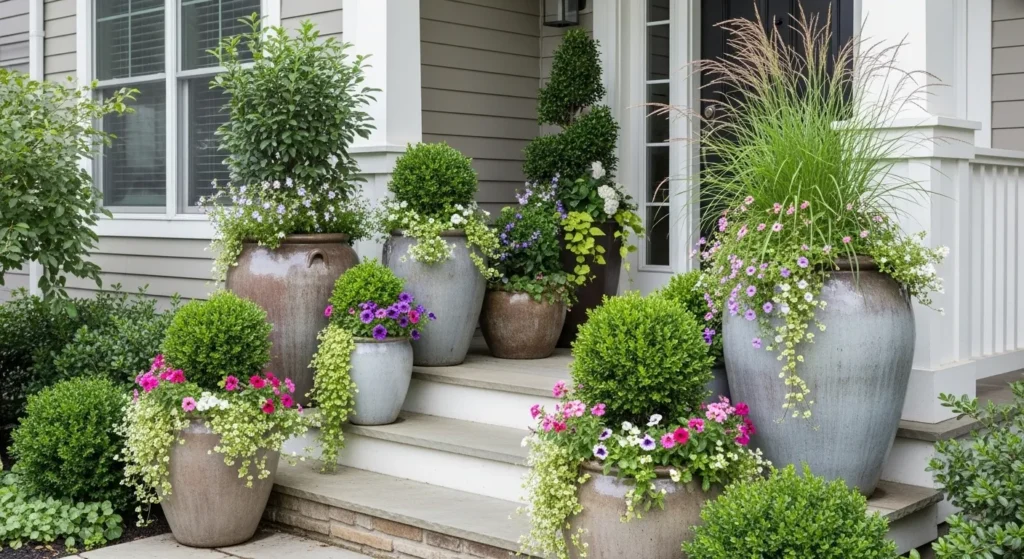
Potted greenery brings life to a small porch without requiring a full garden. The best approach is to choose containers that fit the porch scale and then vary height, leaf shape, and texture. One tall planter beside the door, one medium pot near the steps, and one trailing plant in a smaller container can feel lush without becoming crowded. I’ve noticed that homeowners often buy too many small pots, when fewer, larger containers usually look cleaner, more expensive, and easier to maintain.
For practical results, match plants to your light conditions before choosing them for looks alone. Ferns, hostas, caladiums, and impatiens work beautifully in shady entries, while lavender, boxwood, ornamental grasses, petunias, and rosemary prefer brighter spots. Use resin, ceramic, metal, or concrete-look planters depending on your home style and weather exposure. Add pot feet or saucers where needed to protect porch flooring. Greenery softens hard materials like brick, concrete, and siding, making the entrance feel fresh, cared for, and naturally inviting.
4. Vertical Planters
Bullet Points
- Saves floor space while still adding color and texture.
- Works well for narrow stoops, townhomes, apartments, and side entries.
- Can include herbs, trailing vines, flowers, or compact greenery.
- Adds height and helps frame the doorway beautifully.
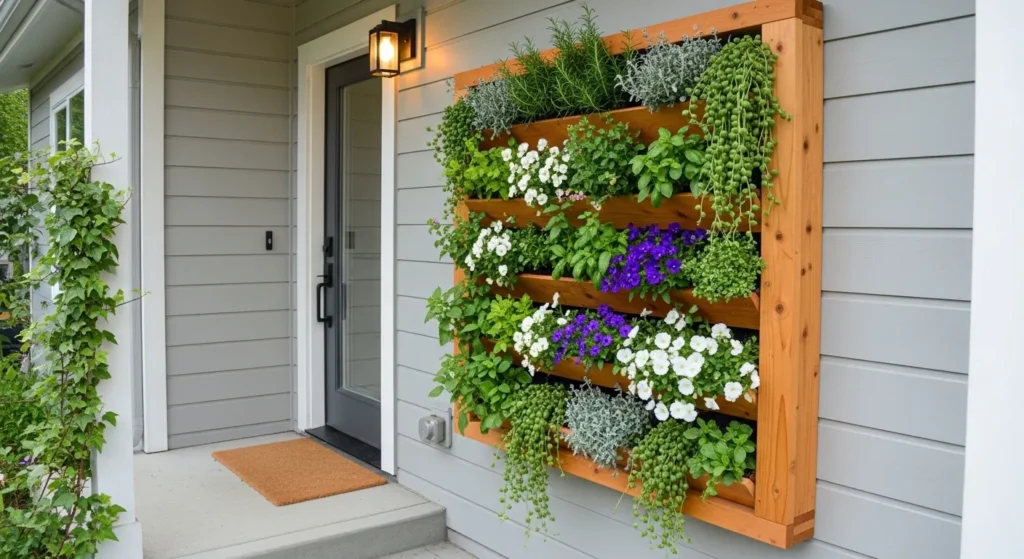
Vertical planters are perfect when floor space is too limited for multiple pots. By moving plants upward, you can add color and texture without blocking the walkway or crowding the door. A wall-mounted planter, ladder shelf, railing box, or slim plant stand can create a garden feeling in a very small footprint. This works especially well for townhomes, apartment-style entries, and narrow porch steps. Choose one vertical piece and keep the planting scheme simple so the area feels stylish instead of busy.
This idea also helps frame the entry, drawing the eye upward and making the porch feel taller. Use trailing vines, herbs, compact flowers, or small evergreens depending on the season and available sunlight. Materials like cedar, powder-coated metal, woven baskets, and weather-safe resin all work well outdoors. Secure wall planters properly and avoid overwatering near siding or wood trim. A vertical arrangement gives you the charm of a garden while preserving the open space needed for deliveries, guests, and everyday movement.
5. Statement Door
Bullet Points
- Creates a bold focal point without using extra porch space.
- Works beautifully with paint, hardware, wreaths, or door accents.
- Helps the entry feel more personal and memorable from the curb.
- Pairs well with simple rugs, planters, and lighting.
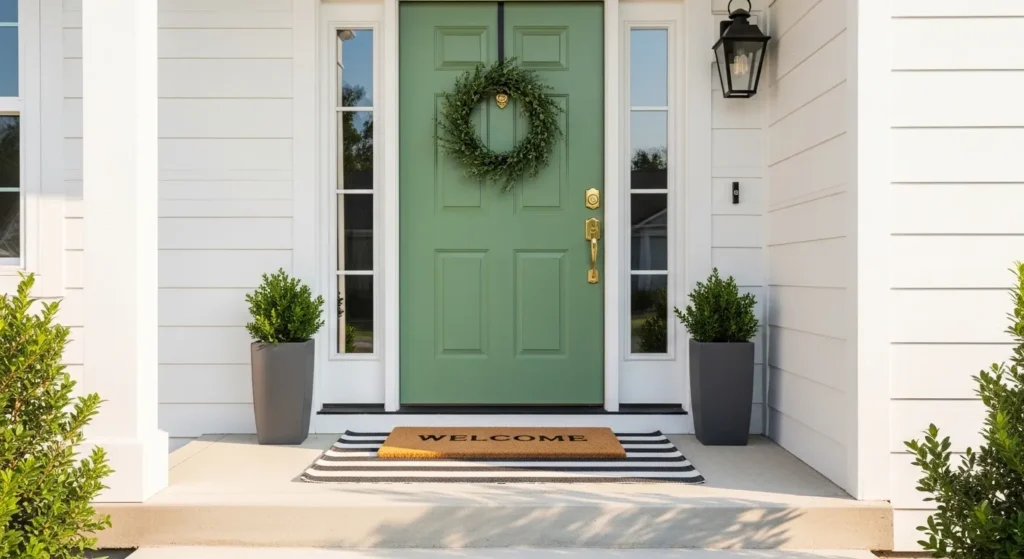
A statement door can carry the entire porch design when space is limited. Paint is one of the most budget-friendly upgrades, and the front door is the perfect place to use a color with personality. Navy, sage green, black, terracotta, deep red, soft blue, and warm charcoal are popular choices because they feel bold without overwhelming the facade. Before painting, test swatches in morning and afternoon light. Exterior colors shift dramatically depending on shade, siding color, brick tones, and surrounding landscaping.
The door becomes the focal point, so the rest of the decor can stay simple. Pair a fresh paint color with updated hardware, a clean kick plate, or a simple wreath for a polished finish. Use exterior-grade paint, primer, painter’s tape, angled brushes, and a small roller for smoother results. If painting is not possible, consider magnetic hardware accents, a wreath, or removable seasonal decor. A strong door color gives the porch identity and makes even the smallest entrance feel memorable from the curb.
6. Wall Lanterns
Bullet Points
- Improves safety, visibility, and evening curb appeal.
- Adds warmth without taking up floor or railing space.
- Works with classic, farmhouse, modern, coastal, or craftsman exteriors.
- Can be hardwired, solar, battery-operated, or rechargeable.
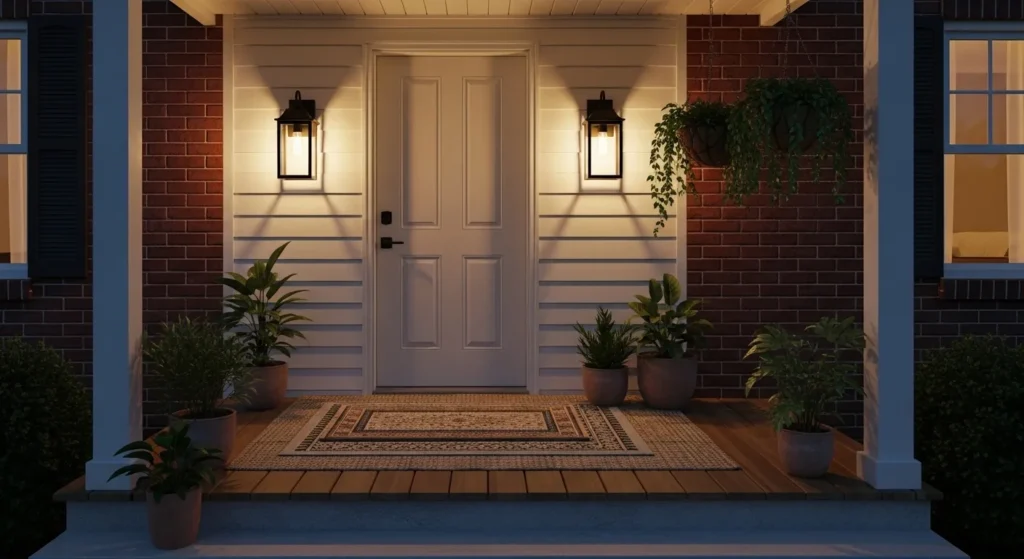
Wall lanterns make a small entry feel safer, warmer, and more finished after sunset. Lighting is often overlooked in porch styling, but it shapes the atmosphere more than many decorative pieces do. A correctly sized lantern beside the door can highlight the architecture, brighten the lock area, and make guests feel welcome. Choose a fixture that fits the door height and does not stick out awkwardly into the walking path. Matte black, aged brass, bronze, and brushed nickel finishes work with many exterior styles.
For the best effect, consider both brightness and bulb temperature. Warm white bulbs usually feel more inviting than cool blue-toned light, especially on porches with brick, wood, or creamy siding. If hardwiring is not an option, battery-operated sconces, solar lanterns, or rechargeable lights can still add charm. Keep the glass clean and replace faded bulbs promptly. Good lighting makes the porch usable in the evening, improves curb appeal, and helps small decorative details like planters, rugs, and door colors stand out beautifully.
7. Compact Bench
Bullet Points
- Adds seating and structure without requiring a large porch.
- Works best against a wall, railing, or protected side area.
- Can include hidden storage or a basket underneath.
- Makes the entry feel more welcoming and lived-in.
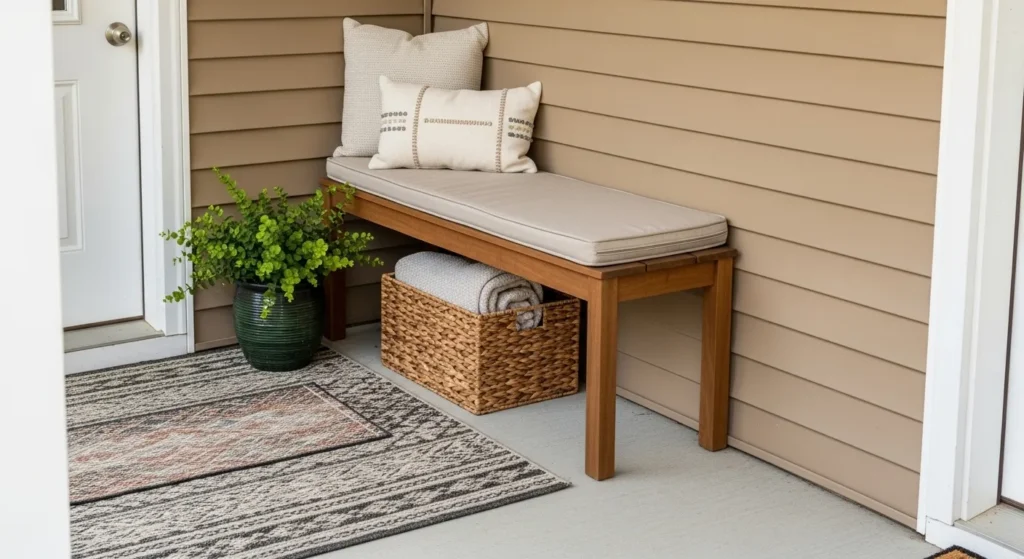
A compact bench can turn an entry into a practical landing spot. Even a narrow bench gives guests a place to set a bag, remove muddy shoes, or wait comfortably at the door. Look for a style with an open base so the porch does not feel heavy. A backless bench often works better than a deep garden bench because it sits closer to the wall. I’ve seen this work well on covered cottage porches, small ranch entries, and narrow stoops with just enough side clearance.
The styling should stay light and purposeful. Add one outdoor cushion or two small pillows, then leave the rest of the bench clear for daily use. If storage is needed, slide a weather-safe basket underneath for gardening gloves, dog leashes, or porch supplies. Wood, metal, and resin benches can all work, but choose materials that match your exposure to sun, rain, and snow. A bench adds comfort and structure while keeping the porch welcoming, organized, and ready for real household routines.
8. Seasonal Wreath
Bullet Points
- Adds personality without taking up any floor space.
- Easy to change for spring, summer, fall, winter, and holidays.
- Works with greenery, florals, ribbon, pine, berries, or grapevine bases.
- Helps connect the door color with the rest of the porch palette.
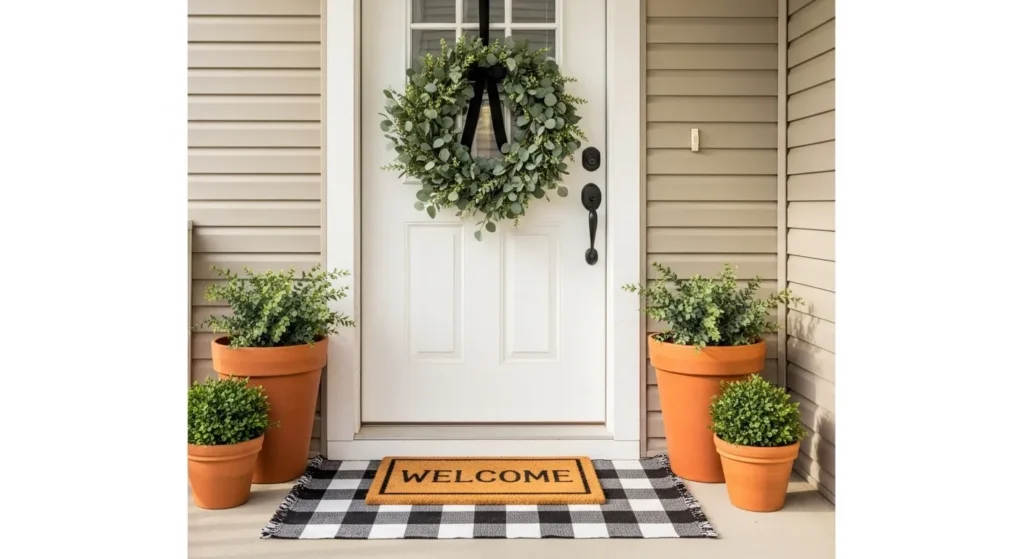
A seasonal wreath adds charm without taking up any floor space. That makes it one of the easiest upgrades for a tiny entrance, especially when every square foot matters. Choose a wreath that fits the door width and leaves breathing room around the edges. Oversized wreaths can look beautiful online, but on a narrow door they may feel bulky. Green eucalyptus, dried grasses, faux florals, pine, berries, ribbon, or simple grapevine bases can all create a polished look depending on the season.
The best wreaths connect to the porch palette instead of fighting it. If your rug has black accents, use a black ribbon. If your planters are terracotta, choose warm fall tones or muted greenery. Use an over-the-door hanger, magnetic hook, or outdoor command hook based on your door material. Rotate wreaths for spring, summer, fall, winter, and holidays, but store them carefully so they keep their shape. This small vertical accent makes the entry feel cared for without adding clutter to the floor.
9. House Numbers
Bullet Points
- Improves curb appeal and makes the home easier to identify.
- Works with metal numbers, plaques, tiles, or wood-backed signs.
- Helps delivery drivers, guests, and emergency services find the home.
- Looks best when sized clearly and placed in a visible location.
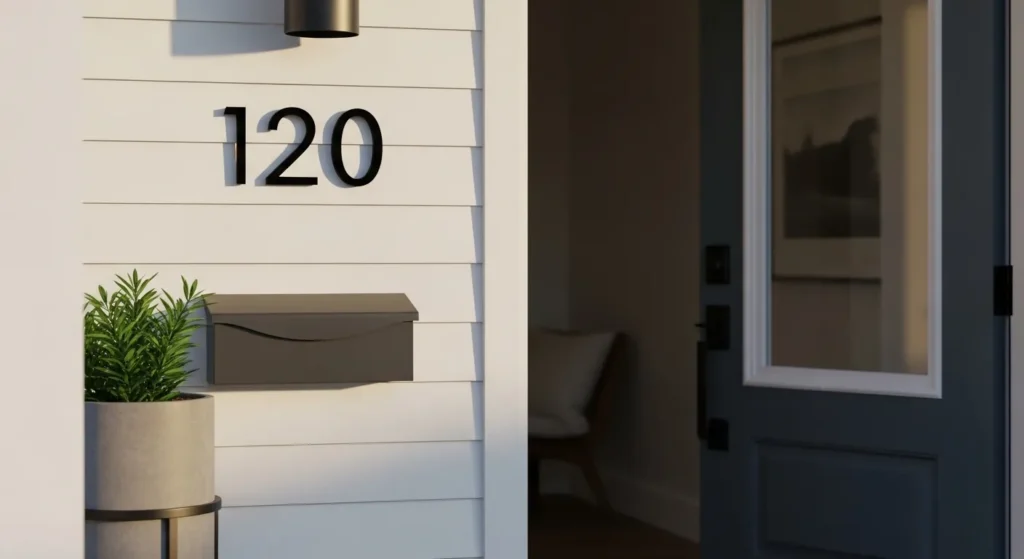
Updated house numbers give a small entry a cleaner, more custom look. They are functional, but they also work like jewelry for the exterior. Choose numbers that are easy to read from the street, especially for deliveries, guests, and emergency visibility. Modern black metal, brass, brushed nickel, ceramic tiles, or wood-backed plaques can all fit different home styles. The key is scale. Numbers that are too tiny disappear, while oversized pieces can overwhelm a narrow door frame or short porch wall.
Placement matters as much as style. Install numbers where they are visible from the curb and not hidden behind plants, railings, wreaths, or screen doors. A vertical plaque can suit a narrow post, while horizontal numbers may work better beside the door or above the mailbox. Use exterior screws, anchors, or adhesive rated for your siding material. This update makes the porch feel sharper and more intentional while also improving everyday function. It is a small project with a surprisingly polished payoff.
10. Mini Table
Bullet Points
- Adds a small surface for plants, lanterns, coffee, or seasonal decor.
- Works beside a chair, bench, railing, or front door corner.
- Best in round, narrow, pedestal, or foldable styles.
- Makes the porch feel more like a finished outdoor room.
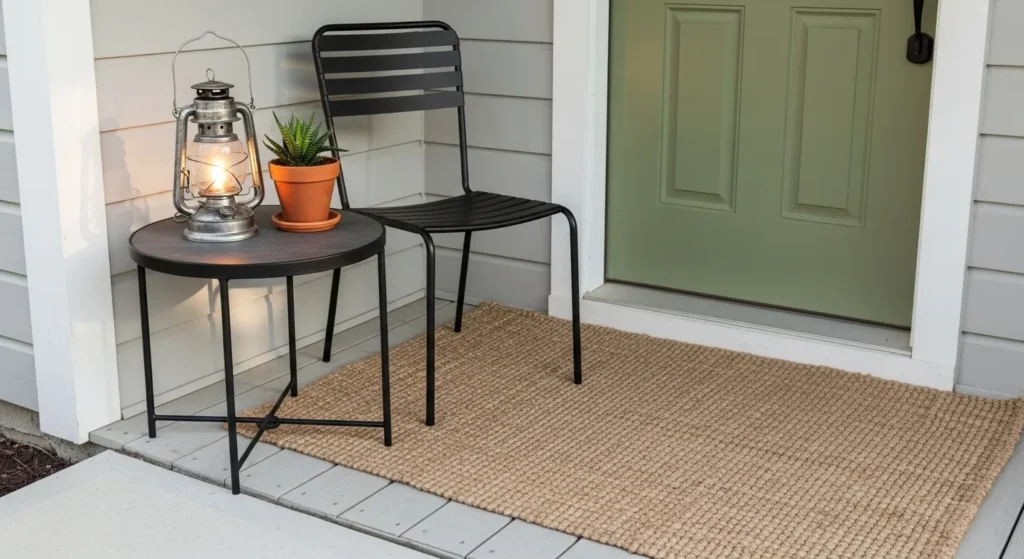
A mini table gives a tiny porch a useful surface without making it feel crowded. Think of it as a landing zone for a coffee cup, lantern, small plant, or seasonal accent. Choose a round, narrow, or pedestal-style table that can tuck beside a chair, bench, or planter. Avoid bulky side tables that interrupt the walking path. In my experience, a table around knee height often looks balanced because it supports decor without competing with the front door or railing.
Style the table with restraint so it remains useful. A small lantern, one potted plant, or a ceramic bowl for decorative stones can be enough. If the porch is exposed, choose metal, resin, teak, or concrete-look materials that tolerate weather. A foldable table is helpful for renters or anyone who wants flexibility during storms and winter months. This simple piece adds a lived-in feeling and makes the porch feel more like a finished outdoor space, even when the layout is extremely compact.
11. Privacy Screen
Bullet Points
- Adds comfort for porches close to sidewalks, driveways, or neighbors.
- Works with trellises, wood slats, railing panels, or tall planters.
- Softens sightlines without making the entry feel closed off.
- Can support climbing plants, grasses, or decorative outdoor panels.
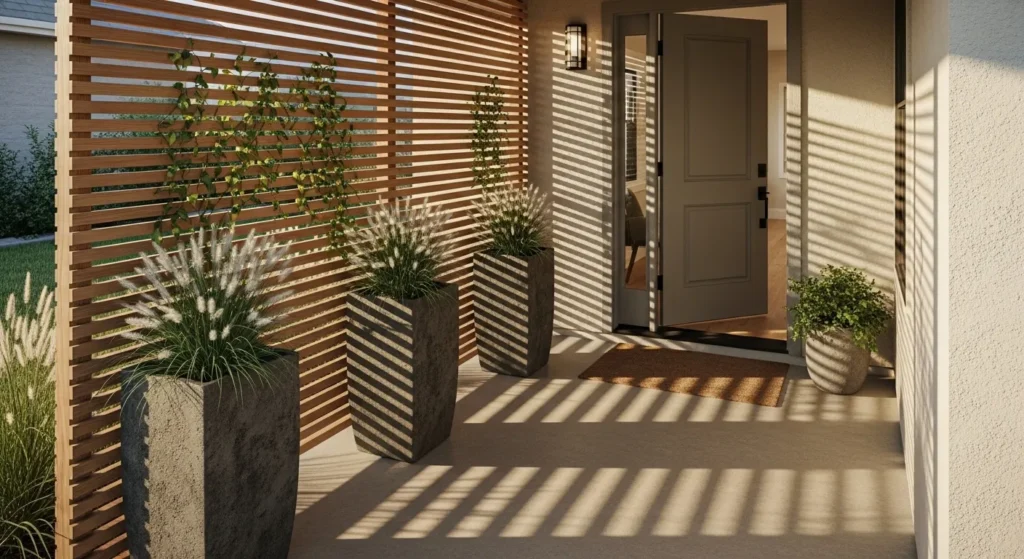
A privacy screen can make a close-to-the-street porch feel calmer and more comfortable. Many small entries in neighborhoods, duplexes, and townhomes sit near sidewalks, driveways, or neighboring doors. A slim screen, trellis, tall planter, or railing panel can create a gentle boundary without closing off the space. The goal is not to block the porch completely, but to soften sightlines. Choose open patterns, natural textures, or greenery so the entry still feels friendly, bright, and connected to the home’s exterior.
This idea works best when the screen also adds beauty. A wood slat panel can feel modern, a black metal trellis can feel classic, and a pair of tall planters can feel soft and garden-inspired. Add climbing jasmine, clematis, ivy alternatives, or tall grasses where climate allows. Make sure the piece is stable, wind-safe, and does not violate HOA or rental rules. A privacy element can make a small porch feel more usable, especially for homeowners who want a cozy threshold without feeling exposed.