12 School Hallway Decoration Ideas
12 School Hallway Decoration Ideas
A school hallway is one of the most powerful spaces in the building because almost every student, teacher, parent, and visitor passes through it every day. It sets the mood before class begins, shows what the school values, and gives students little visual reminders that they belong. In many USA schools, corridors are not just empty walkways; they become mini galleries, celebration zones, reading corners, wayfinding areas, and seasonal displays that make the campus feel alive.
Thoughtful School Hallway Decoration can make an ordinary corridor feel welcoming, organized, and full of school spirit. The best ideas are not always the most expensive ones. Often, the strongest hallway displays come from smart color choices, student involvement, clear spacing, reusable materials, and a design that teachers can actually maintain during a busy school year.
Below are 12 practical, Pinterest-friendly hallway display concepts that work for elementary, middle, and high school spaces. Each idea is designed to be visually inspiring, useful in real school settings, and simple enough to adapt with bulletin board paper, vinyl, student work, labels, borders, and creative classroom supplies.
1. Welcome Entry
Bullet Points
- Creates a warm first impression for students, staff, and families.
- Works beautifully near the main office, front doors, or grade-level entrances.
- Can include school colors, mascot details, student names, or greeting signs.
- Easy to refresh for back-to-school, open house, and parent-teacher nights.
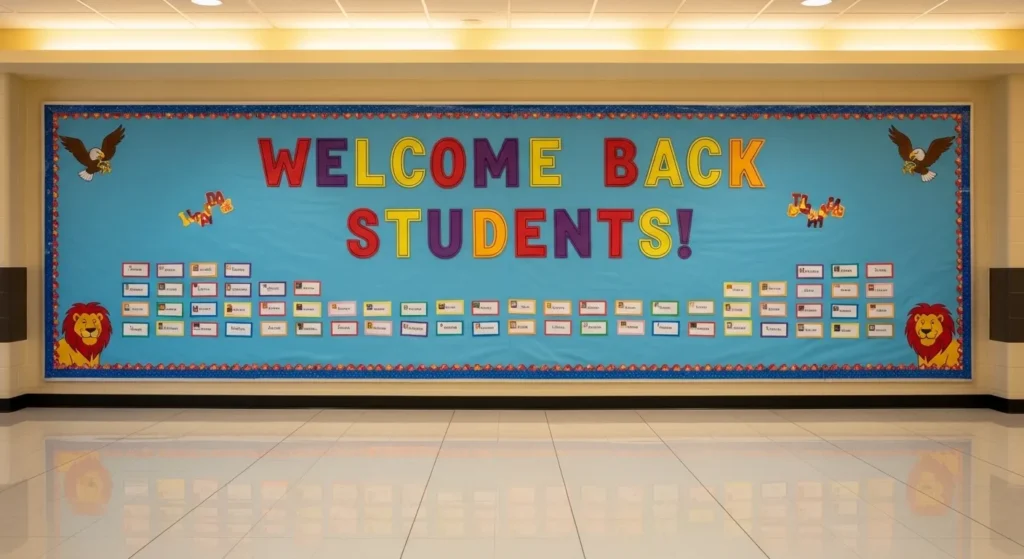
A welcome entry can change the entire feeling of a school before anyone reaches a classroom. When students walk through the doors and see a bright, thoughtful display, the building immediately feels more cared for and more personal. Use a large greeting, bold letters, clean borders, and colors that connect to your school identity. In my experience, the most effective entry displays are simple from a distance but meaningful up close, with small details like student names, grade-level symbols, or positive words.
This idea works best when the layout feels open, readable, and polished. Choose a strong background color, then layer foam letters, laminated cutouts, vinyl decals, or a mascot graphic as the focal point. Add removable elements so teachers can update the display without starting over every month. A welcome entry also helps visitors understand the school’s personality right away. Whether the mood is playful, classic, modern, or spirited, the corridor becomes more than a walkway; it becomes a friendly introduction.
2. Student Showcase
Bullet Points
- Turns student work into meaningful hallway decor.
- Encourages pride, confidence, and parent engagement.
- Works for writing, art, STEM projects, history work, or reading responses.
- Looks best with matching frames, labels, and organized spacing.
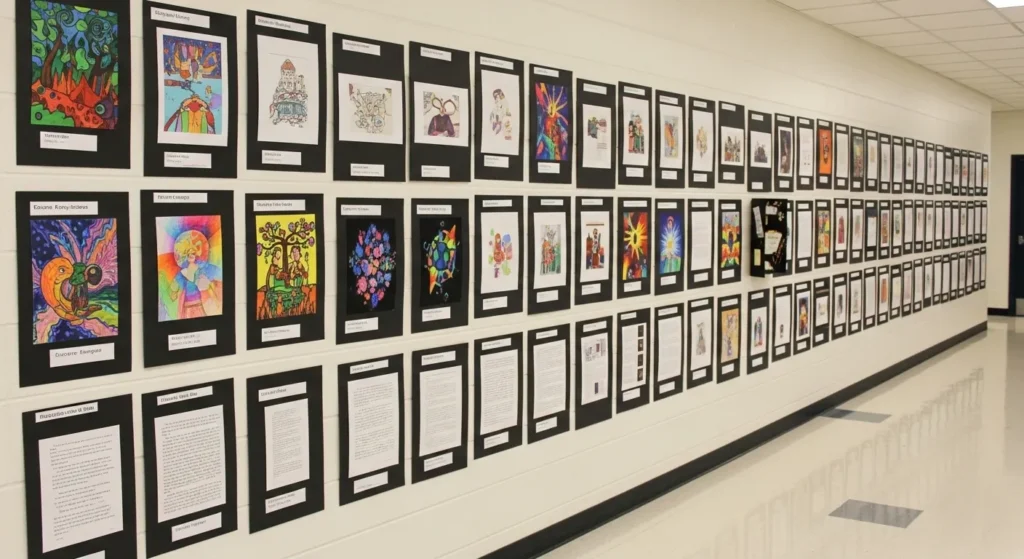
A student showcase brings real learning into the hallway in a way that feels authentic and inspiring. Instead of filling walls with generic posters, this idea highlights the work students are already creating in class. Use matching paper mats, clipboards, or simple cardstock frames to make each piece look intentional. I’ve noticed that families naturally pause in front of student displays when the work is clearly labeled and easy to read, especially during conferences, open house events, and school programs.
The visual transformation comes from consistency. Keep the background clean, use one border style, and leave enough space between pieces so the wall does not feel crowded. Add title cards with the project theme, teacher name, grade level, or learning goal. Materials like binder clips, clothespins, laminated labels, and removable hooks make it easier to change the display throughout the year. Students feel seen when their work is displayed well, and the hallway becomes a living gallery of effort, growth, and creativity.
3. Reading Corner
Bullet Points
- Adds a cozy literacy moment to an unused hallway area.
- Encourages students to see reading as part of school culture.
- Works with book bins, shelves, benches, rugs, or quote signs.
- Best for wider corridors, library entrances, or supervised common areas.
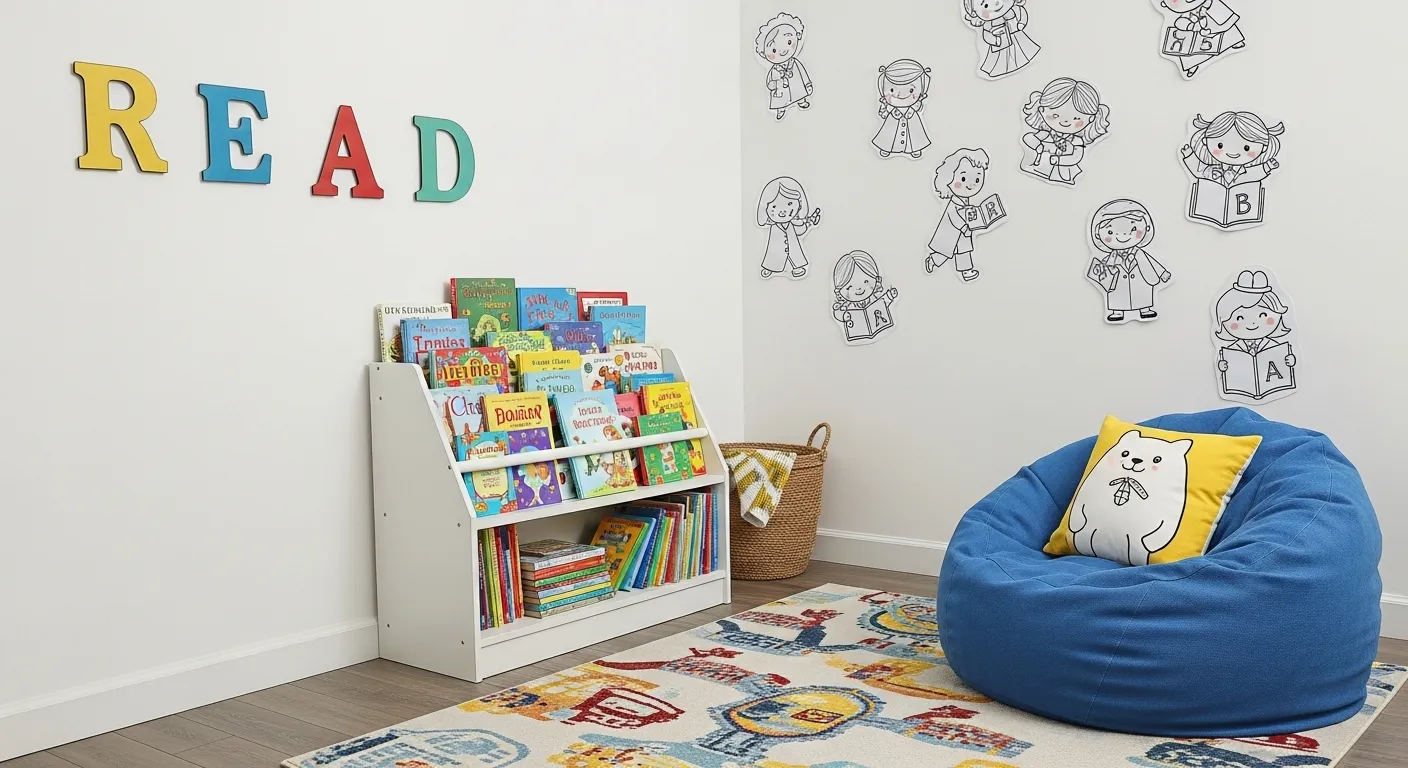
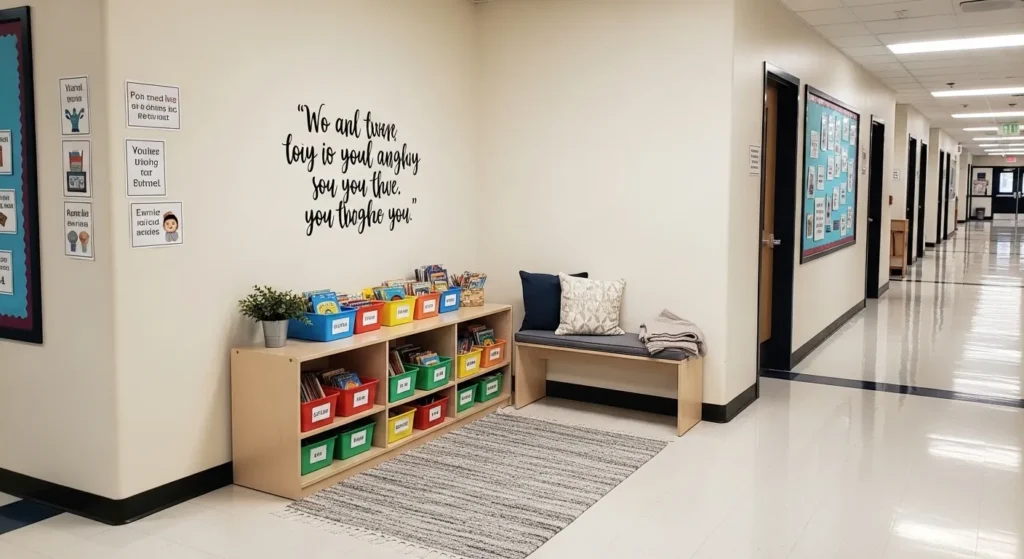
A reading corner can make even a small hallway space feel calm, useful, and inviting. The goal is not to create a full classroom library in the corridor, but to build a little visual reminder that books belong everywhere. Use a low shelf, labeled book baskets, a bench if allowed, and a soft rug only where safety rules permit. For schools with strict traffic flow guidelines, wall-mounted book ledges or forward-facing display shelves can create the same effect without taking up much floor space.
This idea is especially helpful near media centers, elementary wings, and intervention areas. Choose books that match student age levels, seasonal themes, or current classroom units. Add simple signs like “Book Picks,” “Read Next,” or “Teacher Favorites” to guide attention. Wood textures, woven bins, laminated labels, and warm color accents can make the space feel softer without looking messy. When maintained well, a reading corner becomes both decorative and functional, giving students a quiet visual nudge toward curiosity and independent reading.
4. Kindness Board
Bullet Points
- Promotes positive behavior in a visible daily format.
- Works with compliment cards, shout-outs, sticky notes, or kindness prompts.
- Supports counseling themes, anti-bullying campaigns, and school values.
- Can be updated weekly so the board stays fresh and meaningful.
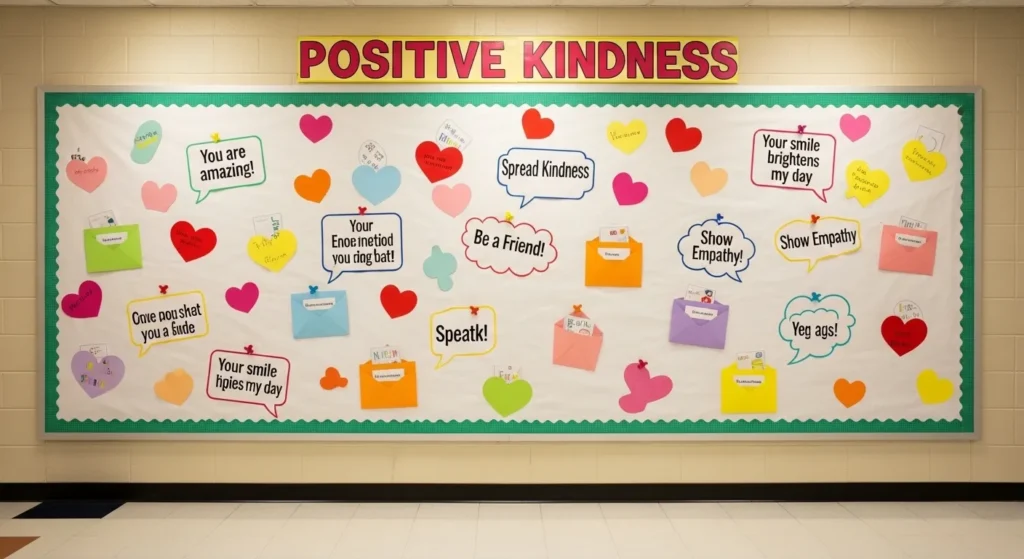
A kindness board gives students a public place to notice the good in one another. Instead of keeping positive behavior hidden inside classrooms, this display turns encouragement into a shared hallway habit. Use a large title, card pockets, speech bubbles, or heart-shaped notes where students and teachers can write short messages. Prompts like “I appreciate,” “You helped me,” or “Thank you for” make participation easier. The design should be cheerful but not cluttered, so the written messages stay central.
This hallway feature works because it builds community through small, repeatable actions. Use bright cardstock, envelopes, clothespins, sticky notes, or laminated cards that can be reused. A counselor, teacher team, or student leadership group can manage the board and reset it regularly. Over time, the display becomes more than decoration. It becomes a gentle reminder that respect, empathy, and gratitude are part of daily school life. Students enjoy seeing their names, and staff members gain a simple tool for reinforcing positive culture.
5. Color Zones
Bullet Points
- Helps organize long hallways into clear visual areas.
- Useful for grade levels, subject wings, specials areas, or classroom clusters.
- Makes navigation easier for students, substitutes, parents, and visitors.
- Can be created with paint, border trim, signs, decals, or bulletin boards.
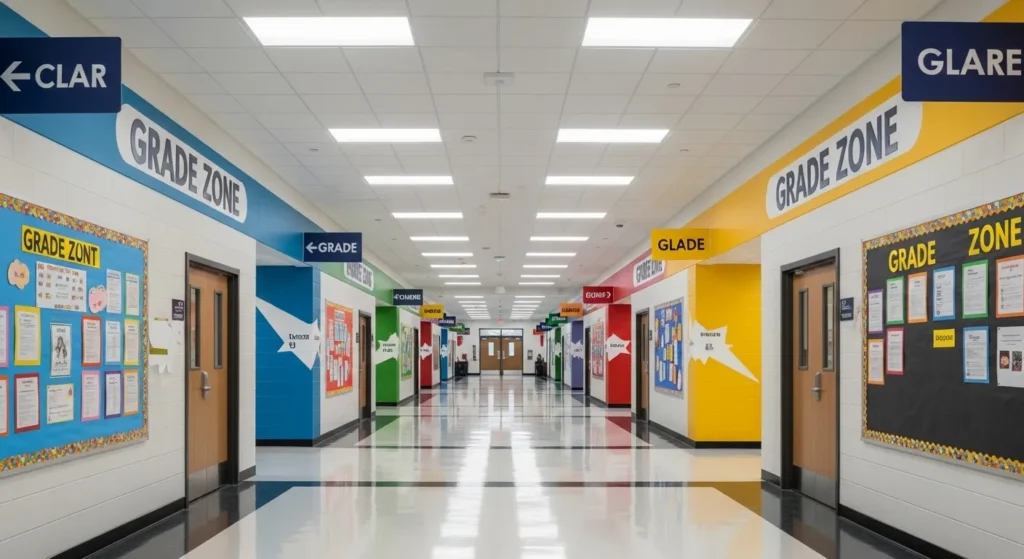
Color zones are a smart way to make a large school feel easier to understand. Many corridors look similar, especially in older USA school buildings with long rows of doors and lockers. Assigning each hallway section a color gives students visual landmarks they can remember. Kindergarten might be yellow, third grade might be blue, and the science wing might use green. You do not need to repaint the whole hallway; even coordinated door signs, bulletin board backgrounds, and border strips can create the zone.
The benefit is both decorative and practical. A clear color system helps younger students find their classroom, helps guests locate offices, and gives teachers an easy way to explain directions. Use laminated grade-level signs, colored arrows, matching nameplates, or vinyl decals for durability. Keep the palette controlled so the hallway feels energetic but not chaotic. That’s why many designers recommend repeating a few strong colors rather than adding every shade available. The result is a corridor that feels organized, branded, and easier to navigate.
6. Growth Timeline
Bullet Points
- Shows progress across the school year in a visual way.
- Works for reading goals, attendance, character traits, testing milestones, or projects.
- Helps students see learning as a journey instead of a single result.
- Can include arrows, road paths, vines, stars, photos, or monthly markers.
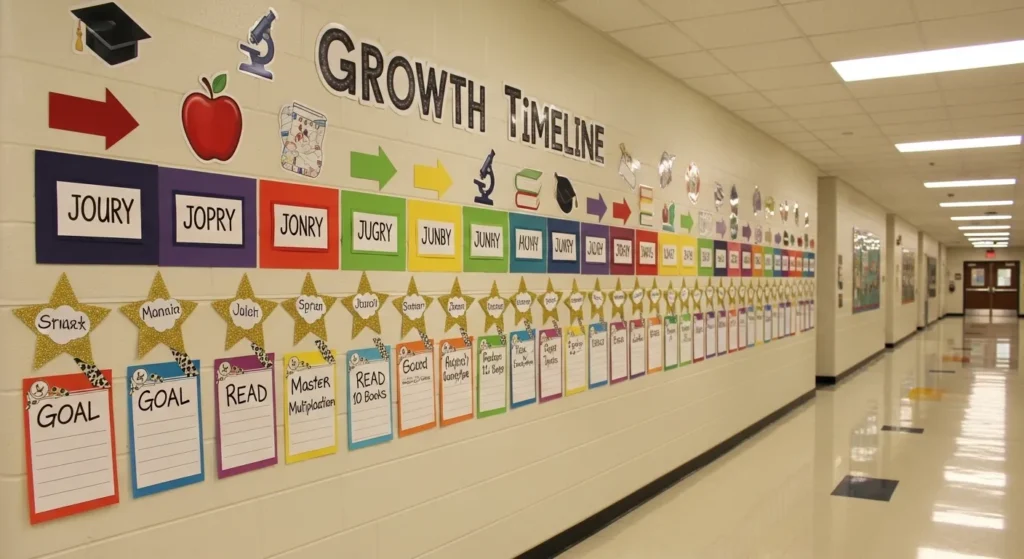
A growth timeline makes the hallway feel like it is moving forward with the students. Instead of creating a display that stays the same all year, this concept grows as the school year unfolds. Start with a long path, road, vine, ladder, or arrow design across a bulletin board or wall section. Add monthly markers, class achievements, reading totals, or goal cards along the way. The layout gives students a visual reminder that progress happens in steps, not all at once.
This display is useful because it can support many academic and behavior goals. A reading timeline might track books completed by grade level, while a character timeline might highlight monthly traits like respect, courage, and responsibility. Use butcher paper, laminated shapes, cardstock stars, student photos, and removable adhesive so updates are simple. Keep each milestone readable from a walking distance. By the end of the year, the hallway becomes a record of effort, celebration, and shared achievement that students can actually recognize.
7. Seasonal Display
Bullet Points
- Keeps the hallway fresh for different times of the year.
- Works for fall, winter, spring, testing season, graduation, and school events.
- Can use reusable base pieces to save time and money.
- Helps the building feel active, current, and visually welcoming.
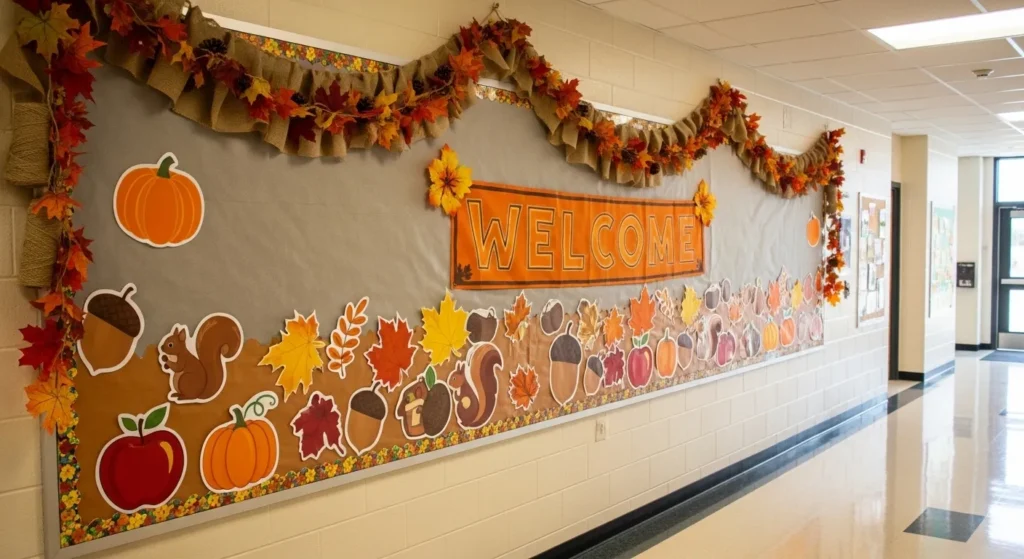
A seasonal display brings freshness to the hallway without requiring a full redesign every month. Choose one main area, such as an entry board, cafeteria hallway, or office corridor, and create a reusable base. Then swap out accents for fall leaves, winter snowflakes, spring flowers, testing encouragement, or graduation details. In my experience, the best seasonal displays feel coordinated rather than crowded. A strong background, clean title, and limited color palette usually look better than too many small decorations competing for attention.
This idea works well because it gives students something new to notice while keeping maintenance realistic for teachers. Use laminated cutouts, reusable garlands, cardstock shapes, printed banners, and removable hooks. For fall, try warm oranges, browns, and gratitude notes. For winter, use icy blues, silver accents, and reading challenges. For spring, add garden themes, growth words, and student goals. Seasonal decor should never block doors or walkways, but when placed thoughtfully, it makes the corridor feel cheerful, timely, and connected to school life.
8. Quote Strips
Bullet Points
- Adds encouragement without taking up large wall space.
- Works above lockers, along stairwells, near classrooms, or in narrow corridors.
- Supports school values, literacy, leadership, and testing motivation.
- Looks best with consistent fonts, colors, and clean spacing.
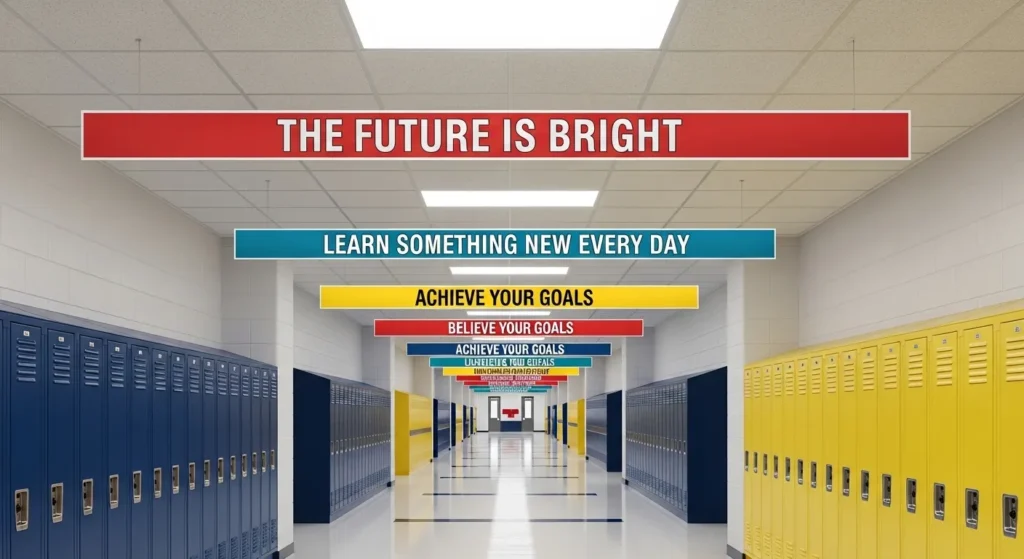
Quote strips are perfect for hallways that need inspiration but do not have room for large displays. Short, readable phrases can be placed above lockers, along classroom wings, or beside stairwells where students naturally pass. The key is choosing words that students can absorb quickly while walking. Avoid long quotes that feel like paragraphs. Instead, use bold typography, school colors, and simple messages about courage, kindness, effort, curiosity, or leadership. The display should feel encouraging without becoming visually loud.
This idea is affordable, flexible, and easy to update when the school theme changes. Use laminated sentence strips, vinyl wall lettering, cardstock banners, or removable decals. For a more student-centered approach, ask classes to submit original quotes and display them with names or grade levels. Keep the strips aligned and evenly spaced so the hallway feels professional. Quote strips also work beautifully during testing season or spirit week because they add motivation without creating clutter. Small words, placed well, can shift the mood of a corridor.
9. Locker Details
Bullet Points
- Makes locker rows feel coordinated and less plain.
- Great for middle school and high school corridors.
- Can include magnets, decals, name tags, spirit signs, or team accents.
- Works best with lightweight, removable, and school-approved materials.
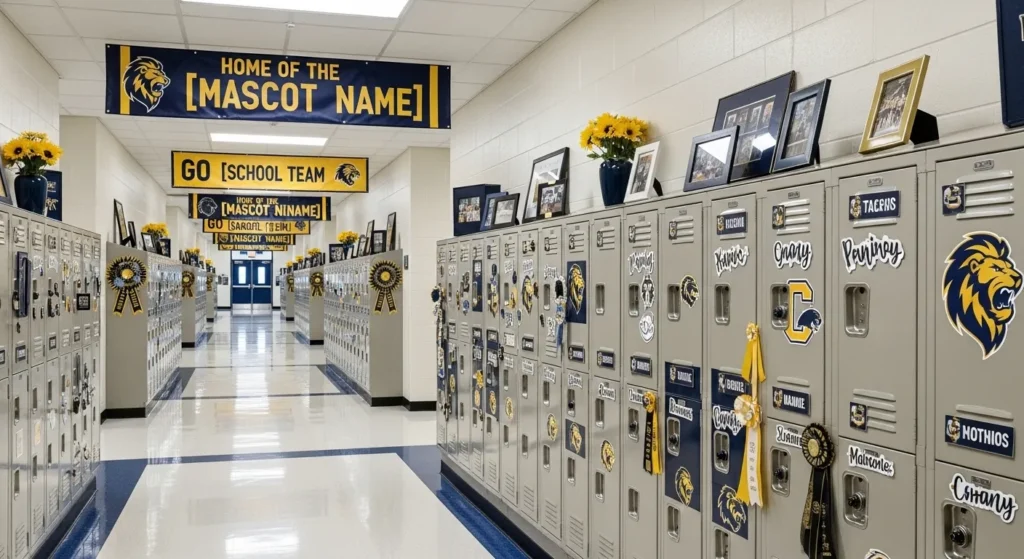
Locker details can soften the look of long metal rows and bring more personality into older student spaces. Many middle and high school hallways feel industrial because lockers dominate the walls. Simple accents, such as magnetic name cards, club signs, mascot decals, or color-coded grade markers, can make the area feel more intentional. The trick is to keep everything removable and consistent. Choose one theme or color family so the design enhances the hallway rather than turning into visual clutter.
This concept is practical for spirit weeks, senior celebrations, sports seasons, club recognition, or back-to-school orientation. Use magnetic frames, laminated tags, removable vinyl, small banners, or locker toppers that do not block locks, vents, or handles. Teachers and student councils can help maintain the look by setting guidelines for size and placement. When done well, locker decor gives students a sense of ownership while still keeping the hallway neat. It adds color, school pride, and personality without requiring permanent changes to the building.
10. Wayfinding Signs
Bullet Points
- Helps students, parents, substitutes, and visitors move confidently.
- Useful for offices, restrooms, cafeterias, gyms, libraries, and grade wings.
- Adds a clean professional layer to the corridor design.
- Can include arrows, icons, room numbers, and school branding colors.
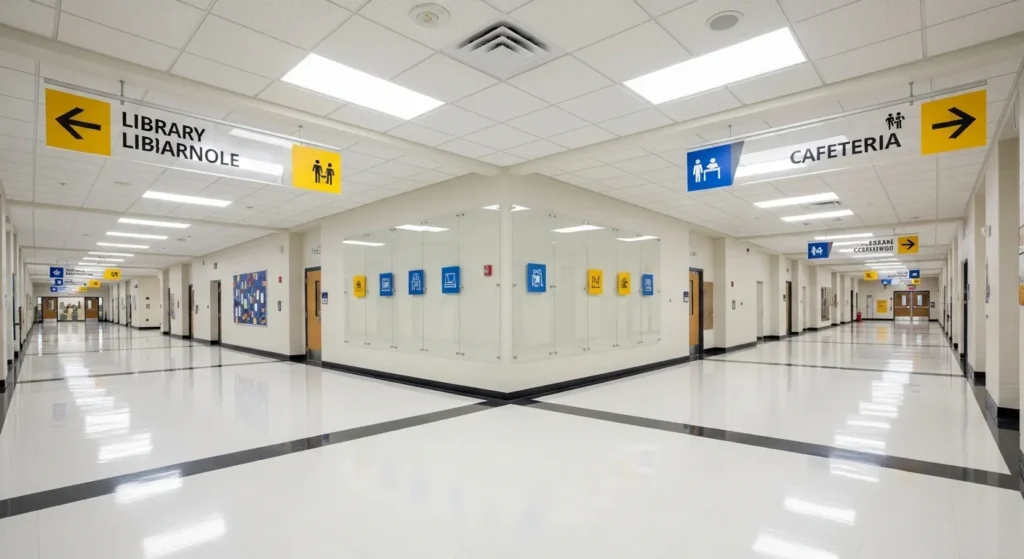
Wayfinding signs are one of the most useful hallway upgrades because they improve both style and function. A school can have beautiful displays, but if visitors cannot find the office, cafeteria, library, or gym, the building still feels confusing. Clear signage helps everyone move through the space with less stress. Use short labels, readable fonts, arrows, and simple icons. Place signs where people make decisions, such as entrances, intersections, stairwells, and hallway turns, rather than only beside the destination.
The design should match the school’s personality while staying easy to understand. Acrylic signs, laminated posters, vinyl arrows, framed prints, or painted directional graphics can all work, depending on budget. Younger students benefit from icons like books, utensils, or music notes, while older students may prefer cleaner typography. This is also a smart place to use school colors without overwhelming the walls. Strong wayfinding makes the hallway feel organized, safe, and polished, which is why it belongs in any complete corridor design plan.
11. Theme Mural
Bullet Points
- Creates a bold focal point in a main hallway.
- Can feature the mascot, local landmarks, school values, or subject themes.
- Works as painted art, removable decals, printed panels, or student collaboration.
- Best when the design is large, clear, and easy to maintain.
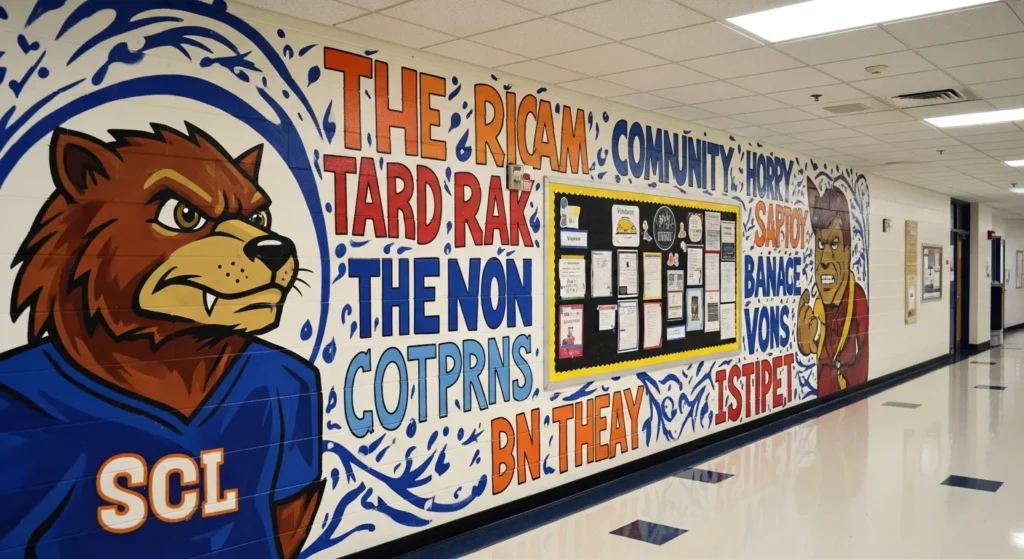
A theme mural can become the most memorable part of a school hallway. It gives the building a visual identity that students and families immediately recognize. The mural might feature the school mascot, a reading garden, a science galaxy, a city skyline, or a values-based design with words like respect and courage. Keep the artwork bold rather than overly detailed, especially in a busy corridor. Large shapes, strong colors, and a clear message usually photograph better and feel more timeless.
This idea works especially well in main corridors, cafeteria entrances, library hallways, and gym areas. A professional artist, art teacher, parent volunteer, or student group can help create the design. If painting is not allowed, removable wall decals or printed mural panels can give a similar effect. Use washable paint, durable finishes, and colors that coordinate with nearby boards or signs. A mural becomes a photo-worthy backdrop for school events while also giving students a stronger sense of pride in their building.
12. Photo Wall
Bullet Points
- Celebrates school memories, student groups, events, and classroom moments.
- Works well near offices, cafeterias, libraries, or main intersections.
- Can include sports, clubs, field trips, assemblies, and grade-level activities.
- Looks best with consistent frames, captions, and a clean grid layout.
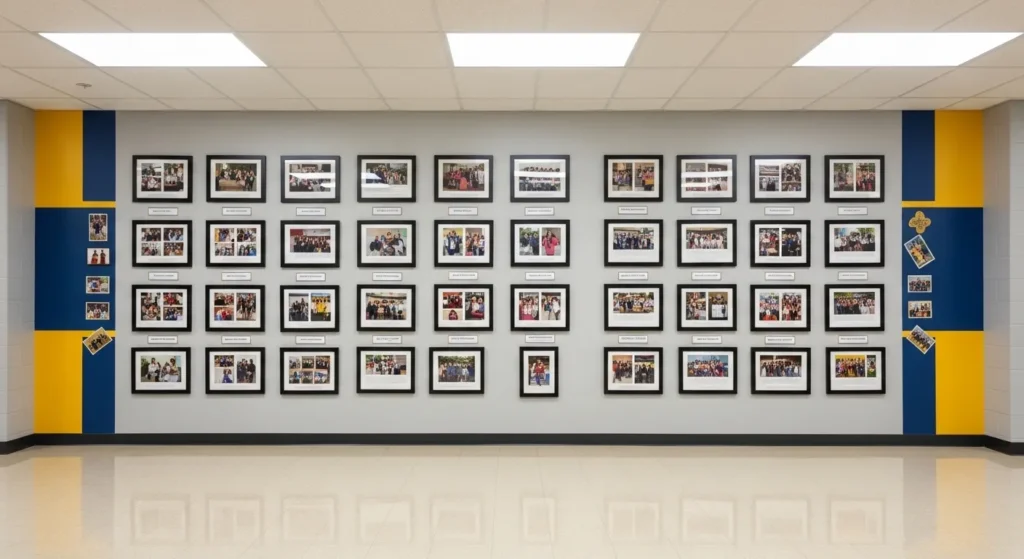
A photo wall makes the hallway feel personal because it shows real people and real moments. Students love seeing familiar faces, and families enjoy noticing events they may have missed. The key is to make the display look intentional instead of random. Use matching frames, printed photo mats, or a clean grid with consistent spacing. Add small captions with dates, event names, or grade levels. This gives the wall context and turns everyday school memories into a polished visual story.
This display can be updated monthly, seasonally, or after major events. Include photos from field trips, concerts, clubs, sports, spirit days, reading nights, and classroom celebrations. Use school-approved images and follow privacy guidelines before posting student photos. Materials like lightweight frames, laminated captions, removable strips, and bulletin board backing make the wall easier to maintain. A photo wall helps build community because it reminds students that their experiences matter. It also gives visitors a quick, authentic glimpse into the life of the school.