10 House Front Yard Ideas
A front yard does more than fill the space between the street and the front door. It shapes the first impression of your home, sets the tone for your exterior style, and can make even a simple property feel warm, cared for, and inviting. For many USA homeowners, the front yard is also one of the most visible parts of the home, which means small upgrades can have a big impact. A cleaner walkway, better lighting, layered plants, or a fresh porch arrangement can instantly improve curb appeal without requiring a full renovation.
The best front yard ideas are not always the most expensive ones. They are the ones that make the entrance easier to use, prettier to look at, and more balanced from the street. Whether your home is a ranch, farmhouse, colonial, craftsman, modern build, cottage, or suburban family house, the right outdoor choices can make the entire exterior feel more complete. These ideas focus on practical beauty: materials that last, layouts that make sense, and styling details that look good in real life, not just in pictures.
This guide gives you ten polished and Pinterest-friendly front yard concepts that are easy to understand and realistic to adapt. You will find ideas for paths, planting beds, porch pots, lighting, edging, mailboxes, seasonal decor, and small seating details. Each one is designed to help your entrance feel more welcoming, organized, and visually pulled together. Think of this as a curb appeal plan you can build slowly, one section at a time, until the front of your home feels fresh, intentional, and beautifully finished.
1. Stone Walkway
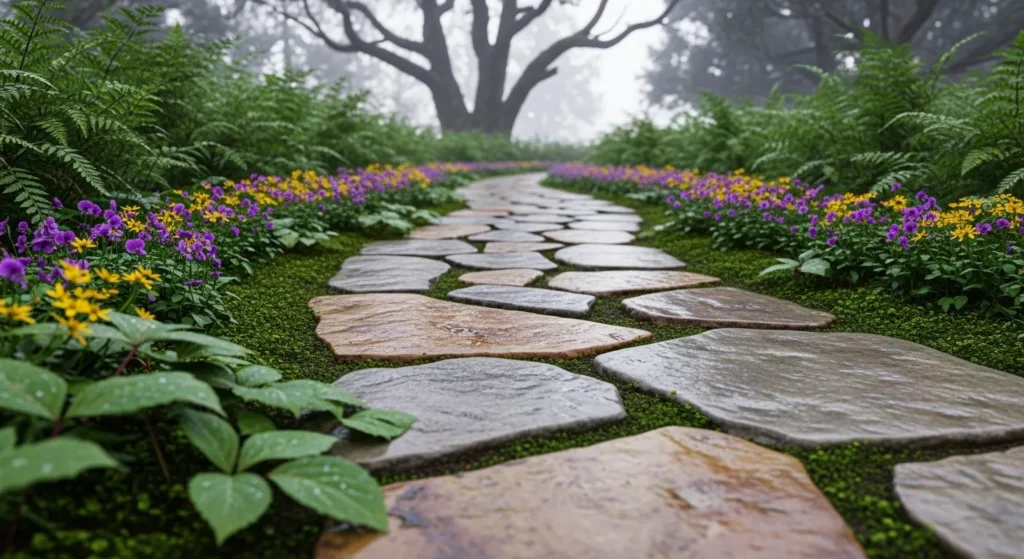
- Creates a clear and welcoming route to the front door.
- Works with flagstone, concrete pavers, brick, gravel, or slate.
- Makes the yard feel more polished from the street.
- Helps connect the driveway, sidewalk, porch, and garden beds.
A beautiful walkway can change the entire feeling of a front yard because it gives guests a clear path and gives the home a stronger visual entrance. Instead of letting people walk across grass or an uneven route, a defined stone path makes the arrival feel intentional. Flagstone works well for cottage and farmhouse homes, while large concrete pavers feel cleaner for modern exteriors. Brick adds classic charm, and gravel can soften the look when paired with edging. In my experience, the walkway often becomes the backbone of curb appeal.
The best walkway layout depends on the shape of your yard and how people naturally move toward the door. A straight path feels formal and clean, while a gentle curve can make a small front yard feel wider and more relaxed. Use low plants along the edges, such as liriope, lavender, boxwood, or ornamental grass, to make the path feel finished. If the surface gets slippery in winter, choose textured materials. A well-planned path improves safety, guides the eye, and makes the home feel more welcoming every day.
2. Layered Flower Beds
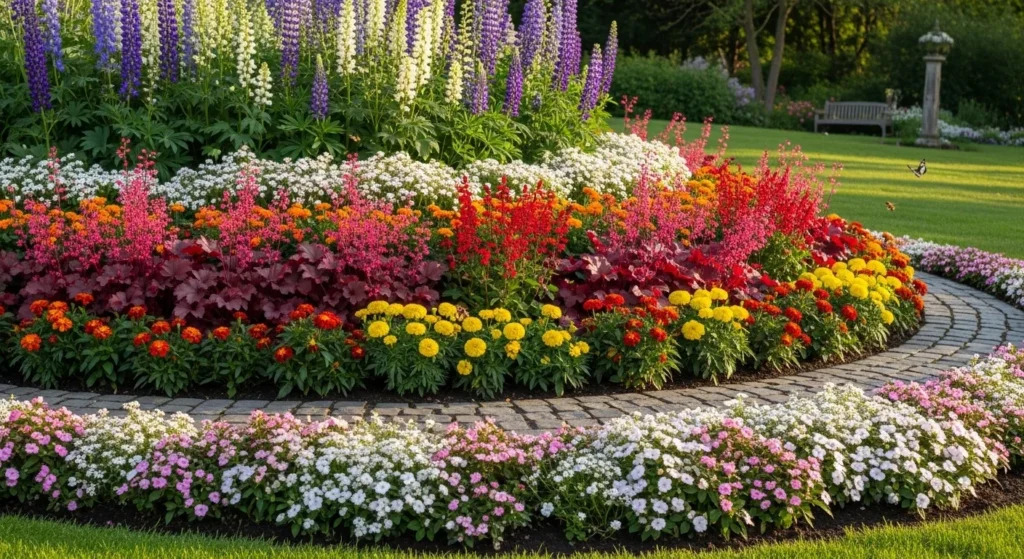
- Adds depth, color, and softness around the home’s exterior.
- Helps hide bare foundation lines and plain walls.
- Works with shrubs, perennials, annuals, mulch, and stone borders.
- Creates a fuller look without making the yard feel messy.
Layered flower beds make a front yard look professionally designed because they create height, rhythm, and softness around the home. The easiest formula is tall plants in the back, medium plants in the middle, and low flowers or groundcover near the front edge. This keeps the bed visible from the street while preventing taller plants from blocking windows or walkways. Use evergreen shrubs for year-round structure, then add seasonal flowers for color. That balance is especially helpful in USA climates where gardens can look empty during colder months.
To make the bed feel clean instead of crowded, repeat a few plant types instead of buying everything that looks pretty at the garden center. For example, pair boxwood with white hydrangeas and purple salvia, or use dwarf grasses with roses and low creeping thyme. Add mulch or decorative stone to control weeds and visually finish the soil. I’ve noticed front beds look more expensive when the plant colors connect with the home’s siding, shutters, or front door. This creates harmony while still giving the yard personality and warmth.
3. Porch Planters
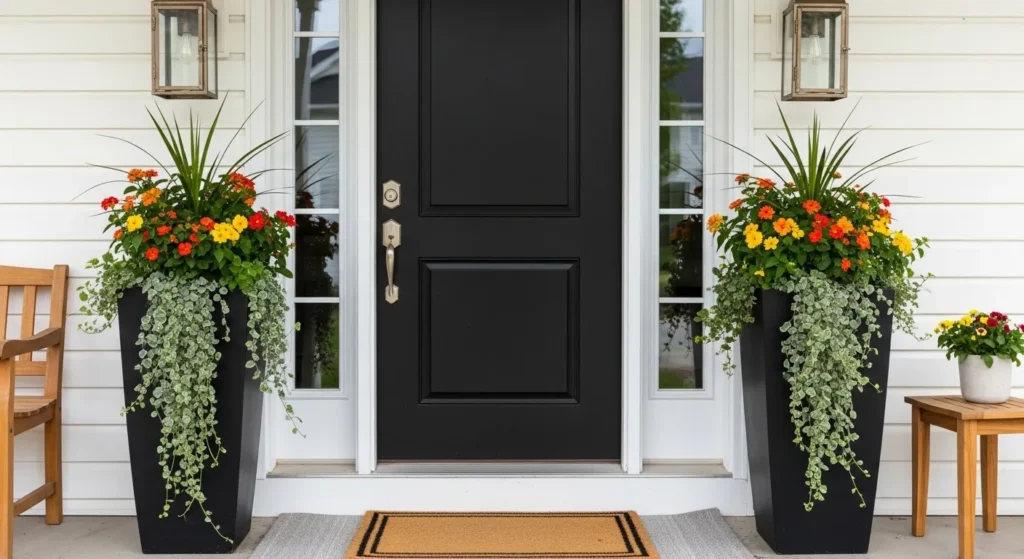
- Frames the front door and makes the entry feel styled.
- Works with tall planters, urns, ceramic pots, or rustic baskets.
- Adds seasonal color without changing the entire yard.
- Helps small porches feel finished and welcoming.
Porch planters are one of the easiest ways to make an entrance feel fresh without committing to a major outdoor project. Two matching planters beside the front door create instant balance, while one oversized planter can work beautifully on a smaller porch. Choose containers that match the home’s style, such as black urns for classic homes, terracotta for warm cottage charm, concrete for modern exteriors, or woven baskets for farmhouse porches. The container itself matters because it becomes part of the overall curb appeal, not just a plant holder.
For a full look, use the classic thriller, filler, and spiller method. Add one tall plant for height, medium plants for fullness, and trailing plants that soften the edges. In spring, try ferns, pansies, or tulips; in summer, use petunias, coleus, or sweet potato vine; in fall, add mums and ornamental cabbage. Keep colors limited so the porch feels styled, not chaotic. Water consistently and rotate pots if one side gets more sun. These simple containers can make the entry feel cared for in every season.
4. Curved Lawn Edge
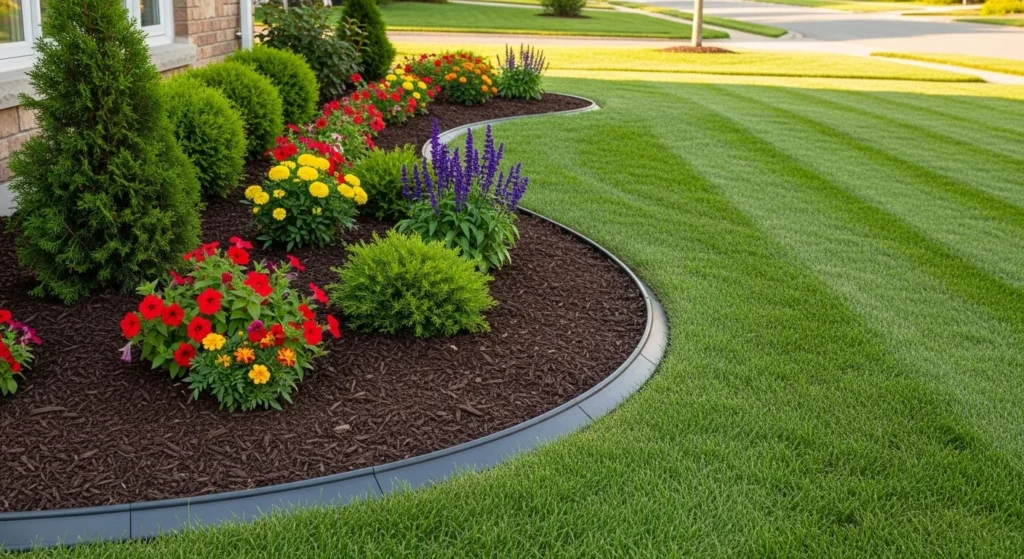
- Gives the front yard a softer, more designed shape.
- Separates grass from mulch, gravel, flowers, or shrubs.
- Works with metal edging, brick, stone, concrete, or natural trench edging.
- Helps the lawn look cleaner after mowing and trimming.
A curved lawn edge can make an ordinary front yard look custom because it replaces harsh, random borders with a soft, intentional shape. Many front lawns feel flat because the grass simply runs into the house, driveway, or flower beds without definition. A curved edge creates movement and makes garden areas feel more graceful. Use flexible metal edging for a clean modern line, brick for a traditional look, or natural stone for a relaxed cottage feel. The curve should be gentle, not wavy or overly decorative.
The practical benefit is just as important as the visual upgrade. A defined edge keeps mulch from spilling into the lawn and makes mowing easier because the boundary is clear. Start by marking the shape with a garden hose before cutting, then step back to view it from the street. That’s why many designers recommend planning edges from the curb perspective, not only from close up. Once the line is cut and filled with mulch or stone, the whole yard appears neater, more balanced, and easier to maintain.
5. Entry Lighting
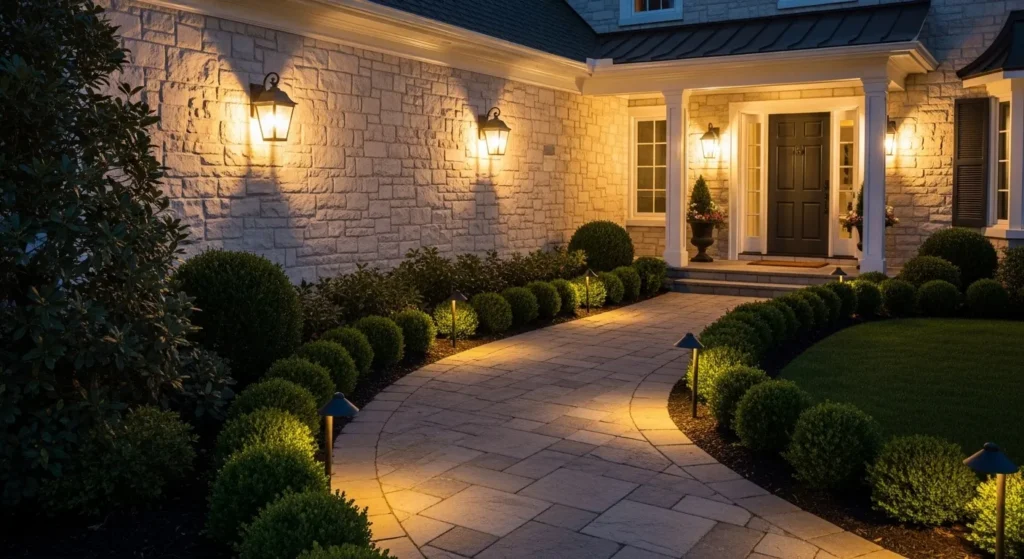
- Improves safety and visibility near the front door and walkway.
- Adds warmth and evening curb appeal.
- Works with sconces, path lights, lanterns, step lights, and uplighting.
- Helps highlight plants, architectural details, and house numbers.
Entry lighting can make a front yard feel warm, safe, and expensive after sunset. A bright porch bulb alone often looks harsh, while layered lighting gives the exterior more depth. Start with matching wall sconces by the front door, then add path lights along the walkway or driveway edge. If you have trees, columns, or beautiful shrubs, subtle uplighting can highlight them without making the yard feel theatrical. Warm white bulbs usually look better than cool blue light because they create a softer and more welcoming glow.
When choosing fixtures, match the finish to your door hardware, mailbox, railings, or house numbers. Matte black, bronze, brass, and brushed nickel are common choices that work with many American home styles. Keep the spacing even along paths, but avoid using too many fixtures close together. Solar lights are easy to install, but hardwired or low-voltage systems often look cleaner and last longer. Good lighting also helps guests find the door, prevents trips on steps, and makes the exterior feel cared for even when the landscaping is simple.
6. Mailbox Garden
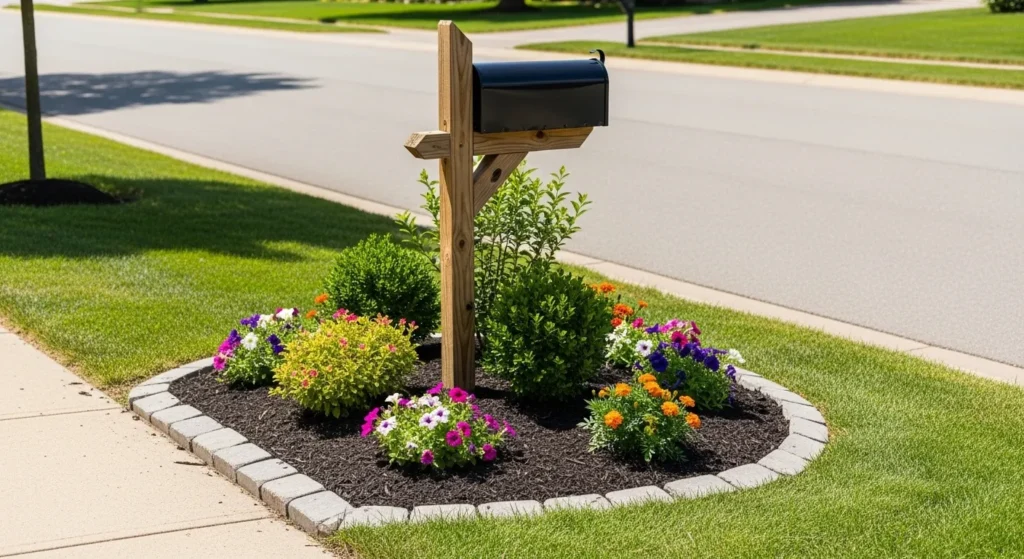
- Turns a plain mailbox area into a charming curbside feature.
- Works with low flowers, small shrubs, mulch, gravel, or stone edging.
- Adds color close to the street without redesigning the whole yard.
- Makes the property look more finished from the curb.
A mailbox garden can make the front of a property feel more complete because it upgrades a spot that many homeowners forget. Instead of leaving the mailbox standing alone in grass, frame it with a small planting bed that matches the rest of the yard. Keep the design low enough so mail delivery stays easy and visibility remains clear from the road. Good plant choices include creeping phlox, daylilies, salvia, dwarf boxwood, sedum, or ornamental grasses, depending on your local sun exposure and maintenance needs.
For the cleanest look, shape the bed in a small circle, oval, or soft rectangle and finish it with stone, brick, or metal edging. Use mulch to reduce weeds and keep the area tidy between trims. If your mailbox is worn, repaint it or choose a style that matches the home’s exterior. I’ve seen this work well in many neighborhoods because it adds charm right where people first notice the property. It is a small project, but it can make the entire curb view feel more thoughtful.
7. Low Hedge Border
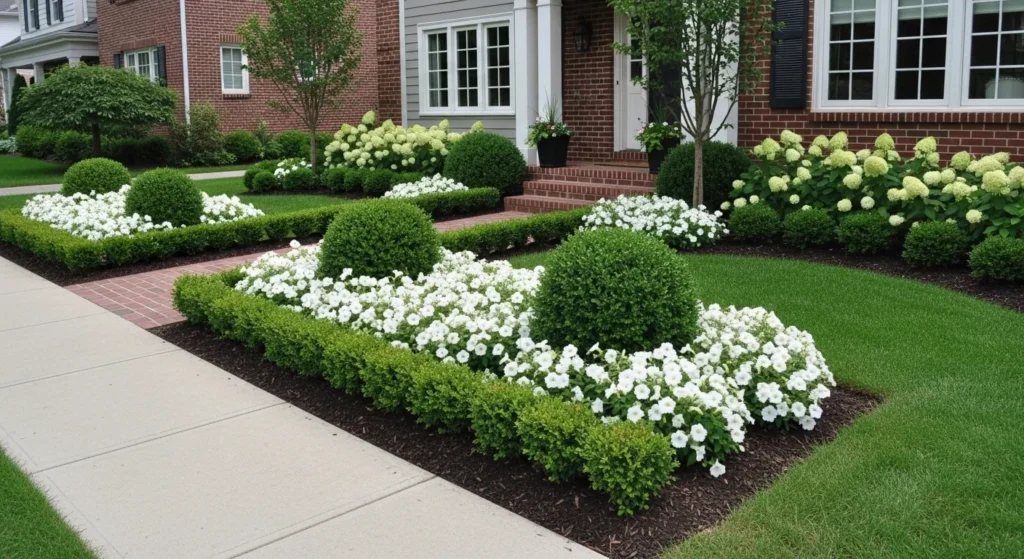
- Adds structure without blocking the home’s exterior.
- Works along walkways, porches, driveways, and foundation beds.
- Creates a classic, tidy, and timeless front yard look.
- Helps define spaces while keeping the design simple.
A low hedge border gives a front yard structure, which is why it works so well for homes that need a cleaner and more polished look. Instead of relying only on flowers, a hedge creates a steady green line that stays attractive through most seasons. Boxwood, dwarf yaupon holly, inkberry, Japanese holly, and compact privet can work depending on your region. The hedge should stay low enough to frame the yard without hiding windows, porch details, or beautiful siding.
The secret is consistent spacing and regular trimming. Plant each shrub at the recommended distance, not too close, because crowded hedges can become unhealthy and difficult to maintain. Use the border along a walkway, around a porch bed, or near the driveway to guide the eye. Pair it with softer plants inside the bed, such as hydrangeas, roses, lavender, or seasonal annuals. The result feels classic and organized, especially from the street. A low hedge also helps other decorative elements look more intentional rather than randomly placed.
8. Seasonal Door Decor
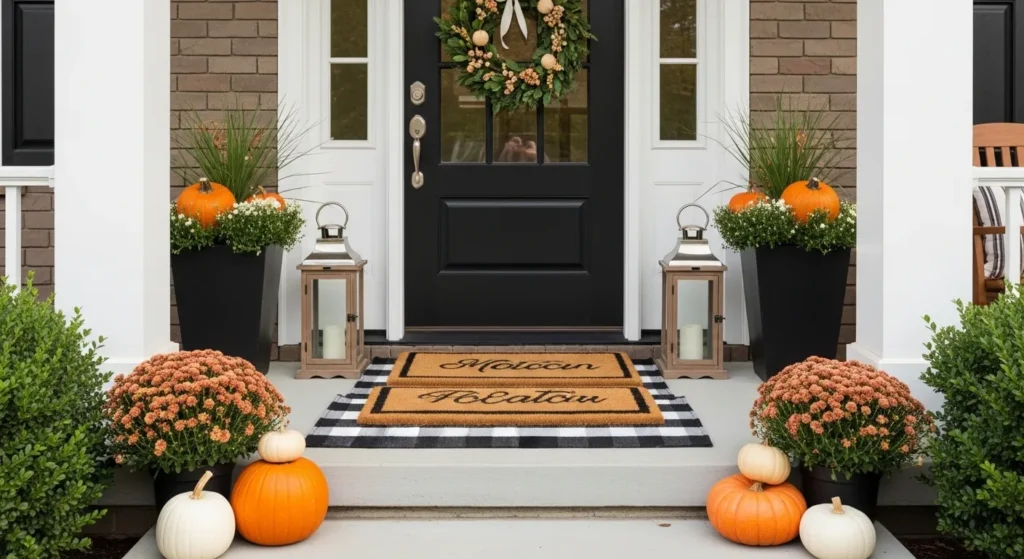
- Refreshes the entrance without expensive landscaping changes.
- Works with wreaths, doormats, lanterns, planters, and porch accents.
- Adds personality while keeping the yard easy to maintain.
- Makes the entry look updated for spring, summer, fall, and winter.
Seasonal door decor keeps the front entry feeling alive throughout the year without requiring constant planting or major projects. A wreath, fresh doormat, pair of lanterns, and updated porch planters can change the entire mood of the entrance. For spring, use soft greenery and pastel flowers; for summer, choose bright blooms and woven textures; for fall, add mums, pumpkins, and warm earth tones; for winter, use pine, berries, lanterns, and simple ribbon. The goal is tasteful change, not clutter.
To keep the look polished, choose one main color story each season and repeat it in small ways. For example, black lanterns, a tan mat, and cream planters can stay year-round while flowers and wreaths change. Avoid blocking the door swing or crowding narrow steps. This idea works especially well for homeowners who want Pinterest-style curb appeal on a realistic budget. It also makes the entry feel welcoming for guests, delivery drivers, neighbors, and family members coming home at the end of the day.
9. Small Sitting Spot
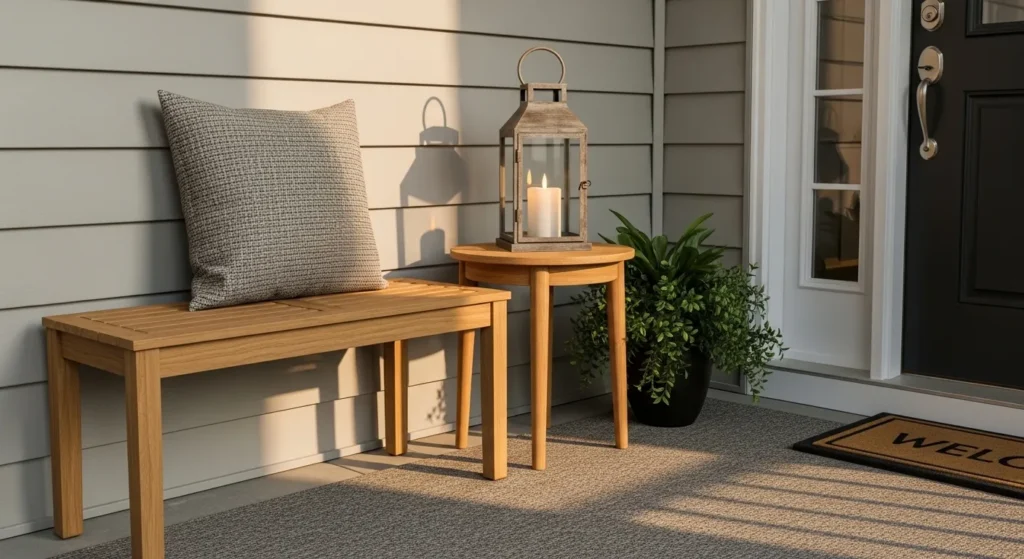
- Adds warmth and personality to porches, patios, or front corners.
- Works with a bench, rocking chairs, bistro set, or single accent chair.
- Makes the entrance feel lived-in and inviting.
- Can be styled with pillows, planters, side tables, and lanterns.
A small sitting spot can make the front yard feel friendly and lived-in, especially when the porch or entry area has unused space. You do not need a large porch to make this work. A slim bench, two rocking chairs, a small bistro set, or even one beautiful chair with a side table can create a welcoming moment. Choose furniture that fits the scale of the space, leaving enough room for people to walk comfortably to the door without turning sideways.
Style the sitting area with restraint so it feels inviting, not crowded. One outdoor pillow, a small planter, or a lantern may be enough. Materials should handle local weather, such as powder-coated metal, teak, cedar, wicker made for outdoor use, or durable resin. In my experience, front seating works best when it looks intentional from the street and practical up close. It adds charm, gives homeowners a place for morning coffee, and makes the entrance feel more personal without needing a large landscaping budget.
10. Fresh Mulch Finish
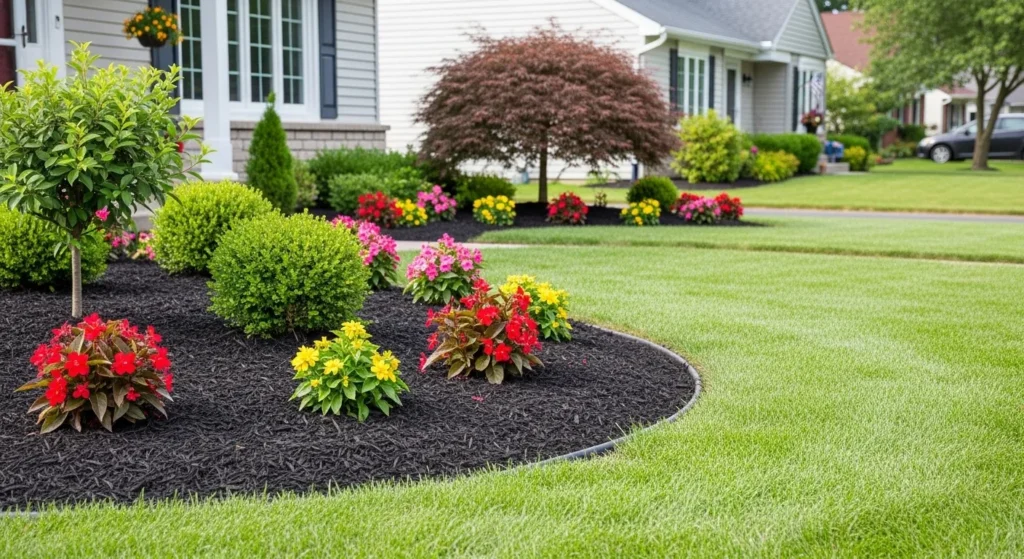
- Instantly makes planting beds look cleaner and newer.
- Helps control weeds and protect soil moisture.
- Works with bark mulch, pine straw, compost, gravel, or rubber mulch.
- Makes flowers, shrubs, and edging stand out more clearly.
Fresh mulch is one of the fastest ways to make a front yard look renewed because it covers tired soil and creates a clean background for plants. Even healthy shrubs can look neglected when the ground around them is faded, patchy, or full of weeds. Bark mulch, pine straw, compost, and decorative gravel are all options, depending on the home style and climate. Dark brown mulch often looks natural and rich, while pine straw suits Southern homes and gravel fits modern or drought-friendly yards.
Before adding mulch, remove weeds, trim bed edges, and pull old material away from plant stems and tree trunks. Spread a consistent layer, usually two to three inches, without piling it too high. This helps retain moisture and protect roots while still allowing the soil to breathe. A fresh mulch finish also makes borders, flowers, and shrubs stand out more clearly from the street. It is simple, affordable, and highly visible, which makes it one of the most practical curb appeal upgrades for busy homeowners.