
11 School Hallway Ideas
11 School Hallway Ideas
A school hallway is more than a path between classrooms; it is one of the first places students, parents, and staff experience the personality of a campus. In many USA schools, hallways carry the daily rhythm of arrivals, announcements, student work, seasonal events, and quick moments of encouragement. When that space feels organized, colorful, and intentional, it can make the whole building feel warmer and more motivating.
The best hallway designs do not have to be expensive or complicated. A simple bulletin board refresh, a reading corner, a student showcase, or a clean color theme can change how students feel as they move through the day. The goal is to create a space that feels safe, inspiring, easy to maintain, and visually strong enough to catch attention on Pinterest.
Below are 11 practical, classroom-friendly corridor decorating concepts that work well for elementary, middle, and high school settings. Each idea includes realistic styling tips, useful materials, and design logic that helps the hallway look polished instead of cluttered.
1. Welcome Wall
Bullet Points
- Creates a warm first impression for students, parents, and visitors.
- Works well near entrances, office areas, or main corridor intersections.
- Can include school colors, mascot graphics, student names, or positive greetings.
- Easy to refresh for back-to-school, open house, and seasonal events.
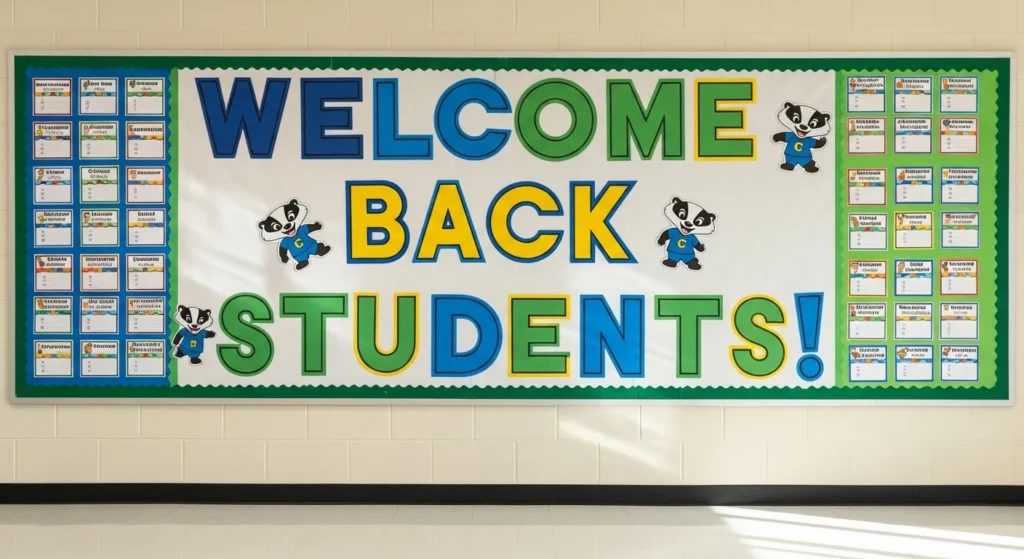
A welcome wall instantly sets the emotional tone for the entire school day. When students walk in and see a bright, thoughtful display, the hallway begins to feel less like a pass-through space and more like a shared community area. Use large letters, durable border trim, and a clean background color that matches the school palette. In my experience, a simple design with strong spacing looks better than one packed with too many cutouts, because it feels intentional, readable, and easy to enjoy from several feet away.
This idea works especially well when it combines beauty with belonging. Add student names, classroom groups, grade-level icons, or a rotating “we are glad you’re here” message. Materials like bulletin board paper, peel-and-stick vinyl, foam letters, laminated shapes, and school mascot decals can make the wall feel professional without a custom budget. Keep the center message large and use smaller details around the edges. The result is a cheerful hallway feature that helps everyone feel recognized before they even reach the classroom.
2. Student Gallery
Bullet Points
- Turns student work into meaningful hallway decor.
- Encourages pride, ownership, and parent engagement.
- Works for art, writing, science projects, history timelines, or math displays.
- Looks best with matching frames, labels, and organized spacing.
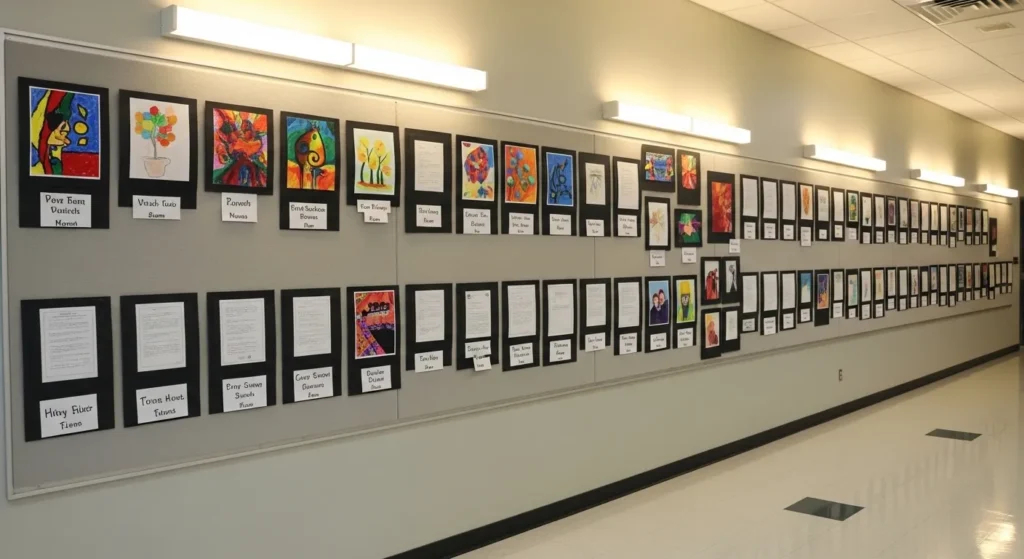
A student gallery makes the hallway feel alive because it celebrates real learning. Instead of using generic posters, this idea turns children’s writing, artwork, research, and projects into a polished display that families actually stop to admire. The key is presentation. Use consistent backing paper, simple title cards, and evenly spaced rows so the display feels like a mini museum. That’s why many designers recommend repeating one or two colors throughout the gallery, rather than mixing every shade available in the supply closet.
The transformation is both visual and emotional. Students are more likely to care about their work when they know it may be displayed in a public space. Add small labels with names, grade levels, project prompts, or teacher notes to make the gallery easier to understand. For materials, try black construction paper mats, clipboards, binder clips, twine, removable hooks, or lightweight frames. This layout also makes changing work simple, which is important for busy teachers who need hallway decor that stays fresh without becoming overwhelming.
3. Reading Nook
Bullet Points
- Adds a cozy literacy-focused moment to the corridor.
- Encourages reading culture outside the classroom.
- Works with shelves, book bins, benches, rugs, or wall quotes.
- Best for wider hallways, media center areas, or supervised corners.
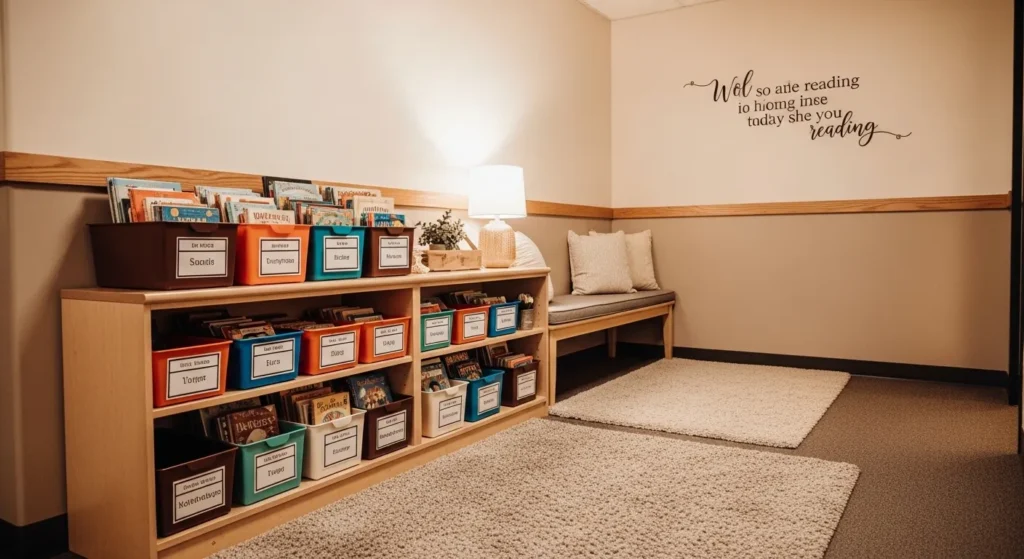
A hallway reading nook can turn an unused corner into one of the most inviting spots in the school. Even if students do not sit there for long periods, the visual message is powerful: books matter here. Use a small bookshelf, forward-facing book ledges, a soft rug, and a bench if space allows. Keep safety and traffic flow in mind, especially in USA schools where hallways must remain clear and accessible. Choose low-profile furniture and avoid anything that blocks emergency routes or classroom doors.
This idea works because it blends function with atmosphere. A few book baskets labeled by grade level, theme, or reading interest make the space practical for students and teachers. Add a sign like “Take a Book Break” or “Currently Reading” without overcrowding the wall. Textures matter here, so combine wood shelves, woven bins, laminated labels, and soft seating when permitted. I’ve noticed that even a tiny reading display can make a hallway feel calmer, especially when paired with warm lighting tones and gentle colors.
4. Growth Timeline
Bullet Points
- Shows progress across the year in a clear visual way.
- Works for academics, character goals, attendance, reading minutes, or school events.
- Helps students see learning as a journey, not a single grade.
- Can be created with paper paths, arrows, milestones, or photo updates.
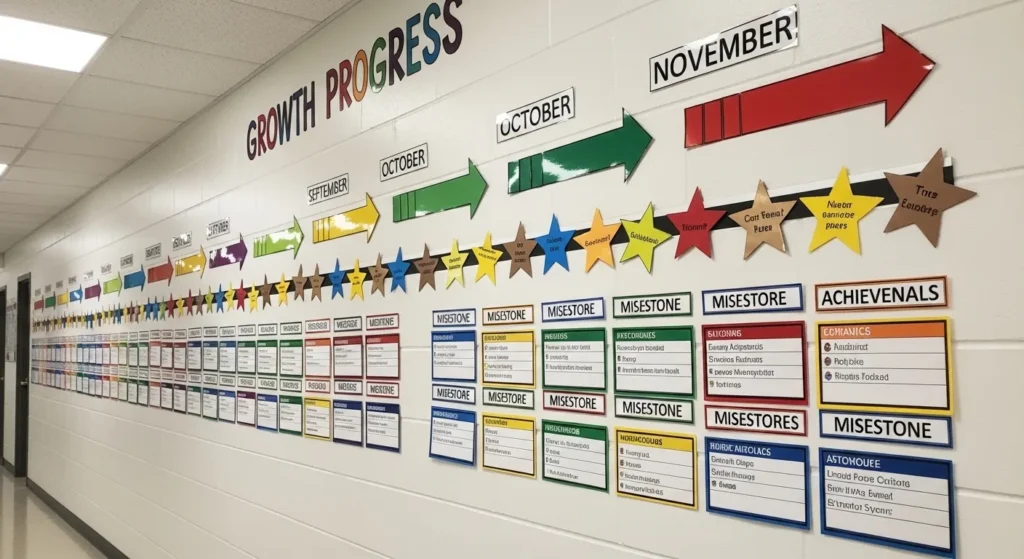
A growth timeline gives the hallway a sense of movement and purpose. Instead of decorating only for one season, this concept evolves as students make progress during the year. Start with a long horizontal path, road, vine, ladder, or stepping-stone layout. Add milestones for months, units, goals, or schoolwide achievements. The visual structure helps students understand that growth happens step by step. It is especially useful for elementary schools, intervention programs, reading challenges, and character education themes that need regular visibility.
The best part is how adaptable this display can be. Teachers can add student photos, class achievements, short reflections, goal cards, or celebration stars as the year continues. Use butcher paper, laminated arrows, removable adhesive, cardstock shapes, and bold month labels for durability. Keep each milestone easy to read from a walking distance. This hallway idea becomes more meaningful over time because it documents real progress, not just decoration. By spring, the wall tells a story students can recognize and feel proud of.
5. Color Zones
Bullet Points
- Helps organize long hallways visually and practically.
- Useful for grade levels, classroom wings, subjects, or school departments.
- Makes navigation easier for students, substitutes, and visiting families.
- Can be done with paint, borders, signs, decals, or bulletin boards.
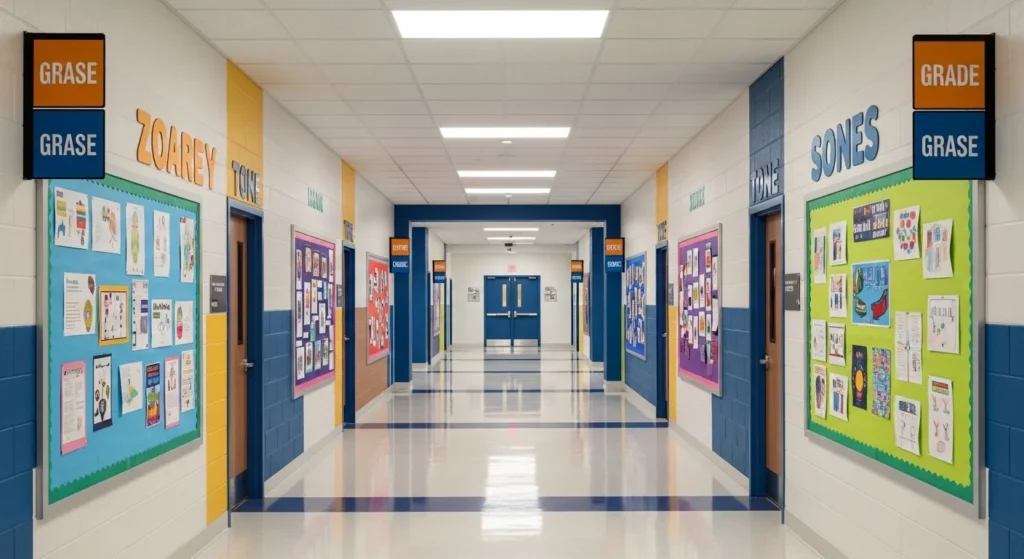
Color zones are a smart way to make a school corridor feel organized without adding clutter. Many buildings have long hallways that look nearly identical from one end to the other, which can feel confusing for younger students and visitors. Assigning each hallway section a color creates visual landmarks. For example, kindergarten may use yellow, first grade may use blue, and upper grades may use green or orange. The colors do not need to cover every wall; even borders, signs, or display backgrounds can create the effect.
This approach improves both style and usability. When paired with clear signage, color zones help students find classrooms, restrooms, offices, and specials areas more independently. Materials can include painted accent panels, vinyl decals, colored bulletin board paper, laminated door signs, or matching hallway passes. Keep the palette school-appropriate and balanced so the space feels cheerful, not chaotic. I’ve seen this work well in many schools because it gives each area an identity while still allowing the entire building to feel connected and intentional.
6. Kindness Board
Bullet Points
- Promotes positive behavior in a visible, daily way.
- Works for notes, shout-outs, compliment cards, and classroom challenges.
- Helps build community across grade levels.
- Easy to update weekly or monthly with student participation.
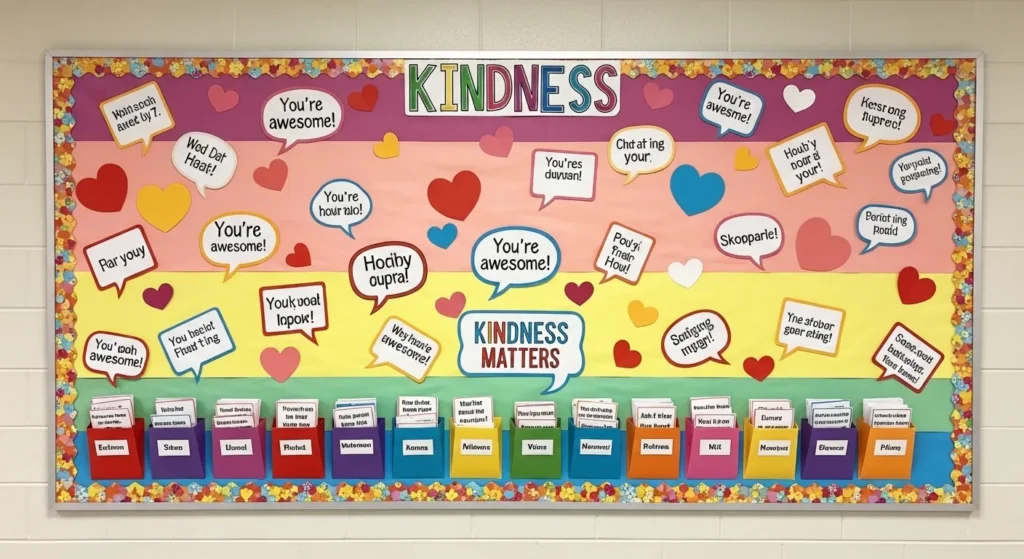
A kindness board brings encouragement into the hallway where everyone can see it. Instead of keeping character education inside a classroom lesson, this display makes positive behavior part of the school environment. Use a large title, simple card pockets, and space for students or teachers to add notes. Prompts like “I noticed,” “Thank you for,” or “You helped when” make it easier for children to write meaningful messages. Keep the design clean so the notes become the main decorative feature.
This idea can transform hallway culture because it gives students a public place to recognize one another. Use colorful sticky notes, heart cutouts, speech bubbles, clothespins, envelopes, or laminated cards that can be reused. A weekly reset keeps the board from becoming messy, while a monthly archive lets teachers save special messages. The board can also support anti-bullying campaigns, school spirit weeks, or counseling programs. When managed consistently, it becomes more than decor; it becomes a quiet reminder that small actions are noticed.
7. Seasonal Entry
Bullet Points
- Creates a fresh look for holidays, seasons, and school events.
- Works well near main doors, office windows, or grade-level entrances.
- Can use reusable decor pieces to save money over time.
- Helps the school feel active, current, and welcoming.
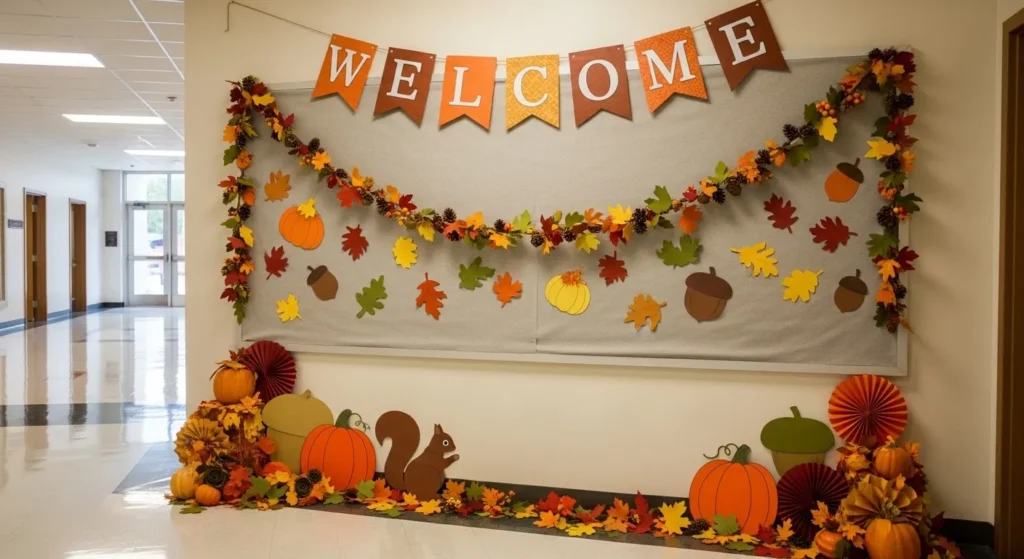
A seasonal entry display makes the school feel refreshed throughout the year without redesigning every hallway. Focus on one strong entrance area and update it for fall, winter, spring, testing season, graduation, or back-to-school. Use a consistent base, such as a neutral bulletin board or reusable banner, then switch out accent pieces. This keeps the workload manageable. In my experience, schools get better results when seasonal decor feels coordinated instead of scattered across every blank space in the building.
The display should be festive but still functional. For fall, add paper leaves, warm plaid borders, and student gratitude cards. For winter, use snowflakes, cool blues, and reading challenge signs. For spring, try flowers, garden themes, or growth messages. Materials like laminated cutouts, removable hooks, reusable garlands, foam shapes, and printed signs help reduce waste. Keep decorations away from walkways and doors. A well-styled entry gives families a positive impression and gives students something new to notice as the year changes.
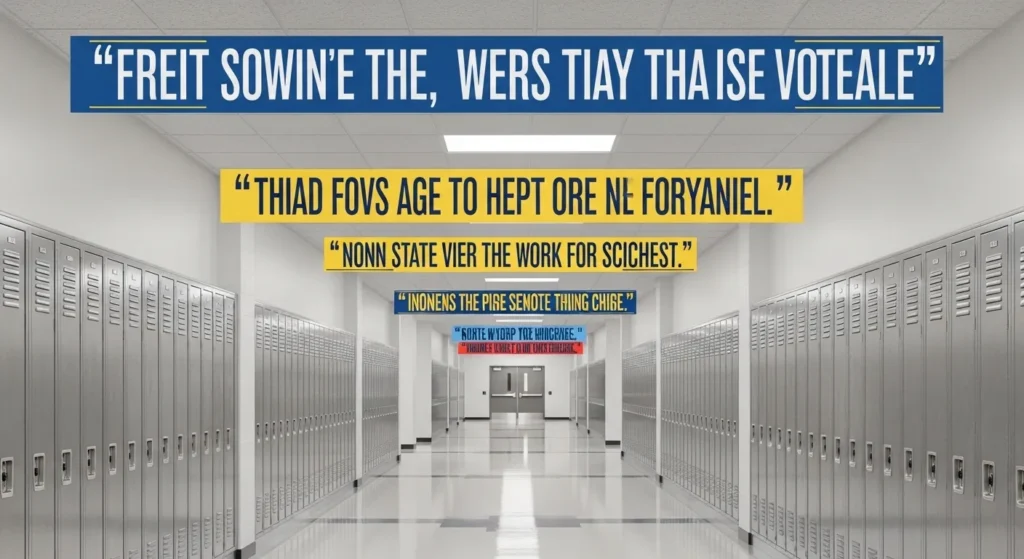
8. Quote Strips
Bullet Points
- Adds inspiration without taking up much wall space.
- Works on stairwells, locker rows, classroom wings, and narrow corridors.
- Can support school values, literacy, leadership, or test motivation.
- Looks best with consistent fonts, colors, and spacing.
Quote strips are perfect for hallways that need personality but cannot handle large displays. Instead of one oversized bulletin board, place short motivational lines along walls, above lockers, or near classroom doors. Choose quotes that are age-appropriate, positive, and easy to read quickly. Avoid long paragraphs because students are usually moving. A strong quote strip should feel like a small moment of encouragement, not a reading assignment. Use bold lettering, school colors, and clean spacing for a professional look.
This idea is especially useful because it works in tight spaces. Vinyl lettering, laminated sentence strips, removable wall decals, or printed cardstock banners can all create a finished effect. You can organize the quotes by theme, such as courage, respect, curiosity, or perseverance. For a student-centered twist, invite classes to submit original sayings and display them with names or grade levels. The hallway becomes visually stronger while also reinforcing school culture. It is simple, affordable, and easy to update when the message needs to change.
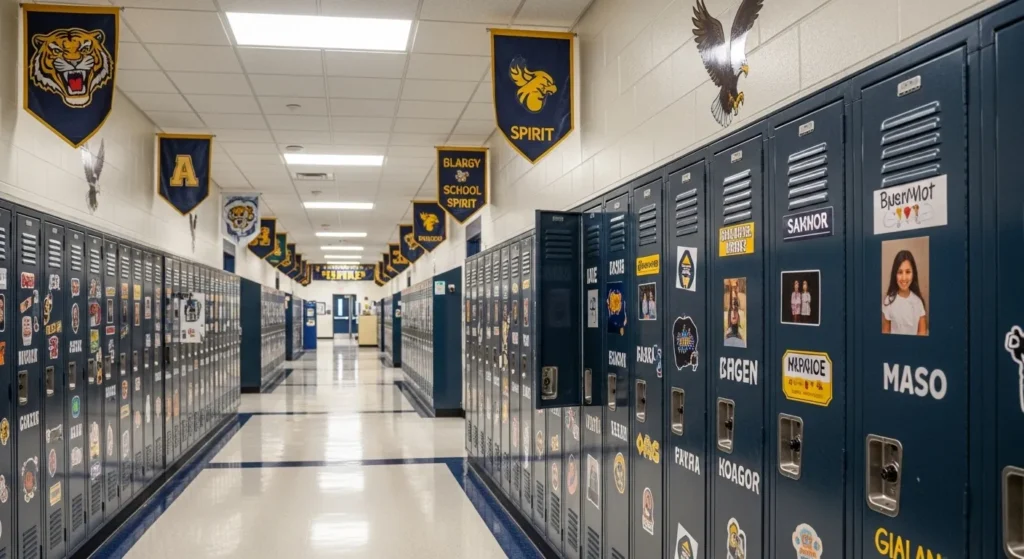
9. Locker Accents
Bullet Points
- Makes locker areas feel more coordinated and less plain.
- Great for middle school and high school hallway styling.
- Can include magnets, name tags, banners, decals, or themed signs.
- Works best when decorations are lightweight and removable.
Locker accents can completely change the mood of a hallway that might otherwise feel cold or industrial. Rows of metal lockers often dominate middle and high school corridors, so even small decorative touches make a noticeable difference. Use removable magnets, vinyl decals, themed number labels, or school spirit banners to soften the look. Keep designs consistent so the hallway feels organized. For example, one grade level might use navy stars, while another uses gold circles or mascot-themed shapes.
The key is balancing personality with maintenance. Avoid anything that blocks locks, vents, handles, or student access. Magnetic frames, laminated name cards, sports schedule strips, club signs, and seasonal locker toppers are practical options because they are easy to remove. This idea also works well for spirit weeks, senior celebrations, testing encouragement, or team recognition. When done carefully, locker accents help students feel ownership of the space without creating clutter. The hallway becomes more colorful, more personal, and easier to connect with school identity.
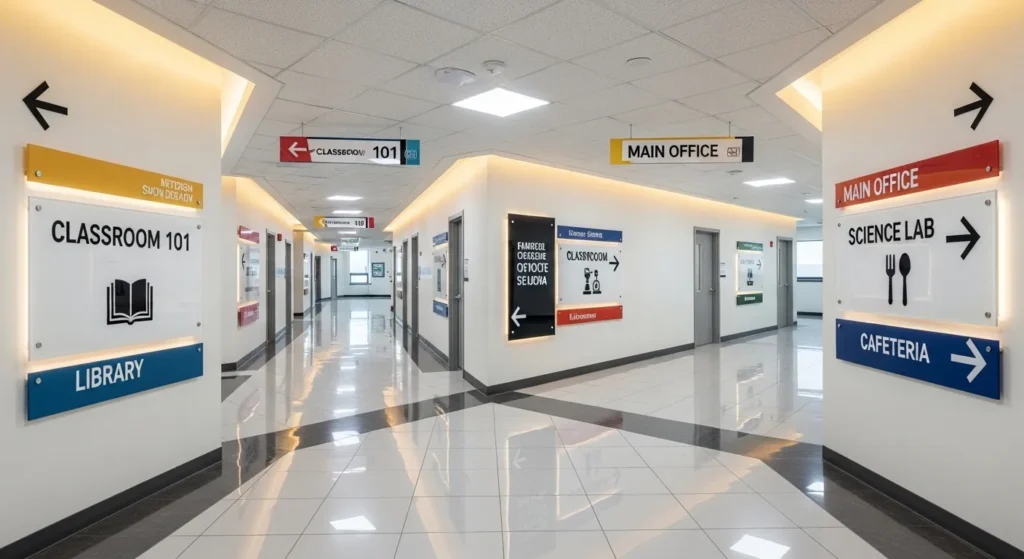
10. Wayfinding Signs
Bullet Points
- Helps students and visitors move through the building confidently.
- Useful for offices, restrooms, gyms, cafeterias, libraries, and grade wings.
- Adds a clean, professional design layer to the hallway.
- Can match school branding, mascot colors, or simple modern icons.
Wayfinding signs are one of the most practical hallway upgrades a school can make. Clear signs reduce confusion for new students, substitute teachers, parents, and visitors during busy events. They also make the building feel more polished. Use arrows, icons, room numbers, and short labels that can be understood quickly. Consistency matters, so choose one font, one sign shape, and a limited color palette. That small design discipline can make even an older hallway feel more updated.
This idea works best when signs are placed at decision points, not randomly along the wall. Add directional signs near intersections, entrances, stairwells, and major classroom wings. Materials can include acrylic signs, laminated cardstock, vinyl decals, painted arrows, or framed prints. For younger students, use icons like books for the library or utensils for the cafeteria. For older students, sleek typography may feel more appropriate. Strong wayfinding improves safety, confidence, and flow while giving the hallway a cleaner visual structure.
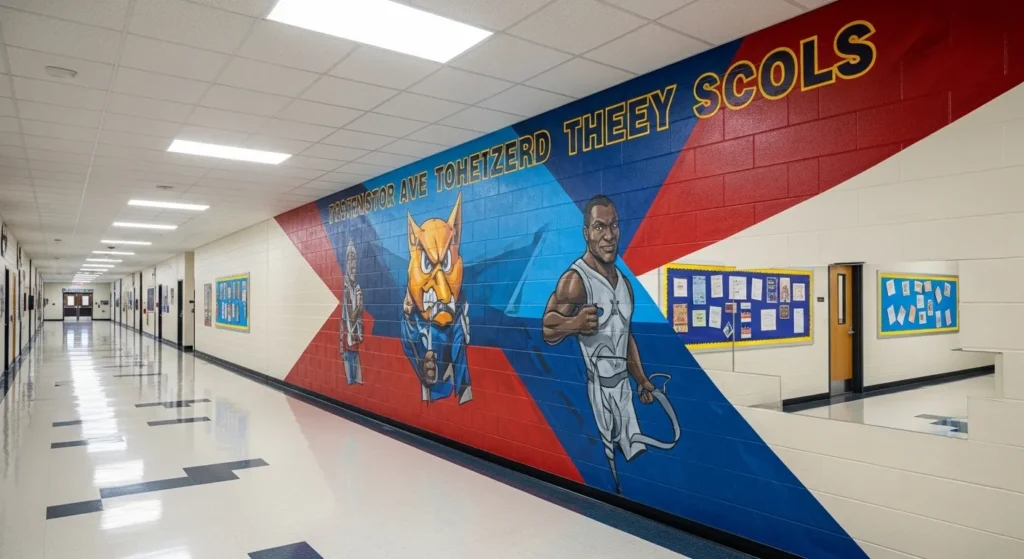
11. Theme Mural
Bullet Points
- Creates a memorable focal point in a main hallway.
- Can reflect the mascot, community, subject area, or school mission.
- Works as painted art, removable decals, or collaborative student artwork.
- Best when the design is large, simple, and easy to maintain.
A theme mural can become the visual heart of a school hallway. Whether it features the mascot, local landmarks, a reading garden, a science galaxy, or a leadership message, the mural gives the building a strong identity. It does not have to cover every wall. A focused section with a bold design can be more effective than a huge, overly detailed scene. Many designers recommend choosing a theme that will still feel relevant several years from now, rather than chasing a short trend.
The most successful murals combine beauty with school pride. A professional painter, art teacher, parent volunteer, or student club can help bring the design to life. If painting is not allowed, large removable decals or printed panels can create a similar effect. Use durable finishes, washable paint, and colors that coordinate with nearby displays. This idea is especially powerful in main corridors, cafeteria entrances, library halls, or gym areas. Done well, it becomes a photo-worthy backdrop and a lasting symbol of community.